


Thulasimathi Murugesan Wins Silver at Asian Para Games, Eyes Two More Golds
India's world No. 2 para shuttler loses women's singles SU5 final to China's Yang Qiuxia but remains in contention for titles in mixed and women's doubles.
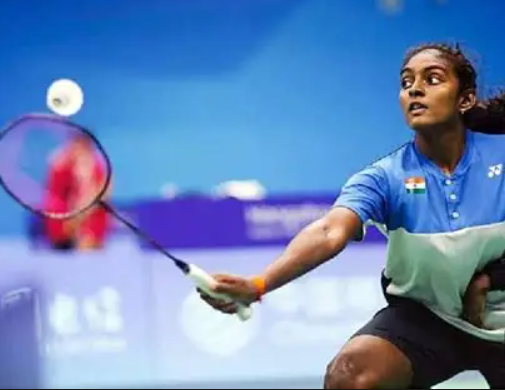
Nagoya, Oct 23 : India’s Thulasimathi Murugesan secured a silver medal in the women’s singles SU5 badminton event at the Aichi-Nagoya Asian Para Games on Friday after losing to China’s Yang Qiuxia in the final. The Indian shuttler went down 18-21, 11-21 at the Ichinomiya City Municipal Gymnasium but still has two more opportunities to win gold at the continental competition.
The 24-year-old, who also won silver at the Paris 2024 Paralympic Games, could not overcome Yang in the title clash. Despite the defeat, her performance added another medal to India’s campaign and kept her in contention for further honours in the doubles events.
Thulasimathi entered the final after an impressive semifinal performance against compatriot Manisha Ramadass. The world No. 2 recovered from losing the opening game to register a 19-21, 21-15, 21-13 victory, demonstrating her ability to adjust her game under pressure.
The semifinal was an important test for both Indian players, who are familiar with each other’s strengths and playing styles. Ramadass started strongly, taking the first game, but Thulasimathi gradually improved her control of the rallies and reduced her errors to turn the contest around.
After levelling the match, Thulasimathi maintained her momentum in the deciding game and secured her place in the final. The victory also ensured that India would have a representative in the women’s singles SU5 gold-medal match.
However, Yang proved a difficult opponent in the final. The Chinese shuttler took the opening game 21-18 before strengthening her position in the second game. Thulasimathi was unable to mount another comeback, as Yang won 21-11 to claim the gold medal.
The result underlined the competitiveness of the women’s SU5 category, where small differences in accuracy, movement and decision-making can determine the outcome of important matches.
For Thulasimathi, the silver medal adds to a growing record of achievements in international para-badminton. Her performance at the Paris Paralympics established her among India’s leading players in the discipline, and her continued presence in major finals demonstrates her consistency at the highest level.
Born on April 11, 2002, in Kancheepuram, Tamil Nadu, Thulasimathi has combined international competition with academic commitments. She trains in Hyderabad under coaches Pullela Gopichand and Irfan Sait while pursuing a degree in veterinary science at Namakkal.
She has also received the Arjuna Award in recognition of her achievements in sport. Her progress reflects the growing visibility of Indian para-athletes who have established themselves in international competitions through sustained training and competitive experience.
The SU5 classification in para-badminton is intended for players with upper-limb impairments. Athletes compete under classification rules designed to ensure fair competition based on the impact of their impairments on sporting performance.
The discipline requires players to combine quick reactions, tactical awareness, court coverage and accurate shot placement. At the highest level, maintaining consistency during long rallies is particularly important, as opponents seek to exploit even small openings.
Thulasimathi’s immediate focus will now shift to the remaining events in her campaign. She has reached the mixed doubles SL3-SU5 final alongside Nitesh Kumar, giving the Indian pair an opportunity to challenge for the gold medal.
The duo secured their place in the final after defeating China’s Li Mingpan and Xiao Zuxian in a closely contested semifinal. The Indians won 21-19, 14-21, 21-17 in a match that lasted 42 minutes.
The semifinal demonstrated the pair’s ability to recover after losing the second game. Having taken the opening game, Thulasimathi and Nitesh faced a strong response from the Chinese combination, which forced the match into a decider.
The Indian duo regrouped and regained control in the third game. Their victory secured a place in the final against Indonesia’s Leani Ratri Oktila and Hikmat Ramdani.
The mixed doubles final presents a different challenge from singles competition. Players must coordinate their movement, cover different areas of the court and make rapid decisions about when to attack or defend. Communication and an understanding of a partner’s strengths can prove decisive during close encounters.
Thulasimathi will also compete in the women’s doubles SL3-SU5 final alongside Manasi Girishchandra Joshi. The Indian pair are scheduled to face China’s Yang Qiuxia and Xiao Zuxian.
The matchup offers Thulasimathi another opportunity to challenge Yang, the player who defeated her in the singles final. However, doubles competition introduces different tactical demands, and the outcome will depend on how effectively the Indian pair work together against their Chinese opponents.
Joshi’s partnership with Thulasimathi provides India with another medal opportunity in the women’s doubles event. The pair will need to maintain their attacking intent while limiting errors and ensuring that their positioning remains effective throughout the match.
India’s para-badminton contingent has delivered several encouraging performances at the Games, with athletes advancing to finals and securing medals across different classifications. The results have strengthened the country’s overall campaign and highlighted the depth of talent available in the sport.
Nitesh Kumar and Naveen Sivakumar have also been among India’s notable performers in the badminton competition. Their progress in the men’s events has added to the contingent’s medal opportunities, while several other Indian players have secured bronze medals after reaching the semifinals.
The results reflect the competitive standard of para-badminton in Asia, where athletes from India, China, Indonesia and other countries have developed strong programmes. The tournament provides an important platform for players to test their skills against leading opponents and gain experience at a major multi-sport event.
For India, Thulasimathi’s silver is a significant result, but her campaign remains unfinished. The two upcoming finals could provide her with an opportunity to add to her medal collection and finish the competition with a gold.
The Indian player will need to put the singles defeat behind her and concentrate on the demands of the remaining matches. Recovering physically and mentally after a final can be challenging, particularly when the competition schedule offers limited time between events.
Her experience at the Paralympics and other international tournaments could prove valuable as she prepares for the doubles finals. At the same time, the Indian pairings will need to focus on their own strategies rather than relying on past results.
The Asian Para Games are an important event for athletes seeking to establish themselves at the continental level and build momentum towards future international championships. Success requires both technical ability and the capacity to adapt to different opponents and match situations.
Thulasimathi’s journey at the 2026 edition has already included a demanding semifinal comeback and a silver-medal finish in singles. The remaining doubles contests offer fresh opportunities to convert her strong performances into additional titles.
India will be hoping that the experienced shuttler can carry her form into the final matches and help strengthen the country’s medal tally. Her performances have once again brought attention to the progress of Indian para-badminton and the growing competitiveness of its athletes on the international stage.

