


Trump Signals He’d Back Israeli Strikes on Iran if Nuclear Diplomacy Falters: Report
Geneva nuclear negotiations proceed even as contingency plans for strikes on missile sites are said to be under discussion
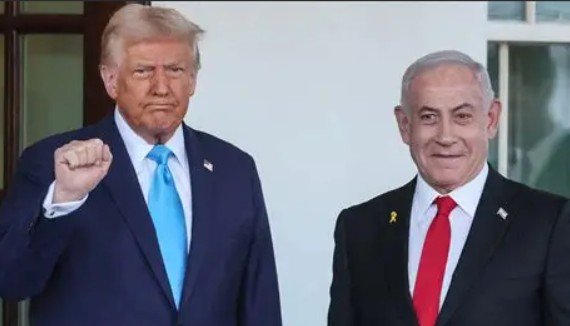
WASHINGTON, Feb 16: Trump backs Israeli strikes on Iran if diplomatic efforts fail, according to a US media report that sheds light on a private December conversation between Donald Trump and Benjamin Netanyahu.
The discussion reportedly took place at Trump’s Mar-a-Lago residence in Florida at a time when indirect negotiations between Washington and Tehran were being revived. The account suggests that while diplomatic engagement is ongoing, military options remain under consideration.
A report by CBS News, cited by IANS, said Trump conveyed his willingness to support Israeli action targeting Iran’s ballistic missile infrastructure if talks break down. The same report indicated that US military and intelligence officials have examined possible forms of assistance, including aerial refuelling for Israeli aircraft and diplomatic efforts to secure overflight permissions from regional states.
However, countries such as Saudi Arabia, Jordan and the United Arab Emirates have reportedly signalled they would not permit their airspace to be used for offensive operations involving Iran. Neither the Pentagon nor the White House has publicly confirmed the reported discussions.
The disclosure comes days before a second round of nuclear negotiations between the United States and Iran scheduled in Geneva. The talks follow an initial meeting in Muscat earlier this month that both sides described as constructive but inconclusive.
During a visit to Slovakia on Sunday, US Secretary of State Marco Rubio reiterated his preference for resolving tensions through dialogue. He confirmed that envoy Steve Witkoff and Jared Kushner will represent Washington at the upcoming round.
On the Iranian side, Foreign Minister Seyed Abbas Araghchi arrived in Geneva to lead what Tehran described as a specialised diplomatic delegation. He is also expected to meet Swiss Foreign Minister Ignazio Cassis, Omani Foreign Minister Sayyid Badr bin Hamad Al Busaidi, and International Atomic Energy Agency chief Rafael Grossi.
While negotiations continue, officials from both countries have expressed differing expectations from any potential agreement, underscoring the fragility of the process. The reported exchange between Trump and Netanyahu indicates that parallel strategic planning remains part of the broader equation.

