


Trump Targets Somali and Haitian Immigrants at Ohio Rally for Republican Candidates
US president renews controversial immigration rhetoric while campaigning for Senator Jon Husted; independent candidate Greg Levy accuses a Republican linked group of misleading voters in Ohio’s Senate race.
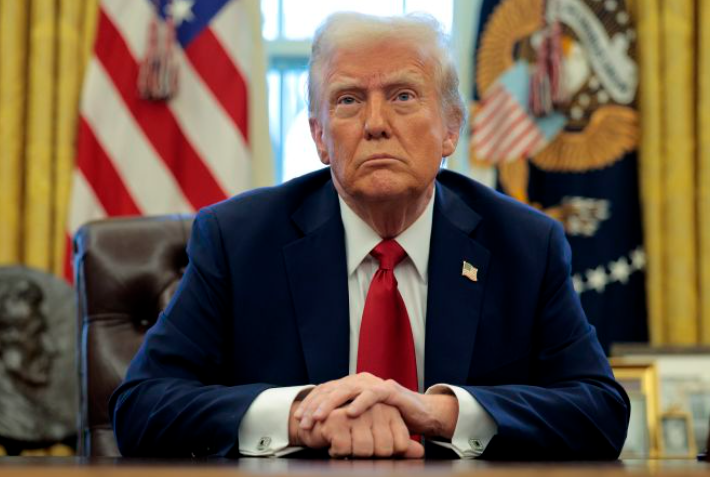
YOUNGSTOWN, Ohio, Oct 13: US President Donald Trump intensified his attacks on Somali and Haitian immigrants during a campaign rally in Ohio on Monday, seeking to strengthen Republican prospects in the upcoming midterm elections while backing Senator Jon Husted’s bid for re-election.
Trump focused heavily on immigration during the event, linking Minnesota’s Somali community with Haitian immigrants living in Springfield, Ohio. His remarks revived disputed allegations about migrants that have featured prominently in his political messaging.
The president also praised Republican Representative Max Miller, who attended the rally despite facing allegations of domestic abuse. Trump acknowledged Miller from the audience and thanked him for attending.
The rally in Youngstown came less than a week after Trump campaigned in Dayton, underscoring the importance Republicans are placing on Ohio ahead of the November midterm elections. Although Trump won the state comfortably in the 2024 presidential election, several competitive contests could determine the balance of power in Washington.
Trump renews disputed claims about Haitian immigrants
Addressing supporters, Trump argued that Ohio could face problems similar to those he has attributed to Minnesota’s Somali immigrant population. He also revisited his claims about Haitian migrants in Springfield, a controversy that gained national attention during the 2024 presidential campaign.
Trump had falsely claimed during a presidential debate that Haitian immigrants were eating residents’ pets. The allegation originated from an unverified social media post, whose author later acknowledged having no evidence to support it and apologised.
Despite the lack of evidence, Trump reiterated his position at Monday’s rally and praised his administration’s efforts to restrict immigration.
He also celebrated what he described as an exodus of Haitian migrants from Springfield, saying the city’s original residents were getting their community back.
The administration has moved to terminate a programme that allowed more than 350,000 Haitians to remain legally in the United States. The policy change has raised concerns among affected families and immigration advocates about their legal status and prospects of remaining in the country.
Springfield, which has a population of approximately 60,000, experienced a substantial increase in its Haitian population in recent years. The arrival of around 15,000 Haitian migrants brought additional workers and residents to the community while also generating political debate over public services and immigration policy.
Trump presented the administration’s restrictions as a necessary response to immigration-related concerns, although his remarks again relied on allegations that have been publicly discredited.
Somali community faces renewed criticism
Trump devoted considerable attention to Somali immigrants, particularly those living in Minnesota. He used derogatory language to describe the community and questioned its contribution to American society.
His remarks reflect a longstanding feature of his immigration agenda, which has frequently targeted migrants from particular countries and regions.
The comments came on the same day federal Homeland Security agents searched the Washington residence of Democratic Representative Ilhan Omar, a Somali-born US citizen who represents a Minnesota congressional district.
The timing placed immigration and political tensions at the centre of national attention. However, the search and the president’s campaign remarks were separate developments, and no connection between them was established in the information available.
Omar has frequently criticised the administration’s immigration policies and has been a prominent target of Republican political attacks.
Trump’s latest statements are likely to renew debate over the treatment of immigrant communities, the role of race in political rhetoric and the consequences of immigration restrictions for families living in the United States.
Ohio emerges as a critical electoral battleground
The rally was primarily intended to support Husted, who was appointed to the US Senate in 2024 after JD Vance became vice president.
Husted faces a challenging contest against Democrat Sherrod Brown, a longtime senator who lost his seat to Republican Bernie Moreno in the 2024 election.
Brown’s campaign is seeking to regain support among working-class voters, while Republicans are attempting to preserve their advantage in a state that has increasingly favoured the party in recent national elections.
The Senate race is particularly important because the outcome of competitive contests across the country could determine which party controls the chamber.
Trump’s appearance also comes amid broader economic and foreign policy concerns, including lingering inflation and the consequences of the Iran war. These issues could influence voters’ assessments of the administration and the Republican candidates it supports.
Ohio’s gubernatorial election is another closely watched contest. Republican Vivek Ramaswamy is facing Democrat Amy Acton in a competitive race that could shape the state’s political direction.
The president’s repeated visits to Ohio demonstrate the administration’s determination to mobilise Republican voters and maintain political momentum before the midterms.
Controversial mailers spark dispute in Senate race
The rally also coincided with a controversy involving campaign mailers promoting independent Senate candidate Greg Levy over Brown.
The mailers, sponsored by Enough Promises Ohio PAC, began reaching voters in recent days. They used slogans such as “Join the Revolution” and “Send a Worker to the Senate”, language that appeared designed to appeal to voters dissatisfied with established political parties.
Levy describes himself as a socialist running for the US Senate to represent Ohio in 2026. He condemned the mailers, accusing the group of falsely presenting the material as connected to his campaign.
He characterised the practice as an attempt to mislead voters and undermine democratic participation, adding that he was considering legal action.
Levy also criticised the material publicly on social media, arguing that the alleged impersonation was an undemocratic tactic that did a disservice to voters in Ohio and elsewhere.
The dispute highlights the role of outside political organisations in closely contested elections. Independent expenditure groups can spend money to influence electoral outcomes, but their activities may become controversial when campaign materials create confusion about a candidate’s positions or affiliations.
The extent to which the mailers could influence the Senate contest remains unclear. Their appearance nevertheless adds another layer of uncertainty to an already competitive political environment.
Trump announces manufacturing investment
During the rally, Trump announced that a new submarine component manufacturing centre would be located in nearby Cleveland.
The announcement provided an economic dimension to the event, allowing the president to highlight industrial investment alongside his campaign message.
Manufacturing and defence-related production are important political issues in Ohio, where candidates frequently emphasise job creation, industrial development and opportunities for local workers.
Facilities supplying components for submarines and other defence equipment can generate employment across engineering, production, logistics and specialised manufacturing. They may also create business opportunities for regional suppliers and contractors.
However, the long-term economic impact of such projects depends on investment commitments, construction schedules, workforce requirements and the scale of production.
The announcement offered Trump an opportunity to present his administration as supporting domestic manufacturing while campaigning for Republican candidates.
Immigration policy remains a defining issue
Trump’s immigration agenda has become a central part of his second administration’s domestic policy. His government has pursued stricter border controls, expanded enforcement measures and changes to programmes that previously allowed certain migrant groups to remain in the country legally.
The administration has also restricted refugee admissions, with a policy favouring white South Africans drawing criticism from opponents who argue that refugee protections should be based on individual circumstances and established legal criteria.
Supporters of the administration argue that stricter enforcement is necessary to control illegal immigration and protect national interests. Critics contend that broad restrictions and rhetoric directed at particular ethnic groups risk stigmatising entire communities.
Trump’s comments about Haitian and Somali immigrants illustrate how immigration policy continues to intersect with debates about race, identity and electoral politics.
For immigrant families, changes to legal protections can have immediate consequences for employment, housing, education and family stability. Local governments and community organisations may also face uncertainty when federal programmes change.
Political stakes rise ahead of the midterms
The Ohio rally illustrated the lengths Trump is willing to go to support Republican allies as the party prepares for a difficult electoral environment.
His appearance combined criticism of immigrant communities, support for Husted, praise for other Republican figures and an announcement concerning industrial investment.
At the same time, the controversy surrounding the mailers promoting Levy underscores the increasingly aggressive tactics used in competitive political campaigns.
For Republicans, maintaining control of the Senate and defending vulnerable seats will require balancing the mobilisation of Trump’s political base with the concerns of voters focused on prices, jobs and the economy.
Democrats, meanwhile, are seeking to turn dissatisfaction over economic conditions and administration policies into electoral gains.
The Senate race in Ohio is likely to remain a major focus as both parties intensify their campaigning. Trump’s latest remarks ensure that immigration will continue to feature prominently in the debate, even as voters weigh a wider range of domestic and international issues.
The outcome will depend not only on national political trends but also on candidates’ ability to connect with local concerns and persuade undecided voters before election day.

