


Trump Thanks China’s Xi, Russia’s Putin for ‘Neutral’ Stance in Iran War
US President says China and Russia avoided actions that could have escalated the war, credits their restraint after ceasefire agreement
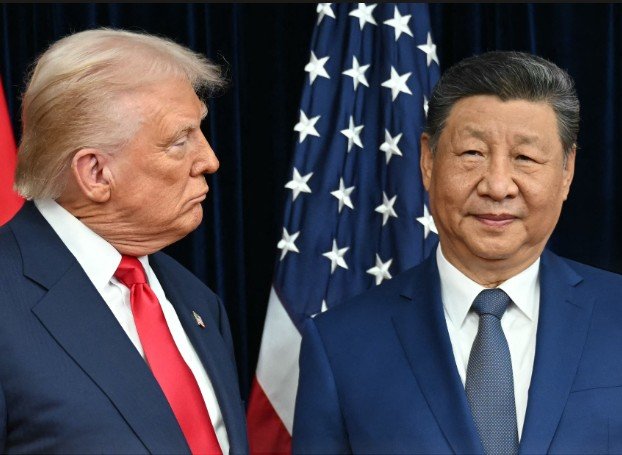
EVIAN-LES-BAINS, France, June 18: U.S. President Donald Trump on Wednesday expressed appreciation to Chinese President Xi Jinping and Russian President Vladimir Putin for maintaining what he described as a “neutral” position during the recent conflict involving Iran. Speaking after a ceasefire agreement was reached, Trump said the leaders of China and Russia refrained from taking steps that could have complicated Washington’s efforts to address Tehran’s nuclear program.
Addressing reporters at the Group of Seven (G7) summit in Evian-les-Bains, France, Trump credited both leaders with helping create conditions that allowed diplomatic efforts to succeed.
“I just want to thank them because they made it a lot better,” Trump said while discussing the ceasefire arrangement that brought an end to hostilities.
The U.S. president emphasized that neither Beijing nor Moscow intervened in a manner that would have increased tensions in the region, despite their longstanding political and economic ties with Iran.
Trump specifically praised Chinese President Xi Jinping, saying that Beijing chose not to become directly involved in the conflict. According to Trump, China’s decision to avoid providing major military assistance helped prevent further escalation.
“I want to thank China, President Xi. I was with him, and he stayed neutral, totally neutral, and I appreciate it,” Trump stated during the press conference.
The president also acknowledged Russian President Vladimir Putin, saying Moscow had similarly avoided actions that could have complicated the situation.
“And I want to thank Vladimir Putin, he was very neutral. They could have made it much more difficult for us,” Trump remarked.
The comments marked a notable contrast with Trump’s recent criticism of several U.S. allies. During and after the conflict, Trump had voiced frustration with some partner nations in Europe and Asia, arguing that they did not provide sufficient assistance either during military operations or in efforts to restore normal shipping through the Strait of Hormuz.
The strategic waterway, one of the world’s most important energy transit routes, faced major disruptions during the confrontation. The temporary blockage affected global shipping and raised concerns about energy supplies and international trade.
While Trump praised Beijing and Moscow, both countries had publicly expressed concerns over U.S. military actions against Iran.
Russia, which maintains close diplomatic and defense ties with Tehran, warned that the conflict carried the risk of triggering a wider regional arms race. Russian officials repeatedly urged restraint and called for negotiations to prevent further instability across the Middle East.
China also criticized U.S. military strikes, describing them as a violation of Iran’s sovereignty. Chinese officials called for dialogue and peaceful resolution of disputes while opposing military intervention.
Despite those differences, Trump suggested that behind the scenes cooperation from Beijing contributed to efforts aimed at ending the conflict.
According to the president, China refrained from supplying advanced military equipment that could have strengthened Iran’s capabilities during the crisis. Trump argued that such assistance could have significantly altered the course of the conflict and increased risks for U.S. forces and regional partners.
“They could have sent in an oil ship with six destroyers alongside of it, on each side. They didn’t do that,” Trump said.
The president went further, suggesting that Xi played a constructive role in encouraging a peaceful outcome.
“President Xi helped me. He tried to help, and I think he probably helped get it solved,” Trump added.
The remarks come amid continued scrutiny of China’s relationship with Iran. U.S. intelligence officials have reportedly assessed that Beijing supplied certain dual-use goods with potential military applications to Tehran. At the same time, Chinese independent refineries remained among the largest buyers of Iranian crude oil throughout the crisis despite existing U.S. sanctions.
China’s purchases of Iranian energy have long been a point of contention between Washington and Beijing, with American officials arguing that such trade provides economic support to Tehran. Chinese authorities, however, maintain that their commercial relations with Iran are legitimate and should not be subject to unilateral sanctions.
Analysts note that Trump’s comments reflect a pragmatic assessment of the conflict’s outcome. By publicly thanking Xi and Putin, the U.S. president appeared to signal that both powers exercised restraint at a critical moment, even while maintaining their own strategic interests in the region.
The ceasefire agreement has eased immediate fears of a broader regional confrontation, although questions remain regarding Iran’s nuclear ambitions, future sanctions, and the long-term stability of the Gulf region.
Diplomats are expected to continue discussions in the coming weeks aimed at preventing renewed tensions and ensuring freedom of navigation through key maritime trade routes. International attention will also remain focused on whether major powers can sustain cooperation in addressing future security challenges involving Iran.
Trump’s acknowledgment of both Xi and Putin underscores the complex geopolitical dynamics that emerged during the conflict, where rival powers often found themselves balancing strategic alliances with broader concerns about regional stability and economic security.

