


Trump Warns ‘China Will Eat Them Up’ as He Attacks Canada on Greenland Defence Plan
US President says Ottawa’s rejection of the Greenland-based missile shield and closer trade ties with Beijing could weaken its security position.
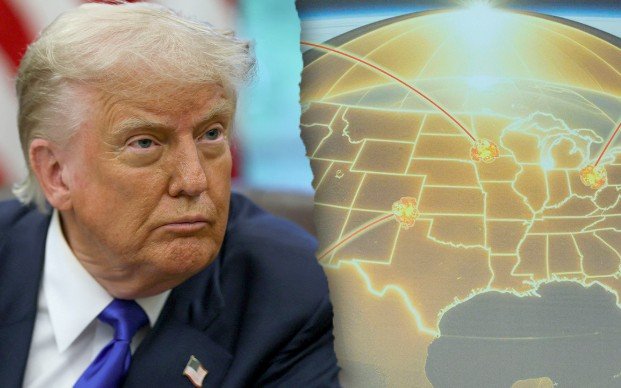
US, Jan 24 : US President Donald Trump has launched a scathing attack on Canada for opposing his proposed “Golden Dome” missile defence system, accusing Ottawa of undermining regional security while deepening economic engagement with China.
In a post on Truth Social, Trump argued that the defence project planned to cover Greenland would enhance protection for both the United States and Canada. He criticised Ottawa’s resistance to the initiative and contrasted it with what he described as a growing willingness to expand trade with Beijing.
“Canada is against The Golden Dome being built over Greenland, even though it would protect Canada,” Trump wrote, claiming that closer business ties with China could leave the country exposed. He warned that Beijing would “eat them up” if current policies continued.
Davos remarks sharpen diplomatic rift
The comments came days after Trump addressed the World Economic Forum in Davos, where he openly questioned Canada’s approach to defence cooperation. He suggested that the US bears a disproportionate share of North American security responsibilities and expressed frustration with what he described as a lack of appreciation from Ottawa.
During the forum, Trump also pointedly referenced Canadian Prime Minister Mark Carney, saying the missile defence plan would extend protection north of the US border and that Canada’s security depended heavily on Washington’s support.
Although Greenland was not directly linked to tariffs in Trump’s speech, Carney later criticised the use of economic pressure as a diplomatic tool, warning that global politics was entering a period of intensified rivalry and declining multilateral norms.
China trade deal intensifies tensions
Relations were further strained following Canada’s announcement of a new trade agreement with China earlier this month. The deal aims to expand Canadian exports and reduce dependence on a single trading partner, according to Ottawa.
Under the agreement, Canada will ease restrictions on Chinese electric vehicle imports while securing significant tariff reductions on agricultural exports such as canola. The Canadian government described the move as a strategic response to an increasingly fragmented global economy.
Carney has defended the outreach, arguing that economic engagement with China has delivered clearer outcomes at a time when trade relations with the US have become more unpredictable.
Canada is currently facing steep US duties on a range of goods, including metals and automobiles, adding to economic friction between the two long-time allies.
Strategic fault lines widen
The dispute highlights growing fault lines in US-Canada relations, with defence policy, trade diversification and great-power competition now intersecting in public exchanges. While both countries remain close allies, the Greenland missile defence proposal and Ottawa’s China pivot have exposed contrasting strategic priorities on the global stage.

