


Trump Warns of 100% Tariff on French Wine in Escalating Digital Tax Dispute
US President signals tough trade action against French exports, linking future market access to the removal of Paris' levy on major American technology firms ahead of the G7 summit.
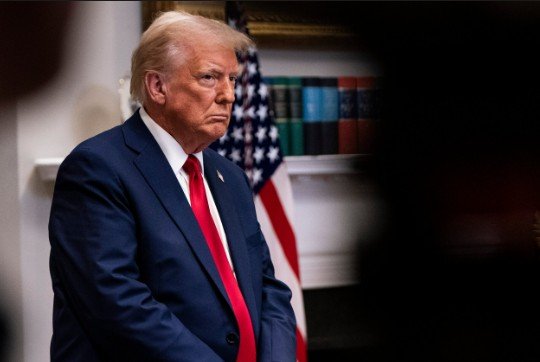
Washington/Paris, June 15 : A fresh trade confrontation is emerging between the United States and France after US President Donald Trump threatened to impose a 100 percent tariff on French wine and champagne imports if Paris refuses to withdraw its digital services tax targeting major American technology companies.
Speaking in an interview with the New York Post, Trump revealed that he had personally conveyed the warning to French President Emmanuel Macron, arguing that the French levy unfairly singles out US based technology giants. According to Trump, France must eliminate the tax or face severe trade consequences in one of its most valuable export markets.
The latest remarks have injected new tension into transatlantic relations at a time when leaders of the world’s major economies are gathering for the G7 summit in France. Analysts believe the issue could become one of the most contentious topics discussed on the sidelines of the international meeting.
Trump maintained that the digital tax places an unjust burden on American companies that generate significant revenue overseas. He argued that Washington cannot allow foreign governments to impose what it views as discriminatory taxes on US businesses without responding through trade measures.
The United States represents a crucial destination for French wine producers, accounting for a substantial share of annual export earnings. Industry estimates indicate that French wine and champagne sales in the American market exceed two billion dollars each year, making the US one of the sector’s most important customers.
French officials introduced the digital services tax in 2019 as part of a broader effort to ensure that multinational technology firms contribute more to national revenues. The measure applies a three percent charge on revenue generated within France by large digital companies whose global operations reach specific financial thresholds.
The policy affects several of the world’s biggest technology corporations, including Alphabet, Amazon, Meta and Apple. French authorities have consistently defended the tax, arguing that existing international taxation rules have failed to keep pace with the rapid growth of digital business models.
Unlike traditional corporate taxes that are based on profits, France’s digital levy is calculated on revenue generated from local users and services. Critics of the system argue that it disproportionately affects companies headquartered in the United States because they dominate many global digital markets.
The dispute gained renewed attention after members of France’s National Assembly debated proposals to strengthen the tax regime. Lawmakers voted in favor of increasing the rate and expanding its reach to cover more large technology firms. However, the proposed changes were later blocked by government ministers concerned about potential economic and diplomatic repercussions.
Political observers note that the debate over digital taxation has become increasingly complex as governments seek new ways to collect revenue from multinational corporations operating across borders. European nations have argued that many technology companies generate substantial earnings within their jurisdictions while paying comparatively low taxes under existing international frameworks.
Washington has repeatedly opposed such measures, contending that they unfairly target successful American enterprises. Successive US administrations have warned that unilateral digital taxes could lead to retaliatory trade actions if they are deemed discriminatory.
The current standoff reflects a broader disagreement over how digital economies should be taxed in an increasingly interconnected global marketplace. Efforts led by international organizations to develop a common framework have progressed slowly, leaving individual countries to pursue their own solutions.
A source close to the French presidency recently suggested that discussions surrounding digital taxation had largely been settled among major economies. However, American officials rejected that assessment, indicating that significant differences remain and that the matter continues to be a source of disagreement.
Trump’s latest warning revives a strategy that first emerged several years ago when US trade authorities considered imposing substantial tariffs on selected French products in response to the digital levy. Although earlier threats did not result in full implementation, they underscored Washington’s willingness to use trade policy as leverage during tax disputes.
The White House has also signaled a tougher approach toward foreign tax measures affecting American corporations. A presidential memorandum issued earlier this year instructed trade and treasury officials to review policies that could be viewed as unfair barriers to US businesses operating abroad.
Administration officials argue that protecting American companies from what they describe as excessive foreign taxation remains a key priority. They contend that digital taxes imposed by certain countries create an uneven competitive environment and discourage innovation and investment.
France, meanwhile, has defended its position by emphasizing the need for fair taxation in the digital era. Officials in Paris have maintained that multinational technology firms should contribute to public finances in countries where they generate significant revenue, regardless of where their headquarters are located.
The disagreement comes as several other countries reconsider similar tax policies. Canada previously suspended its digital tax plans following pressure from Washington and concerns about broader trade negotiations. Italy is also reported to be reviewing its approach amid discussions over economic relations with the United States.
The United Kingdom has chosen a different path, retaining its digital services tax while continuing to engage with US officials through existing trade channels. The varying responses highlight the challenges governments face in balancing domestic revenue goals with international economic relationships.
Industry groups on both sides of the Atlantic are watching developments closely. French wine exporters fear that any major tariff increase could significantly reduce their competitiveness in the American market, while US importers warn that consumers could face sharply higher prices if additional duties are imposed.
Trade experts caution that a prolonged dispute could affect sectors beyond wine and technology. Retaliatory measures often trigger wider economic consequences, creating uncertainty for businesses and investors operating across international markets.
As G7 leaders continue discussions on global economic challenges, the digital tax controversy is expected to remain a sensitive issue. Whether negotiations lead to a compromise or a further escalation will likely shape future trade relations between Washington and Paris.
For now, both governments appear determined to defend their respective positions. The coming weeks may prove crucial in determining whether diplomacy can ease tensions or whether the disagreement evolves into another significant chapter in the ongoing debate over global taxation and international trade policy.

