


UPSC at 100: Commission Looks to Make Examinations More Focused on Reasoning and Judgment
As the Union Public Service Commission completes a century, its leadership outlines a technology driven approach to recruitment while stressing reasoning, spontaneity and fairness in examinations.
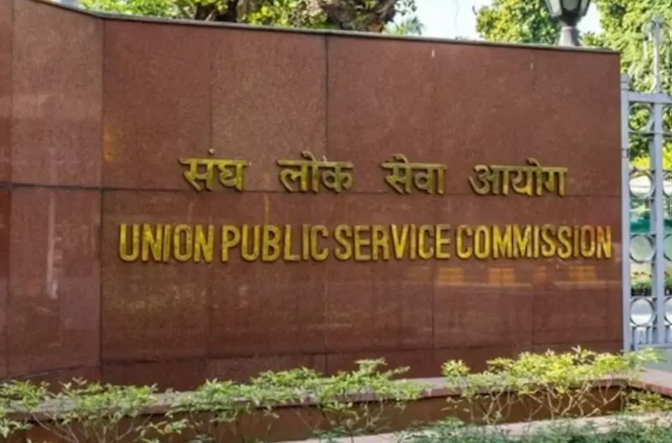
NEW DELHI, Oct 1: The Union Public Service Commission has marked 100 years of its institutional journey with discussions on how competitive examinations can evolve to assess candidates more effectively in a changing administrative environment.
At the centenary programme in New Delhi, UPSC Chairman Ajay Kumar highlighted the need for examinations to look beyond predictable or rehearsed responses and place greater emphasis on reasoning, spontaneous thinking and the ability to exercise judgment when faced with uncertain situations.
The two-day centenary programme, titled ‘Manthan’, began at Bharat Mandapam and brought together senior officials, policymakers and other participants to discuss the future of public service recruitment and administration. The celebrations are focused on the changing requirements of civil services as technology, governance systems and public expectations continue to evolve.
Kumar said the Commission’s approach for its next phase would be guided by three broad principles — trust, transparency and technology. While examination methods and digital systems may change, he stressed that merit, fairness and equal opportunity would remain central to the constitutional role of the institution.
A significant part of the discussion centred on the type of abilities that examinations should measure. According to Kumar, candidates should be assessed on their capacity to reason, respond spontaneously and make sound judgments in situations where there may not be a straightforward answer.
The emphasis represents a broader discussion about how competitive examinations can distinguish between genuine understanding and preparation based primarily on memorised or coached responses. For aspirants, such an approach could place greater importance on analytical ability, awareness and the capacity to apply knowledge to unfamiliar situations.
The UPSC chairman also referred to the importance of strengthening examination integrity through technology. Digital e-admit cards and face authentication were cited among the measures being used to improve security and ensure that examination procedures remain reliable.
The Commission conducts recruitment examinations for a wide range of disciplines. Kumar said the UPSC handles around 250 recruitment processes every year covering fields such as engineering, medicine, science, economics and defence. Its most prominent examination, the Civil Services Examination, is used to select candidates for services including the Indian Administrative Service, Indian Foreign Service and Indian Police Service.
The scale of this operation also requires extensive advance planning. The UPSC examination calendar is prepared around 18 months in advance, reflecting the number of examinations and recruitment processes handled by the Commission.
The centenary discussions also examined how recruitment can become more accessible to candidates from different parts of the country. Speakers discussed the need to widen participation from Tier-2 and Tier-3 cities as well as aspirational districts.
Such discussions are relevant to the changing geography of competitive examination preparation in India. A growing number of candidates prepare for government examinations outside traditional metropolitan centres, making access to reliable information, examination infrastructure and digital services an important part of the recruitment ecosystem.
Technology was another major theme during the discussions. Participants considered how artificial intelligence, data analytics and digital architecture could be used to improve administrative systems and reduce procedural delays.
The Commission has already introduced several technology-related measures. These include a Universal Registration Number introduced in 2025, randomised interview boards, a candidate helpdesk with a 30-channel IP call centre and a two-level escalation system. The UPSC has also expanded examination centres as part of its efforts to improve access and support candidates.
The discussions also connected recruitment reforms with the wider requirements of public administration. Speakers called for a civil service that can respond to rapid changes and work across traditional departmental boundaries.
Suman Sharma, a member of the UPSC, spoke about the need for outcome-driven administration and a shift from a largely procedural approach towards proactive facilitation. The discussions suggested that public administration is increasingly being evaluated in terms of its impact on citizens rather than simply the completion of administrative procedures.
Chief of Defence Staff Gen N S Raja Subramani highlighted the importance of overcoming departmental silos and taking informed decisions in an environment marked by rapid disruption and increasing interaction between civilian and military institutions.
Former Foreign Secretary and Rajya Sabha member Harsh Vardhan Shringla raised the issue of broadening recruitment from smaller cities and aspirational districts, while also discussing the participation of younger candidates in public service.
The programme also looked at integrity and fairness in recruitment. Shaktikanta Das, Principal Secretary-2 to the Prime Minister, described the UPSC as a gateway to public service and underlined the importance of integrity in the selection process.
The emphasis on fairness is particularly significant for an examination system that attracts a large number of candidates each year. Changes in digital authentication, candidate services and examination infrastructure are therefore being considered alongside questions about the design and content of tests.
The Commission’s centenary also provided an opportunity to examine its historical development. The first Public Service Commission in India was established on October 1, 1926, initially as an advisory body. It subsequently developed into an independent constitutional institution responsible for conducting recruitment examinations and advising the government on matters related to public services.
Over the past century, the nature of recruitment has changed substantially. The Commission has moved from paper-based processes to increasingly digital systems while retaining its constitutional responsibilities.
The latest discussions indicate that the next phase could involve further use of technology while placing greater attention on the qualities expected from future public servants.
For candidates, the evolving approach could mean that preparation increasingly requires more than the reproduction of prepared material. Reasoning, interpretation, problem-solving and the ability to respond to unfamiliar situations are likely to remain important areas of attention as examination systems develop.
The centenary programme therefore combines reflection on the UPSC’s institutional history with a discussion about the future of public recruitment. The central challenge is to modernise procedures without compromising the principles of merit, fairness and equal opportunity that underpin the Commission’s role.
As the UPSC enters its second century, its examination reforms are being discussed against a wider transformation in technology and governance. The Commission’s stated focus on trust, transparency and technology provides a framework for considering how recruitment can respond to these changes while maintaining public confidence in the selection process.

