


Urban Traffic Transformation
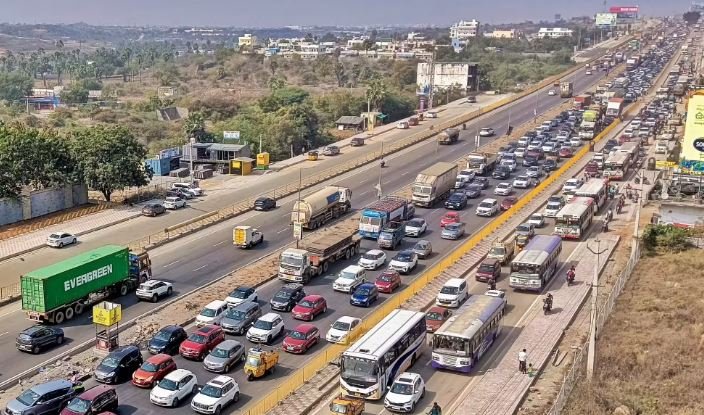
Urban traffic congestion has quietly emerged as one of the most persistent quality-of-life challenges in Jammu and Srinagar. Rapid urbanization, rising vehicle ownership, unplanned growth patterns, and competing demands on limited road space have combined to place immense pressure on existing transport systems. The result is familiar to every commuter in the twin capitals: longer travel times, increased accident risks, air and noise pollution, and growing public frustration. Addressing this challenge demands more than isolated interventions. It requires a coordinated, time-bound, and evidence-based governance framework that brings together multiple institutions, modern technology, and sustained public engagement.
A key shift now underway is the recognition that urban mobility is a shared governance responsibility involving multiple departments, including housing and urban development, transport, public works, municipal bodies, traffic police, planning authorities, and environmental agencies. This multi-agency approach recognizes the close connection between traffic challenges and broader urban design, infrastructure planning, and land-use decisions, necessitating comprehensive solutions. The emerging framework places a strong emphasis on transitioning from planning to execution. While various traffic studies and proposals have been prepared in the past, their impact has often been limited by delays, fragmented responsibilities, and weak follow-through. A time-bound implementation model, supported by budgetary backing, clear accountability, and regular monitoring, is considered essential to translate plans into visible improvements and to build public confidence. Technology-enabled traffic management is another important pillar of reform. Strengthening intelligent traffic management systems and linking them with integrated command and control centers can enable real-time monitoring, adaptive signal control, automatic violation detection, and faster incident response. When combined with trained personnel and clear operational protocols, these tools can enhance efficiency, improve compliance, and reduce dependence on manual enforcement. However, technology is viewed as an enabler rather than a standalone solution and must be supported by sound policy and institutional capacity. Infrastructure-led decongestion forms the backbone of practical intervention. Upgrading junctions and rotaries, developing dedicated bus bays, improving pedestrian corridors, creating organized parking spaces, and strengthening footpaths can collectively ease congestion and enhance safety. Identifying high-traffic corridors, providing alternative routes, rationalizing vending zones, and removing encroachments are also crucial to restoring order on congested stretches. Enforcement remains a critical component. The consistent use of e-challans, along with firm action such as suspension of driving licenses, registration certificates, and route permits for serious violations, reinforces the message that traffic rules are to be respected. For enforcement to be effective, it must be fair, transparent, and uniform, ensuring that citizens perceive the system as credible and just. Public awareness and participation are equally vital. Penalties alone will not be enough to keep traffic discipline going. Continuous communication, education campaigns, and community outreach help citizens understand the rationale behind route changes, parking restrictions, and no-honking zones, encouraging them to become active partners in reform rather than passive recipients of directives. Beyond local benefits, the traffic management initiatives in Jammu and Srinagar carry broader significance as a potential model for other growing cities facing similar challenges. We can address congestion, safety, and mobility issues in a structured and integrated manner through a multidisciplinary, technology-supported, and time-bound approach.
Ultimately, everyday improvements on the streets will measure success, not the number of plans or systems introduced. Smoother journeys, safer crossings, predictable travel times, and cleaner air are the outcomes that matter most to citizens. The twin capitals can move steadily toward a future where urban mobility supports economic activity, social well-being, and the aspirations of a growing population if there is strong political will, good coordination between departments, and a clear focus on execution.

