


Urmila Matondkar Pays Tribute to Classic Hindi Cinema With Vintage Rendition of Mere Piya Gaye Rangoon
The actress shares a black and white musical performance inspired by the golden era of Bollywood, celebrating the timeless appeal of old Hindi songs and cinema.
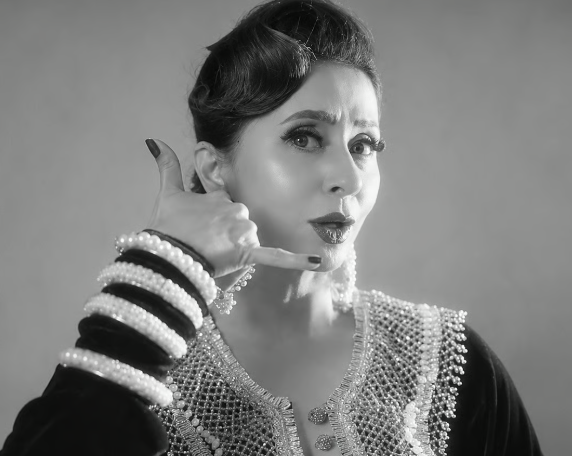
MUMBAI, Nov 5: Actress Urmila Matondkar has taken her followers on a nostalgic journey through the golden era of Hindi cinema with a special rendition of the classic song Mere Piya Gaye Rangoon, originally featured in the 1949 film Patanga.
The actress shared a black-and-white video of herself performing to the popular number on her official Instagram account on Thursday, paying tribute to the musical traditions and visual aesthetics of an era that continues to hold a special place in Indian cinema.
Dressed in a long kurta paired with a skirt, Matondkar completed her appearance with traditional jhumkas and a hairstyle inspired by the fashion of the period. The monochrome presentation added to the vintage atmosphere, recalling the visual style of films produced during the early decades of Hindi cinema.
Alongside the video, the actress expressed her affection for black and white films, old Hindi songs and the nostalgia associated with them.
Her post quickly attracted attention from social media users, particularly those who appreciate classic Bollywood music and the enduring popularity of songs from the industry’s early years.
A tribute to the golden era of music
Mere Piya Gaye Rangoon is among the memorable musical numbers associated with the 1949 film Patanga.
The song became popular for its distinctive musical arrangement, playful presentation and memorable melody. It featured the voices of Shamshad Begum and Chitalkar, with music composed by C. Ramchandra.
The original film starred Nigar Sultana, Shyam and Gope in important roles and remains associated with the musical culture of post-independence Indian cinema.
Matondkar’s decision to revisit the composition reflects the continuing appeal of older Hindi film songs, which have remained popular across generations.
Unlike contemporary music releases, many songs from the black-and-white era were remembered for their melodic compositions, distinctive vocal performances and storytelling through music.
The actress’s latest performance brings attention to that tradition while introducing the classic number to younger social media audiences.
The visual appeal of black-and-white cinema
The black-and-white presentation was an important part of Matondkar’s tribute.
Her traditional outfit, accessories and hairstyle were designed to reflect the fashion sensibilities associated with the period in which the original song was released.
The monochrome treatment also recreated the atmosphere of early Hindi cinema, when filmmakers relied heavily on expressions, lighting, choreography and carefully composed frames to create memorable visual experiences.
For many film enthusiasts, black and white movies represent an important phase in the development of Indian filmmaking.
The period witnessed the emergence of influential directors, performers, composers and playback singers who helped establish the foundations of the Hindi film industry.
Music played a particularly important role in the popularity of films during this era. Songs were often central to storytelling, helping communicate emotions, relationships and important developments in a film’s narrative.
Several compositions from the period continue to be performed, recorded and reinterpreted by contemporary artists.
Matondkar’s video is another example of how established songs can find new audiences through digital platforms.
Urmila Matondkar’s connection with Indian cinema
Matondkar has enjoyed a long association with the Indian entertainment industry, beginning her career as a child artist before becoming one of the prominent actresses of Hindi cinema during the 1990s and early 2000s.
She gradually established herself through performances in films across different genres, earning recognition for her screen presence, expressive acting and willingness to experiment with challenging roles.
Her filmography includes commercially successful productions as well as projects that received critical appreciation.
One of her most recognised performances came in Ram Gopal Varma’s Rangeela (1995), in which she starred opposite Aamir Khan and Jackie Shroff.
The film became a major turning point in her career, earning attention for its music, visual presentation and performances.
Songs from Rangeela became widely popular, with the film’s soundtrack remaining one of the memorable musical collections of the decade.
Matondkar subsequently appeared in several notable films, including Judaai, Satya, Kaun, Pyaar Tune Kya Kiya, Bhoot and Pinjar.
Her performances in psychological thrillers and dramatic films demonstrated her ability to move beyond conventional commercial roles.
In Satya, directed by Ram Gopal Varma, she portrayed Vidya, a character whose life becomes connected with the complicated world surrounding the film’s central protagonist.
She also received appreciation for her performance in Bhoot, a supernatural thriller that became known for its atmospheric storytelling.
These projects helped establish her as an actress capable of working across different cinematic styles.
Social media and the revival of old songs
Matondkar’s latest video also highlights the role social media platforms play in keeping older musical compositions relevant.
Classic Hindi songs have increasingly found new audiences through short videos, dance performances, musical covers and recreated versions.
Digital platforms allow listeners to discover recordings that were originally released decades ago, while established artists can introduce their favourite compositions through personal interpretations.
The popularity of retro music has also influenced contemporary entertainment, with filmmakers and music producers frequently incorporating older melodies into new projects.
However, nostalgia-driven performances offer something different from conventional remixes.
They allow artists to celebrate the original character of a composition while presenting it through their own creative expression.
Matondkar’s black-and-white performance follows this approach by focusing on the atmosphere of the original period rather than simply presenting the song as a contemporary dance number.
Her choice of styling and visual presentation reinforces the connection with the musical traditions that inspired the tribute.
Why classic Hindi music continues to attract audiences
The enduring popularity of old Hindi songs is closely connected with their emotional and cultural significance.
For audiences who grew up listening to these compositions, they often bring back memories of family gatherings, cinema visits and the musical preferences of earlier generations.
Younger listeners, meanwhile, are increasingly discovering retro music through streaming platforms and social media recommendations.
The compositions of C. Ramchandra, Naushad, S.D. Burman, Shankar-Jaikishan and other influential music directors continue to be appreciated for their distinctive arrangements and melodies.
Playback singers such as Lata Mangeshkar, Mohammed Rafi, Kishore Kumar, Mukesh, Geeta Dutt and Shamshad Begum also helped shape the identity of Hindi film music.
Their recordings remain an important part of India’s musical heritage.
Songs from the 1940s and 1950s, in particular, offer an insight into the artistic development of the Hindi film industry during a period when cinema was undergoing significant changes.
Matondkar’s tribute to Mere Piya Gaye Rangoon brings attention to this legacy and demonstrates how classic compositions can continue to connect with audiences through new interpretations.
A nostalgic moment for fans
The actress’s latest Instagram post has provided her followers with an opportunity to revisit a familiar musical favourite while appreciating the visual style associated with an earlier generation of cinema.
Her performance also reflects a broader trend among entertainment personalities who are increasingly using social media to share personal interests beyond their professional projects.
For Matondkar, the tribute was an expression of her appreciation for old Hindi songs and the memories associated with black-and-white cinema.
While contemporary Bollywood music continues to evolve with changing tastes and technology, classic compositions retain their distinctive appeal.
The response to such nostalgic performances demonstrates that the relationship between audiences and older film music remains strong.
Through her rendition, Matondkar has once again drawn attention to a memorable composition from Hindi cinema’s past, celebrating a musical tradition that continues to inspire performers and listeners alike.

