


US Charity Plans to Use AI to Monitor Gaza Classrooms for ‘Hateful’ Speech
Gaza Children Village intends to use artificial intelligence to identify allegedly hateful or inflammatory speech in classrooms, prompting concerns over student privacy, academic freedom and the risks of surveillance in a war ravaged territory.
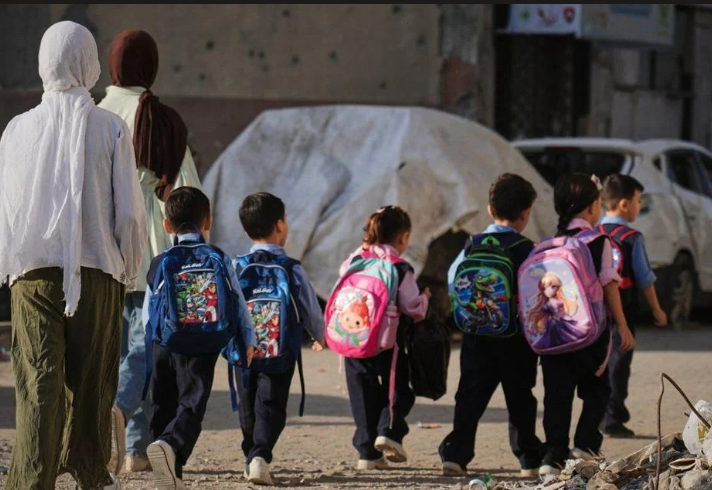
GAZA CITY, October 9: A US charity operating schools in Gaza plans to use artificial intelligence to monitor classroom conversations and identify language it considers hateful or inflammatory, a proposal that has triggered concerns among Palestinian rights advocates, education professionals and some of the organisation’s partners.
The initiative by Gaza Children Village is intended to ensure that teachers follow a curriculum that the charity says promotes peace and tolerance. However, critics have questioned whether recording classroom discussions could undermine students’ privacy, restrict open debate and create risks for teachers and children in a territory deeply affected by years of conflict.
The proposal has drawn particular attention because of widespread concerns about surveillance technology in Gaza, where Israel’s military has used artificial intelligence to analyse intercepted communications and identify potential targets during the war.
Although there is no indication that the charity intends to share classroom recordings with outside organisations, questions remain about how the monitoring system would operate, what language it would identify and whether teachers, students and their families have been informed about the arrangements.
The organisation has also faced criticism over its educational approach, with Palestinian rights groups arguing that decisions about Gaza’s schools should involve local communities and established educational institutions.
Charity founder says monitoring will support curriculum
Gaza Children Village was founded by Dr David Hasan, a neurosurgeon born in Kuwait to Palestinian parents who now teaches at Duke University medical school in Durham, North Carolina.
Hasan developed the initiative after volunteering at hospitals in Gaza during the war. He has said he wants to help break cycles of violence between Palestinians and Israelis by exposing children to perspectives that encourage tolerance and peaceful coexistence.
According to the charity, its educational programme seeks to remove material it considers supportive of violence or discriminatory beliefs while maintaining elements of the Palestinian Authority’s curriculum.
The organisation’s schools, known as Academies of Hope, provide education alongside meals, medical assistance and psychological support. The first school opened last summer, and the charity says its facilities in central and southern Gaza serve thousands of children, many of whom have lost parents or other relatives during the conflict.
During a webinar with humanitarian organisations in September, Hasan explained that classroom monitoring would help train teachers to follow the curriculum consistently.
He acknowledged that the proposal was controversial but argued that the monitoring system was necessary for the organisation to continue delivering its educational programme.
Hasan declined to comment on the matter for the news report or provide specific examples of changes made to the curriculum.
AI system would flag potentially harmful speech
Under the plan outlined by Hasan in communications and during the webinar, classroom conversations would be recorded and analysed using an AI-powered system designed to identify language categorised as antisemitic, hateful or inciting.
When the technology detects potentially problematic speech, it would send an alert to Hasan. He would then contact the teacher to discuss the circumstances and provide feedback, according to his explanation during the September webinar.
Hasan said recordings would be retained for 72 hours. A text message he sent before August, reviewed by The Associated Press, indicated that the technology had been tested and was intended for deployment across dozens of classrooms.
The proposed system raises questions about the ability of artificial intelligence to interpret language accurately, particularly in an educational environment where historical references, political discussions and sensitive subjects may require careful consideration.
AI systems can struggle to distinguish between hateful statements, criticism of political actors, historical descriptions and discussions intended to challenge prejudice. The meaning of a statement can also depend on the speaker’s intention, the surrounding conversation and the age of the students involved.
Without clear definitions, independent oversight and a reliable appeals process, automated alerts could lead to misunderstandings or unfair scrutiny of teachers and pupils.
The charity’s plan also raises questions about who would have access to recordings, how errors would be corrected and what protections would prevent information from being used beyond its stated educational purpose.
Privacy concerns in a conflict-affected territory
The proposal has generated particular unease because of the wider surveillance concerns experienced by Palestinians during the war.
Amjad Iraqi, a senior analyst covering Israel and the Palestinian territories at the International Crisis Group, said the extensive use of information and surveillance technology had left many Palestinians fearful that their communications and behaviour could be monitored.
In this environment, recording classroom conversations could create additional anxiety for teachers and students, even if the stated purpose is educational supervision.
Classrooms are generally expected to provide children with opportunities to ask questions, discuss difficult issues and develop independent thinking. Critics warn that continuous monitoring could discourage students from expressing themselves freely or discussing subjects they believe might attract unwanted attention.
Teachers may also become reluctant to engage in open conversations if they fear that statements taken out of context could trigger warnings or professional consequences.
The concerns are especially significant for children who have experienced displacement, bereavement and psychological distress. A learning environment that depends on trust and emotional security could be affected if students feel that their conversations are constantly being evaluated by automated systems.
The precise safeguards surrounding the proposed technology, including consent arrangements and procedures for handling sensitive information, remain unclear.
Board member questions the proposal
Bishara Bahbah, a Palestinian American political activist who serves on the charity’s board, said he had not been informed about the monitoring plans and that the issue had not been discussed with the board.
Bahbah distinguished between using cameras to assess classroom performance and employing surveillance to restrict conversations between teachers and students. He argued that monitoring should not prevent a free exchange of ideas in educational settings.
He also stressed that the immediate priority should be ensuring that more children in Gaza can return to classrooms, given the severe shortage of functioning schools.
An official at an aid organisation partnering with Gaza Children Village also expressed concern about the proposal. The official said the use of AI to monitor people’s speech could prompt the organisation to reconsider its relationship with the charity.
The official spoke anonymously because of concerns about jeopardising the group’s humanitarian work in Gaza.
The reaction highlights the potential consequences for partnerships between aid organisations, particularly when new technology raises questions about privacy, accountability and the treatment of vulnerable communities.
Six current and former teachers at the Academies of Hope declined to comment on the matter.
Questions over curriculum and educational independence
The monitoring proposal forms part of a wider debate about who should shape the education system in Gaza as reconstruction and recovery efforts continue.
The charity’s curriculum is largely based on material used by the Palestinian Authority, but Hasan has said that some content was removed because it allegedly glorified violence or promoted anti-Israel or antisemitic beliefs.
A 2026 report by the US Government Accountability Office examined textbook content previously identified by the United Nations as problematic. The examples discussed included references to martyrs in a mathematics exercise, the designation of Jerusalem as the capital of Palestine and an account of a Palestinian boy shot while demonstrating in support of Palestinians held in Israeli prisons.
These examples have formed part of a longstanding dispute over Palestinian educational materials and the way the Israeli-Palestinian conflict is presented to children.
The charity’s critics argue that decisions about curriculum changes should not be made without adequate consultation with Palestinian educators, families and relevant institutions.
Ines Abdel Razek, co-director of the Palestine Institute for Public Diplomacy, said the initiative raised concerns about attempts to influence the thinking of a new generation of Palestinians. She argued that established Palestinian educational institutions should be supported in rebuilding Gaza’s schools.
The Palestinian Authority has maintained that its curriculum promotes tolerance and justice. Government spokesperson Mohammad AbuAlrob said he did not have sufficient information about the charity’s educational programme to assess it, but argued that classroom surveillance would cross an important boundary.
Meanwhile, Israel has accused the United Nations Relief and Works Agency for Palestine Refugees, or UNRWA, of being infiltrated by Hamas. The agency denies the accusation.
Previous efforts to modify educational material
The controversy also recalls earlier attempts by UNRWA to adapt the Palestinian Authority’s curriculum to meet the agency’s standards on neutrality, nonviolence and nondiscrimination.
According to the Government Accountability Office report, those efforts encountered resistance from some teachers and members of the community.
Gaza Children Village has faced similar challenges as it seeks to establish an educational model that differs in certain respects from the existing system.
A staff member at the charity said some teachers and employees were worried about possible questioning by Hamas over the curriculum or were uncomfortable working with an organisation supported by Israeli aid groups. The staff member spoke anonymously because they were not authorised to comment publicly.
These concerns illustrate the difficult environment in which educational organisations are operating. Schools must provide learning opportunities for children while navigating political disagreements, security risks and competing expectations about what should be taught.
Introducing automated monitoring could add another layer of complexity, particularly if educators believe that the system may interpret classroom discussions without sufficient context.
Humanitarian needs remain urgent
The proposal comes amid a severe educational crisis in Gaza. UNICEF estimates that hundreds of thousands of children are out of school, while most schools have been damaged or destroyed during the war.
Many children have experienced prolonged interruptions to their education alongside displacement, family losses and psychological trauma. Restoring access to safe and consistent learning is therefore a major humanitarian priority.
Gaza Children Village says its schools provide educational services as well as meals and medical and psychological care. Such support can be particularly important for children whose families have lost access to basic services.
However, education specialists and rights advocates argue that rebuilding classrooms must also involve protecting children’s rights, ensuring the independence of teachers and maintaining a safe environment for discussion.
The debate over AI monitoring illustrates the difficulty of reconciling a charity’s stated educational objectives with broader concerns about privacy and community control.
While technology may help identify certain forms of harmful content, its use in classrooms requires clear boundaries, transparency and safeguards against misuse.
Uncertainty surrounds implementation
It remains unclear when the charity intends to introduce the monitoring system, which specific expressions would trigger alerts and whether teachers, students and their families have received detailed information about the programme.
There are also unanswered questions about how the system would distinguish genuine incitement from political discussion, historical references or criticism expressed in an educational context.
The charity’s plans have prompted calls for greater transparency and consultation with those directly affected. Any implementation is likely to face scrutiny over data protection, informed consent, accountability and the possibility of errors generated by automated speech analysis.
As Gaza’s education system struggles to recover from extensive destruction, the controversy highlights a broader question about the role of emerging technologies in humanitarian settings.
The challenge is to ensure that efforts to promote peaceful coexistence do not undermine the privacy, dignity and freedom of expression of the children and educators they are intended to serve.
For Gaza’s students, the priority remains access to safe classrooms, qualified teachers and an education that supports learning, critical thinking and their future prospects.

