


US Congress Approves $95 Billion Republican Budget to Support Iran War Efforts
Republican backed funding package clears the House by a razor-thin margin, sparking fierce debate over military spending, domestic priorities and election-year politics as Senate approval remains uncertain.
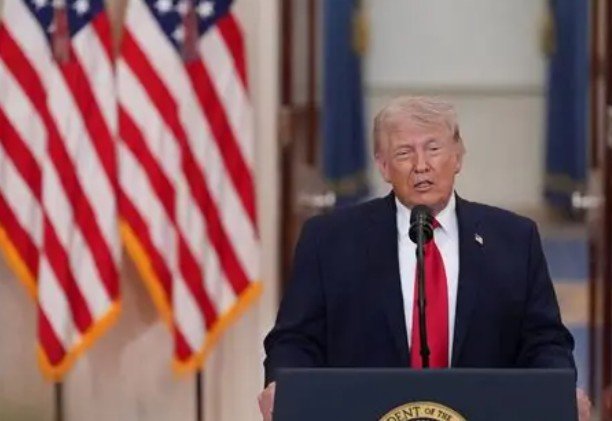
Washington: The US House of Representatives has narrowly approved a Republican-backed $95 billion budget resolution aimed at financing military operations linked to the Iran conflict while supporting several key priorities of President Donald Trump’s administration. The legislation, however, now heads into an uncertain future in the Senate, where lawmakers from both parties have expressed reservations over its contents and political implications.
The proposal was adopted in a close 216-214 vote, highlighting deep divisions within Congress. While the Republican leadership celebrated the outcome as a major legislative victory ahead of the midterm elections, Democrats strongly criticised the measure, arguing that billions of taxpayer dollars should instead be directed toward domestic programs addressing inflation, healthcare, education and economic challenges.
The budget package represents another attempt by House Republicans to move the administration’s agenda forward using the budget reconciliation process, allowing legislation to pass with a simple majority instead of overcoming the Senate’s 60-vote filibuster threshold.
Speaker Johnson Pushes Through Divisive Budget Proposal
House Speaker Mike Johnson pressed ahead with the legislation despite visible divisions within his own party. Fiscal conservatives had raised concerns that the proposal failed to include sufficient spending reductions to offset the additional federal expenditure.
Nevertheless, Johnson argued that advancing the resolution was essential to maintaining military readiness and ensuring the administration had the financial resources required to respond to ongoing security challenges in the Middle East.
The narrow passage underscored the fragile Republican majority, with two Republican lawmakers and one independent member joining Democrats in voting against the measure.
Supporters of the bill described the funding package as necessary to maintain America’s defence capabilities during a period of heightened regional instability.
Military Spending Dominates the Budget
The largest portion of the package is dedicated to defence and national security.
According to the proposal:
$60 billion has been allocated to the Pentagon for military operations and defence preparedness.
$13 billion is reserved for additional national security requirements.
$12 billion will provide assistance to American farmers affected by trade disruptions linked to Trump’s tariff policies.
$10 billion has been earmarked for election-related initiatives connected to the administration’s voting reforms, including measures associated with the SAVE America Act.
Republican leaders argued that the funding is essential to maintain operational readiness, support deployed military personnel and strengthen America’s strategic position overseas.
Republicans Defend National Security Priorities
Republican lawmakers insisted that the funding package focuses on protecting US interests and ensuring that military personnel have the resources needed during ongoing operations.
House Budget Committee Chairman Jodey Arrington described the proposal as providing the financial backing required to complete current military objectives.
Meanwhile, House Armed Services Committee Chairman Mike Rogers emphasised that regardless of political disagreements over the conflict, Congress has a responsibility to fund the armed forces, pay service members and maintain national security.
Republicans argued that delaying military appropriations could weaken defence preparedness at a time when tensions across the Middle East remain elevated.
Democrats Condemn War Spending
Democratic lawmakers launched a sharp attack on the legislation, accusing Republicans of prioritising overseas military campaigns over pressing domestic needs.
House Democratic Caucus Chairman Pete Aguilar argued that tens of billions of dollars allocated for military operations could instead be invested in lowering living costs, expanding healthcare, improving education and strengthening infrastructure.
House Democratic Leader Hakeem Jeffries also criticised the proposal, claiming the Republican budget placed military spending above assistance for vulnerable Americans, including low-income families, veterans and senior citizens.
Democrats maintained that the administration’s Iran strategy has failed to secure broad public support and questioned whether additional funding would produce meaningful strategic gains.
Congress Remains Divided Over Iran Conflict
The budget debate reflects a broader constitutional and political dispute over America’s military involvement in Iran.
Although US forces continue military operations authorised by the administration, Congress has not formally approved a declaration or authorisation for the expanded use of military force.
This has created a situation in which lawmakers are being asked to finance ongoing military actions while continuing to debate their legal and political legitimacy.
Several members of Congress have argued that legislators should have greater authority in determining how and when military operations continue.
Growing Pressure Following Military Casualties
The debate also comes amid renewed attention on the human cost of the conflict.
President Donald Trump recently attended the dignified transfer ceremony for four American service members killed in the Middle East, bringing the reported military death toll in the conflict to 18 personnel.
The fatalities have intensified public scrutiny of the administration’s military strategy and increased pressure on Congress to justify continued financial support for operations overseas.
At the same time, Defence Secretary Pete Hegseth informed senators during recent hearings that Pentagon resources are becoming increasingly strained despite receiving substantial defence funding under previous legislation.
Military officials have warned that sustained operations require additional appropriations to maintain equipment, personnel support and operational capabilities.
Budget Reconciliation Again Becomes Republicans’ Primary Strategy
House Republicans once again relied on the budget reconciliation process to advance the proposal.
Originally intended as a limited fiscal tool, reconciliation has increasingly become a preferred legislative strategy during periods of divided government because it allows budget-related bills to pass the Senate with a simple majority.
Republicans previously used reconciliation to approve major tax legislation, spending reductions and homeland security funding despite unified Democratic opposition.
Johnson’s leadership has continued that approach, describing reconciliation as the most effective means of advancing the administration’s agenda in a politically divided Congress.
Internal Republican Opposition Remains
Although most Republicans ultimately supported the package, opposition within the party highlighted lingering concerns over federal spending.
Some conservatives objected to approving billions in new expenditures without accompanying reductions elsewhere in the federal budget.
Others questioned whether Congress should play a stronger role in determining the future direction of the Iran conflict before authorising additional military funding.
The presence of Republican dissent demonstrated that defence spending continues to divide fiscal conservatives even during periods of heightened international tensions.
Senate Presents the Next Major Challenge
Despite clearing the House, the proposal now faces significant uncertainty in the Senate.
Senate Majority Leader John Thune has not committed to bringing the House version to a vote, acknowledging that Republican senators remain divided over several provisions.
Some Senate Republicans believe defence funding should be increased even further, while others insist any additional spending must be balanced through reductions elsewhere in the federal budget.
Those competing priorities could substantially reshape the legislation before any final agreement is reached.
Government Funding Deadline Adds Pressure
The Senate leadership is simultaneously focused on preventing another federal government shutdown before current funding expires on September 30.
Thune has indicated that passing a temporary continuing resolution remains his immediate priority to ensure uninterrupted government operations.
If negotiations over regular appropriations stall later this year, Senate leaders may revisit the House-approved budget resolution as a legislative vehicle to address broader funding issues.
Such a strategy could allow portions of the proposal to move forward while avoiding a prolonged budget impasse.
Voting Reform Provision Sparks Additional Debate
One of the most politically sensitive sections of the package involves funding connected to the administration’s election reforms under the SAVE America Act.
The proposal would support measures requiring documentary proof of US citizenship before individuals can register to vote in federal elections.
Supporters argue the changes would strengthen election integrity.
Critics, however, contend that federal law already prohibits non-citizens from voting and warn that additional documentation requirements could create unnecessary obstacles for eligible American voters.
The issue has also generated disagreement within the Republican Party, with several Senate Republicans expressing reservations about the proposal’s prospects.
Future of the Budget Package Remains Unclear
With the House approval complete, congressional committees would now begin drafting detailed legislative language if the resolution advances further.
Republican leaders hope to complete that work during the summer before seeking final votes after lawmakers return from the August recess.
However, substantial negotiations are expected in the Senate, where lawmakers are likely to propose numerous amendments affecting defence funding, domestic spending and election-related provisions.
Until both chambers agree on identical legislation, the future of the US House $95 billion GOP budget remains uncertain, leaving one of the administration’s most ambitious funding proposals awaiting its toughest political test yet.

