


US Economic Pressure Deepens Hardship in Iran’s Port City
Port activity, trade and retail sales slump as the Strait of Hormuz city struggles under the impact of the US blockade and ongoing war
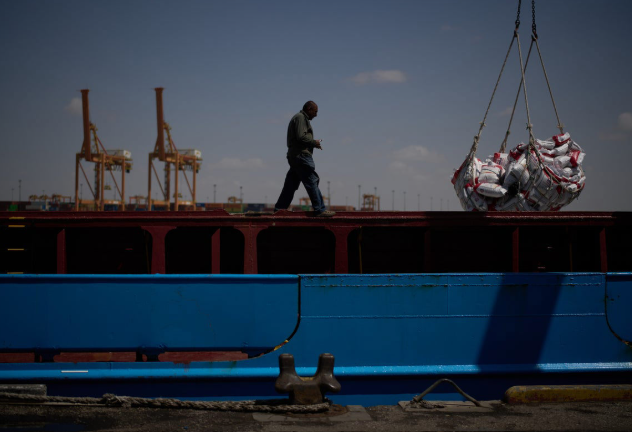
BANDAR ABBAS, Iran, Sept 8: The once bustling waterfront of Bandar Abbas on the Strait of Hormuz has grown noticeably quieter, with fewer boats, trucks and workers moving through the port as the economic fallout from the ongoing war and tightening US measures weighs heavily on the Iranian city.
The Associated Press, which visited the city after fresh US airstrikes hit coastal areas over the past week, reported growing anxiety among residents over jobs, incomes and access to essential goods. Anger toward Washington was also evident among people who say they have borne the consequences of the conflict without seeing any improvement in their daily lives.
Taxi driver Hamid Hajizadeh said he struggled to understand US actions in Iran.
“They are heroes in movies, but here they killed people in schools, wedding ceremonies and other places. They bombed roads and bridges,” he said.
With a population of more than 700,000, Bandar Abbas occupies a strategically important position along the Strait of Hormuz, one of the world’s most significant energy-shipping routes. Residents say that proximity has brought increasing uncertainty and disruption rather than economic benefits during the past six months.
Port activity collapses
Mohammad Torabian, who provides services to passengers at a local dock, said activity has dropped dramatically since the war began.
Before the conflict, as many as 50 trucks carrying food and meat would reportedly unload at the dock each day. The situation has changed sharply amid the US blockade aimed at restricting Iran’s oil exports.
“The business right now is terrible,” Torabian said, estimating that around 500 people previously earned their livelihoods in and around the dock. “There is no job here,” he added.
Bandar Abbas’ economic fortunes have historically been closely linked to maritime trade and the nearby Shahid Rajaee port, one of Iran’s largest commercial facilities. According to Iran’s state-run IRNA news agency, the port has the capacity to handle up to 100 million metric tons of cargo annually.
Iranian officials have strongly condemned the US blockade, which Washington first imposed in April and later renewed after negotiations with Tehran over a possible path toward ending the war broke down.
The United States has indicated that it intends to increase economic pressure linked to the Strait of Hormuz, a vital route for the international movement of oil, natural gas and related products.
Iranian Parliament Speaker Mohammad Bagher Qalibaf, who was involved in the failed negotiations with Washington, warned earlier this month that any escalation of the blockade could trigger a military response.
Trade businesses feel the impact
The economic strain has extended well beyond port workers. Customs agencies, importers and small businesses are also reporting steep declines in activity.
Mahsa Shojaei, an accountant at a customs-clearing company, said the firm previously handled substantial imports of rice, tea and coffee from India and Pakistan.
She estimated that between 80% and 90% of the company’s workload has disappeared since the conflict intensified. A business that could previously process about 100 customs-clearance files during a comparable period is now handling only around 10, she said.
At the same time, the expense involved in moving cargo through customs has increased, adding further pressure on businesses already struggling with reduced trade.
Falling incomes hit retailers
The downturn has also reached Bandar Abbas’ retail markets, where merchants are confronting weaker demand as Iran’s currency falls to record lows and household purchasing power declines.
Children’s clothing seller Mehrdad Jahangiri said his sales have dropped by roughly half compared with the same period last year.
“There are simply no customers,” he said, describing the market as unusually quiet.
The conflict began shortly before Nowruz, Iran’s traditional New Year and one of the country’s busiest shopping periods. Retailers had expected families to spend more during the celebrations, but the war severely disrupted those expectations.
Another important period is now approaching as schools prepare to reopen later in September. Families normally purchase new clothes and other supplies for their children, but Jahangiri said the usual crowds have failed to appear.
His shop has at times struggled to meet rent payments and accumulated debts with suppliers, a situation he said was previously uncommon.
“People’s pockets are empty and incomes have fallen,” Jahangiri said.
He said his family has also been forced to reduce everyday spending.
Some retailers have attempted to cope by offering discounts or allowing trusted customers to pay in instalments.
Fishermen and boat operators face new risks
For those whose livelihoods depend directly on the sea, the crisis has created both financial and safety concerns.
Abbas Golzanaei, a motorboat driver who transports passengers to ships and nearby ports, said he previously travelled as far as 30 miles (48 kilometres) offshore for work.
“Before the war, business was good,” he said. “Now I can’t go beyond seven or eight miles. The sea is not safe.”
The reduced operating range has left him with fewer passengers and a sharp decline in earnings. He also said obtaining fuel has become increasingly difficult.
“We have difficulty getting gasoline,” Golzanaei said.
As evening falls over Bandar Abbas, cargo ships can still be seen offshore, but their presence reflects the uncertainty surrounding the city’s maritime economy. For workers, traders and families onshore, the once-busy port has become a symbol of an economy caught between geopolitical confrontation and an increasingly difficult struggle to make ends meet.

