


US Industry, Lawmakers Urge Trump to Block Chinese Car Entry Ahead of Xi Summit
Lawmakers, automakers and unions warn that allowing Chinese vehicle brands into America could threaten national security and damage domestic manufacturing.
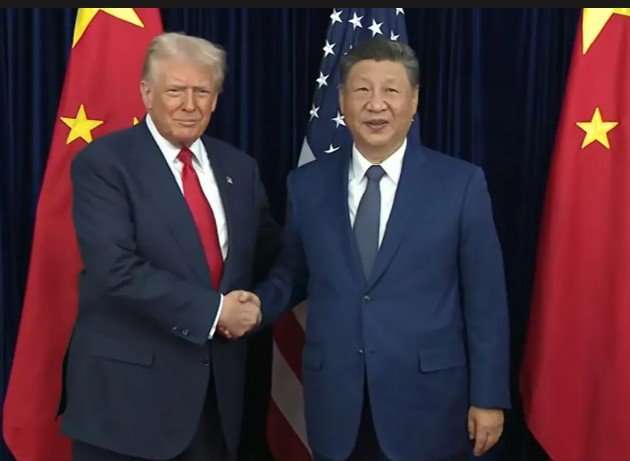
US, May 11 : As US President Donald Trump prepares for a high-stakes meeting with Chinese President Xi Jinping this week, America’s automotive industry and bipartisan lawmakers are intensifying pressure on the White House to prevent Chinese automakers from gaining access to the US vehicle market.
The growing debate comes after Trump recently stated that he would welcome Chinese companies building manufacturing plants in the United States if they created jobs for American workers. Speaking earlier this year at the Detroit Economic Club, Trump said he would support foreign automakers, including Chinese firms, investing in American production facilities.
However, the comments triggered widespread concern among automakers, steel producers, suppliers, labor unions and members of Congress who fear Chinese electric vehicle manufacturers could rapidly dominate the American market with heavily subsidized low-cost vehicles.
Industry groups argue that Chinese automakers benefit from extensive government backing, advanced battery technology, large-scale production capacity and aggressive pricing strategies that US companies would struggle to match. Critics warn that opening the market could weaken America’s manufacturing base and threaten thousands of industrial jobs.
Democratic Senator Elissa Slotkin publicly urged Trump not to negotiate any agreement with China that would allow Chinese-brand vehicles to be sold through American dealerships. Speaking again in Detroit, Slotkin warned against what she described as a potentially damaging economic deal with Beijing.
Slotkin and Republican Senator Bernie Moreno are jointly backing legislation known as the Connected Vehicle Security Act. The proposed bill seeks to permanently enforce restrictions introduced during former President Joe Biden’s administration that effectively block Chinese-connected vehicles from entering the US market over data security concerns.
Lawmakers supporting the measure argue that modern vehicles collect massive amounts of real-time information, including driver movements, location data, infrastructure details and communications systems. They say allowing Chinese-linked technology into American transportation networks could create significant national security risks.
In the House of Representatives, bipartisan support for tougher restrictions is also growing. Representatives Debbie Dingell and John Moolenaar have endorsed legislation that would go even further by restricting partnerships between US automotive companies and Chinese firms.
Congressional aides indicated that the legislation has strong bipartisan backing and could potentially be attached to a transportation spending package later this year.
The American automotive sector has shown rare unity on the issue. Organizations representing domestic automakers, foreign vehicle manufacturers operating in the US, auto dealers and parts suppliers have all urged the administration to maintain strict barriers against Chinese automotive imports.
Steel industry associations have echoed similar concerns, warning that Chinese expansion into the US auto sector could severely impact American steel production and industrial employment. Meanwhile, policy analysts at the Information Technology and Innovation Foundation stated that Chinese electric vehicle companies represent more than ordinary market competition because of extensive state support from Beijing.
Industry experts point to developments in Europe and Mexico as evidence of how quickly Chinese brands can expand internationally. Chinese automakers have steadily increased their market share across Europe by offering cheaper electric vehicles at prices significantly lower than Western competitors.
In Mexico, more than 30 Chinese auto brands are already competing aggressively, accounting for a growing share of the country’s automobile sales. Analysts say affordable pricing has become particularly attractive as consumers worldwide face rising living costs and higher fuel prices.
Automotive executives warn that the US market could face similar disruption if Chinese brands are allowed entry. The average new vehicle price in the United States now exceeds $51,000, making consumers increasingly interested in lower-cost alternatives.
Executives from Japanese automaker Toyota Motor Corporation also acknowledged the challenge posed by Chinese pricing strategies in overseas markets. Company officials noted that many Chinese electric vehicles are being sold at prices difficult for global competitors to match profitably.
Despite growing pressure, US Trade Representative Jamieson Greer recently stated that automobile access was not expected to be part of discussions during the upcoming summit with Xi. Commerce Secretary Howard Lutnick has similarly expressed opposition to Chinese investment in the American auto sector.
Still, manufacturing advocates remain cautious. Some industry groups fear Trump could independently pursue investment agreements aimed at boosting US factory construction, even if long-term consequences emerge after his presidency.
Observers say the outcome of the Trump-Xi discussions could significantly shape the future of the global electric vehicle market, US-China trade relations and the competitiveness of America’s automotive industry in the years ahead.

