


US Military Strikes Three Iranian Oil Tankers After Missile Attack on Navy Ships
American military says two vessels were disabled and a third destroyed as Washington warns it could target Iran’s exposed oil fleet.
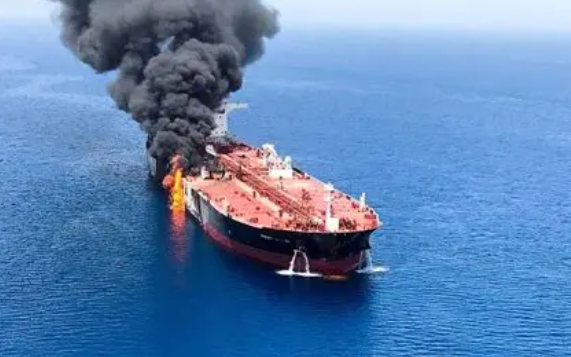
CAIRO, Sept 5: US forces struck three Iranian oil tankers after American Navy vessels came under what the US military described as multiple missile attacks, escalating hostilities between Washington and Tehran.
US Central Command said Saturday that an American aircraft carrier and a destroyer avoided several “unprovoked” Iranian attacks while operating in the region. No US personnel were reported injured.
According to the military, two Iranian oil carriers were permanently disabled, while a third vessel, which was carrying no cargo, was destroyed. The United States said the ships were connected to a shadow network used to generate revenue for Iran’s Islamic Revolutionary Guard Corps and its regional armed allies.
“We will not hesitate to defend American forces, and if necessary, destroy Iran’s limited and exposed oil fleet,” said Adm. Brad Cooper, head of US Central Command.
Iran had not immediately issued an official response to the US military’s account.
Tankers targeted near key Iranian oil facilities
Iranian state television earlier reported that four US missiles struck a tanker roughly 10 kilometres from Kharg Island, a strategically important oil terminal through which much of Iran’s crude exports pass.
Kharg Island has been repeatedly targeted during the conflict, including US attacks on military installations in March.
The US military said one tanker was hit off Kharg Island, while another was struck near Jask, east of the Strait of Hormuz. The third vessel, which was empty, was attacked in the Gulf of Oman. Its crew was instructed to abandon the ship, according to the American military.
Iranian state broadcaster later reported that crews from two of the targeted tankers had evacuated.
Fighting intensifies after months of fluctuating conflict
The latest attacks came a day after US President Donald Trump described the ongoing confrontation as “small potatoes,” despite a renewed escalation in military operations.
The two countries have experienced periods of intense fighting and relative calm since the conflict began with US and Israeli strikes on Iran on February 28. Attempts to negotiate an end to hostilities have since broken down, while both sides have continued to target military and economic interests.
The latest escalation also follows the resumption of attacks around the Strait of Hormuz, a critical international shipping route for global oil and gas supplies.
At least five people were killed earlier this week during US bombardment in southern Iran, according to Iranian reports. One of the strikes hit an area where a wedding celebration was taking place.
Among those injured was 13-year-old Masoumeh Zarei, who was travelling to the wedding when a telecommunications tower was hit. She was knocked unconscious and later regained consciousness in a hospital.
“I had made my nails really pretty for the party, but everything changed,” she told The Associated Press while receiving treatment.
Her 14-year-old friend, Kiana Karimi, was also wounded and remained in intensive care. She said several explosions struck the area.
Washington turns to economic pressure
The renewed military action follows recent US efforts to increase economic pressure on Tehran. Iran’s leadership has indicated that it is prepared to withstand additional sanctions, while President Masoud Pezeshkian’s elected government has continued to support negotiations.
Iran has relied on a network of vessels operating outside conventional shipping channels to move crude despite international sanctions. The United States says the shadow fleet has helped Tehran maintain oil revenues and finance the Revolutionary Guard and affiliated armed groups.
The conflict has also remained closely tied to Iran’s nuclear programme. Negotiations between Washington and Tehran collapsed shortly after the two sides signed a memorandum of understanding in June.
Diplomats have said the United States, Britain, France and Germany are seeking to refer Iran to the UN Security Council over allegations that Tehran has failed to meet its nuclear non-proliferation obligations.
Strait of Hormuz becomes key pressure point
With diplomatic efforts stalled, the Strait of Hormuz has emerged as a major source of leverage for Tehran.
Iran has asserted greater control over the waterway and has targeted some vessels, while the US military has assisted commercial ships navigating the strategic passage.
However, shipping traffic through the strait remains significantly lower than normal amid continued security concerns.
The latest attacks on Iranian oil tankers mark another major escalation in the confrontation, as Washington seeks to combine military action with economic pressure on Tehran.

