


US Navy Repels Iranian Assault in Strait of Hormuz
US Navy Responds to Iranian Assault in Gulf Waters
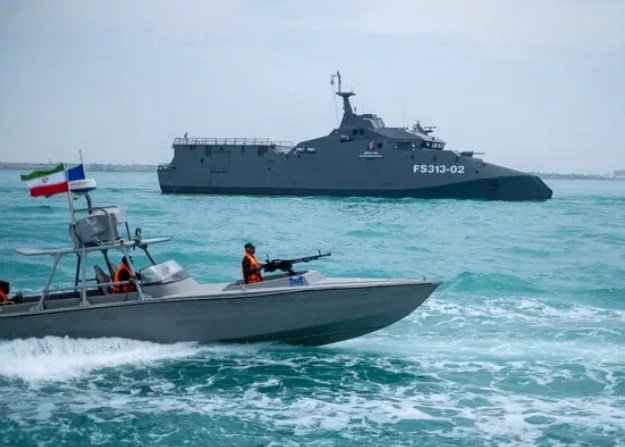
DUBAI: Fresh tensions erupted in the Persian Gulf on Thursday after the United States military confirmed that it intercepted attacks launched by Iran against three American Navy vessels operating in the strategically vital Strait of Hormuz. The confrontation has raised new concerns over the stability of the fragile ceasefire currently in place between Washington and Tehran.
According to the U.S. Central Command, American forces carried out defensive operations after what officials described as “unprovoked attacks” targeting U.S. warships in the region. The military stated that retaliatory strikes were launched against Iranian military positions believed to be responsible for coordinating the assault. Officials stressed that none of the Navy ships suffered damage during the exchange.
Despite the military confrontation, U.S. authorities maintained that Washington is not seeking a wider conflict in the region. The Pentagon reiterated that American forces remain prepared to defend personnel and assets stationed across the Middle East.
President Donald Trump addressed the incident while commenting on the ongoing ceasefire efforts, asserting that the truce remains intact despite the latest violence. Trump warned Tehran against further provocations and said the United States would respond forcefully to any future attacks.
Meanwhile, Iranian state-linked media outlets reported military activity near Qeshm Island in the Persian Gulf, where exchanges of fire allegedly took place between Iranian defense units and hostile forces. The island, which hosts important civilian infrastructure including a desalination plant, is considered strategically important due to its proximity to vital shipping lanes.
Additional reports from Iranian media described explosions and air defense activity in western Tehran and areas near Bandar Abbas. However, Iranian authorities did not immediately identify the source of the blasts or provide details regarding casualties or damage.
The renewed hostilities came amid rising international concern over maritime security in the Strait of Hormuz, one of the world’s most critical energy transit routes. Earlier in the day, shipping analysts reported that Iran had established a new government mechanism to regulate and tax commercial vessels passing through the narrow waterway.
The development has alarmed global shipping companies and energy markets, particularly as hundreds of commercial vessels remain delayed inside the Persian Gulf waiting for safer passage into international waters. Analysts fear the additional controls could disrupt global oil supply chains and further increase geopolitical uncertainty in the region.
Although the ceasefire brokered earlier this year has largely reduced direct military confrontation since April, diplomatic negotiations aimed at ending the conflict permanently remain uncertain. The war initially escalated following U.S. and Israeli strikes against Iranian facilities in February, triggering months of military exchanges and regional instability.
Iranian Foreign Ministry spokesperson Esmail Baghaei said Tehran is currently reviewing fresh proposals from the United States regarding a possible peace agreement. He confirmed that messages delivered through Pakistani mediators were being considered, though no final response had yet been issued by Iranian leadership.
Diplomatic activity continued on multiple fronts as U.S. Secretary of State Marco Rubio met with Pope Leo XIV at the Vatican to discuss broader peace efforts in the Middle East and the growing concerns surrounding the Iran conflict.
The Trump administration has delivered mixed signals in recent weeks regarding its long-term strategy. While officials have repeatedly spoken about ending military operations, Washington has also warned of renewed strikes if Tehran refuses to accept terms tied to the restoration of disrupted oil and natural gas exports.
Speaking after Thursday’s confrontation, Trump again warned Iran that failure to finalize a diplomatic agreement could result in severe consequences. At the same time, he suggested that negotiations could still succeed in the coming days, though uncertainty continues to dominate the situation.
Pakistan has remained actively involved in mediation efforts. Pakistani Foreign Minister Ishaq Dar reportedly spoke with Iranian Foreign Minister Abbas Araghchi to discuss prospects for a negotiated settlement. Islamabad expressed hope that all parties would move toward a peaceful and sustainable resolution capable of restoring stability across the Middle East and international markets.

