


US Offers to Secure Strait of Hormuz as Trump Urges Global Reimbursement
US President says Washington is prepared to oversee the strategic maritime corridor, while fresh strikes on Iranian targets intensify tensions and raise concerns over global energy security.
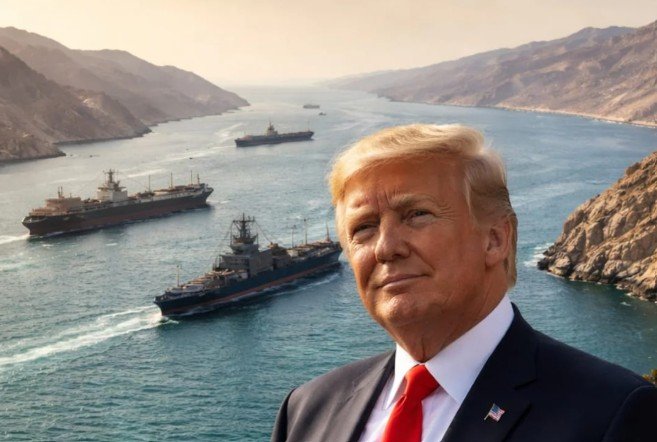
WASHINGTON, July 13: US President Donald Trump has announced that the United States is prepared to assume the role of the “guardian” of the Strait of Hormuz, one of the world’s most strategically significant maritime routes, while urging allied nations to contribute financially to maintaining security in the region. His remarks come amid escalating military tensions between Washington and Tehran following a fresh round of US strikes targeting Iranian military infrastructure.
Speaking during an interview with Fox News’ “Fox & Friends”, Trump argued that the United States has spent decades protecting one of the world’s busiest oil transit corridors without receiving any financial support from countries that benefit from its security.
“We’re going to keep the strait, and we’ll probably run it,” Trump said, adding that Washington could become the “guardian” or even the “guardian angel” of the vital waterway. He maintained that nations relying heavily on energy shipments passing through the Strait of Hormuz should help bear the cost of ensuring its safety.
Trump Urges International Burden Sharing
Highlighting America’s long-standing military presence in the Gulf region, Trump said the US has protected commercial shipping routes for nearly half a century without compensation.
According to the President, wealthy partner nations have benefited significantly from secure maritime trade while Washington has shouldered the responsibility almost entirely on its own.
Trump argued that a new framework should require allied countries to reimburse the United States for maintaining regional security operations, especially at a time when geopolitical risks have sharply increased.
The proposal reflects his broader policy position that America’s allies should contribute more toward collective security arrangements instead of depending primarily on US military resources.
Fresh US Military Action Targets Iran
Trump’s comments followed an announcement by the United States Central Command confirming another series of precision strikes against Iranian military positions.
According to US officials, the latest operations were designed to weaken Tehran’s ability to threaten international shipping passing through the Strait of Hormuz.
Military planners believe reducing Iran’s operational capabilities would help maintain freedom of navigation for commercial vessels and reduce risks to global energy supplies.
The renewed military campaign comes after several days of heightened confrontation in the Gulf, where concerns over potential disruptions to oil exports have grown among international markets.
President Claims Iran’s Military Has Been Weakened
During the interview, Trump asserted that Iran’s military infrastructure had suffered substantial damage following recent American operations.
He claimed that significant portions of Iran’s naval assets, missile systems and air force capabilities had been degraded, limiting Tehran’s ability to challenge US forces or interfere with maritime traffic.
While independent verification of those claims remains unavailable, the administration has maintained that its military actions are intended to deter future attacks against commercial shipping and regional allies.
The President insisted that maintaining pressure on Iran remains necessary to preserve stability across the Gulf region.
Negotiations Face Fresh Obstacles
Trump also offered details regarding ongoing diplomatic contacts between Washington and Tehran.
According to the President, Iranian representatives participated in lengthy negotiations lasting nearly eleven hours, during which both sides reportedly reached a preliminary understanding.
However, Trump alleged that Iranian negotiators later attempted to revise parts of the agreement after initially accepting the proposed terms.
He stated that the United States was unwilling to reopen negotiations or modify the framework once consensus had already been reached.
Although no official confirmation has been released by Iranian authorities regarding the President’s account, diplomatic engagement between the two countries remains uncertain following the latest military escalation.
Strategic Importance of the Strait of Hormuz
The Strait of Hormuz remains one of the world’s most critical maritime chokepoints, connecting the Persian Gulf with the Gulf of Oman and the Arabian Sea.
A significant share of globally traded crude oil and liquefied natural gas passes through the narrow waterway every day, making uninterrupted navigation essential for international energy markets.
Any disruption in the passage of tankers through the strait has the potential to trigger volatility in oil prices, affect shipping costs and create wider economic uncertainty across importing nations.
Because of its strategic location, the region has long remained at the centre of geopolitical competition involving the United States, Iran and Gulf countries.
Global Markets Watching Closely
Energy analysts continue to monitor developments around the Strait of Hormuz, warning that sustained military confrontation could increase insurance premiums for commercial shipping and place additional pressure on global fuel markets.
Several importing nations remain concerned about maintaining uninterrupted energy supplies, particularly as international demand continues to recover.
Security experts note that while diplomatic channels remain open, further military exchanges could complicate efforts to restore stability in the Gulf.
Regional Tensions Remain Elevated
Trump’s latest remarks underline Washington’s determination to maintain a strong security presence in one of the world’s most strategically sensitive waterways.
At the same time, his proposal that allied nations reimburse the United States for protecting the Strait of Hormuz signals a renewed push for greater burden-sharing in international security operations.
With military activity continuing and diplomatic negotiations facing uncertainty, the Strait of Hormuz is expected to remain a focal point of global strategic attention in the coming weeks.

