


US Supreme Court to Review Legality of Trump’s Order Ending Birthright Citizenship
Court to take up challenge to Trump’s executive order halting citizenship for children of noncitizens, decades old interpretation of the 14th Amendment now under scrutiny.
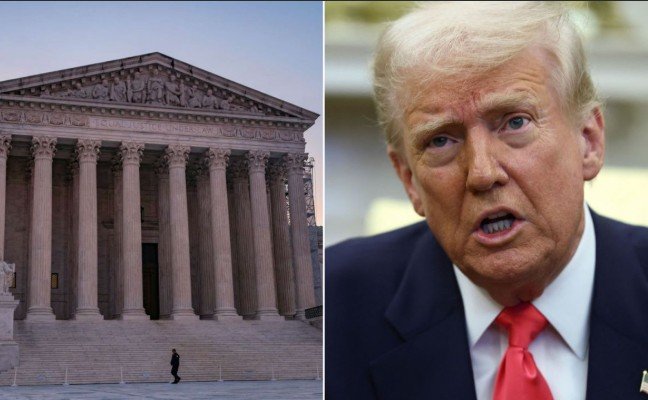
US, Dec 06 : The US Supreme Court has agreed to review the legality of President Donald Trump’s executive order seeking to end birthright citizenship, a principle widely regarded as settled constitutional law for more than a century.
Shortly after taking office on January 20, Trump signed an order directing federal agencies to stop recognising citizenship for children born after February 19 if neither parent is a US citizen nor a lawful permanent resident, Xinhua reported.
Legal Basis of the Administration’s Argument
The Trump administration argues that the 14th Amendment does not extend automatic citizenship to the children of “temporary visitors or illegal aliens,” asserting that such individuals are not “subject to the jurisdiction” of the United States in the constitutional sense.
The order sparked immediate legal backlash, with multiple lawsuits filed across the country. Several federal judges blocked the directive temporarily.
Supreme Court Steps In
On June 27, the Supreme Court ruled 6–3 that federal district courts cannot issue broad nationwide injunctions blocking the policy. By agreeing to hear the case now, the Court has chosen to confront the core constitutional dispute.
The case is shaping up to be one of the most consequential immigration matters the Court will consider in years.
Political and Legal Support for Trump’s Position
Twenty-four Republican-led states and 27 GOP lawmakers, including Senators Ted Cruz and Lindsey Graham, have urged the Court to uphold the executive order. They echo the administration’s claim that children of noncitizens are not constitutionally eligible for automatic citizenship.
The case is part of a wider series of legal battles over Trump’s immigration policies that have repeatedly landed before the Supreme Court.

