


US Tariff Waiver Offers Temporary Relief to India’s Russian Oil Trade, but Uncertainty Persists
Washington’s decision to waive threatened duties of up to 100 per cent eases immediate pressure on Indian energy imports, but trade-policy risks and volatile crude prices continue to complicate business planning.
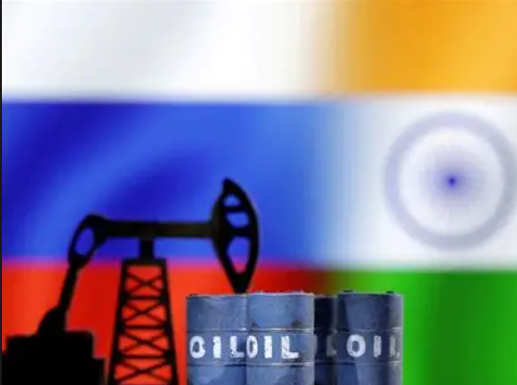
NEW DELHI, Oct 17: The United States’ decision to waive threatened additional tariffs of up to 100 per cent on countries purchasing Russian oil has offered India temporary relief from a potentially significant trade challenge. However, the policy shift has not eliminated the uncertainty facing Indian importers, energy companies and businesses sensitive to international crude prices.
The development was discussed in an assessment by the Global Trade Research Initiative (GTRI), which cautioned that the waiver should not be interpreted as a permanent resolution of the dispute surrounding purchases of Russian oil.
India relies heavily on imported crude to meet its energy requirements, making international supply conditions and trade restrictions important considerations for its economy. Any additional duties linked to oil purchases could affect commercial decisions, energy costs and the wider relationship between New Delhi and Washington.
The waiver reduces the immediate threat of a major tariff burden, but the possibility of a future reversal leaves businesses exposed to changes in US policy. Why the tariff decision matters to India
Crude oil is a critical input for India’s economy. It supports transport, industrial production, petrochemicals and several other activities that depend directly or indirectly on petroleum products.
Because domestic consumption exceeds the country’s own crude production, India depends substantially on overseas suppliers. The price paid for imported energy can influence inflation, the current account balance, the rupee and government finances.
Russian crude has been an important part of India’s import mix, with commercial purchases shaped by pricing, availability, freight costs, insurance arrangements and international restrictions.
The prospect of additional US tariffs on countries buying Russian oil introduced another factor into these calculations. Duties of up to 100 per cent could potentially raise the cost of affected trade or create pressure on importers and governments to reconsider sourcing arrangements.
For Indian businesses, the central concern was not limited to the tariff itself. Uncertainty over whether such a measure would be introduced, how it would be applied and how long it would remain in force could complicate procurement decisions and investment planning.
The latest waiver provides immediate breathing space by removing the threatened additional duties for the time being. Nevertheless, companies still need to account for the possibility that Washington could alter its approach again.
GTRI warns against treating the waiver as a permanent solution
GTRI’s assessment emphasised that the US decision provides temporary relief rather than long-term certainty.
The distinction is significant because businesses typically make purchasing and investment decisions over periods that extend beyond the immediate trading cycle. Refiners, shipping companies, energy traders and other participants need to assess not only current prices but also the likelihood of future regulatory changes.
A temporary reprieve can help reduce immediate pressure, but it does not necessarily provide the confidence required for long-term contracts or major investment commitments.
For India, the risk is that renewed US pressure could force another round of adjustments in crude procurement, supplier relationships and trade negotiations.
The uncertainty also creates difficulties for companies that must decide whether to maintain existing sourcing patterns or diversify their supply arrangements. A shift away from one supplier may involve additional transport costs, changes in refining economics or different payment and insurance requirements.
At the same time, continuing with established arrangements could leave importers exposed if restrictions return.
GTRI’s warning therefore highlights the need to distinguish between short-term policy relief and a durable agreement that offers businesses a predictable operating environment.
Crude prices add another layer of economic pressure
The tariff issue is unfolding against a backdrop of volatile international energy markets.
Brent crude prices reached approximately $110 a barrel during trading on October 16, with the market responding to concerns about supply disruptions linked to tensions in the Middle East and risks affecting shipments through the Strait of Hormuz. The contract settled at $109.86 a barrel, while US West Texas Intermediate crude reached $101.41. <Cite refs={[“turn273197search1″,”turn273197search3”]}/>
These price movements matter to India because higher international crude prices can increase the cost of imports even when additional trade duties are not imposed.
The impact extends beyond oil companies. Transport operators, airlines, manufacturers and logistics businesses can face higher operating expenses when fuel prices rise. Depending on market conditions and the ability of businesses to pass on costs, some of that pressure may eventually reach consumers.
Elevated oil prices can also complicate inflation management. If fuel and transportation costs remain high, central banks may have less room to ease monetary policy, particularly when broader price pressures remain persistent.
For the government, an increase in the value of energy imports can place pressure on the trade balance and increase the demand for foreign currency.
The relationship between crude prices and the rupee is not automatic, as currency movements are also influenced by capital flows, interest rates and other international developments. However, an expensive energy import bill can add to the economy’s external financing requirements.
Consequently, the US tariff waiver addresses one potential source of pressure but does not protect India from market-driven increases in oil prices.
Refiners face difficult procurement decisions
Indian refiners must evaluate several factors when choosing crude suppliers. These include the price of the oil, its suitability for refinery operations, transportation expenses, insurance, payment arrangements and the reliability of future deliveries.
Russian crude can remain commercially attractive when its overall delivered cost compares favourably with alternative supplies. However, the economic calculation can change if international restrictions, shipping risks or financing complications increase the cost of transactions.
The latest US decision reduces the immediate threat posed by the proposed additional tariffs. Yet it does not remove the need for refiners to monitor sanctions-related developments and evaluate their exposure to changing trade rules.
Companies may respond by diversifying procurement where commercially practical, maintaining alternative supply arrangements and strengthening compliance checks. Such steps can provide flexibility if geopolitical conditions change.
However, diversification is not cost-free. Alternative suppliers may charge different prices, require longer shipping routes or offer crude grades that produce different yields at a refinery.
A sudden shift in purchasing patterns could also affect freight demand and regional price differentials.
The challenge for refiners is therefore to maintain supply security without committing to arrangements that become uneconomical if market conditions or government policies change.
Trade relations remain vulnerable to policy changes
The waiver also illustrates the wider uncertainty surrounding energy trade and international economic relations.
For India, access to affordable energy is an important economic consideration, while relations with the United States encompass trade, investment, technology and strategic cooperation. Decisions affecting Russian oil purchases can therefore have implications that extend beyond the energy sector.
A temporary easing of tariff pressure may improve the immediate commercial environment, but businesses will continue to assess whether the change signals a durable shift in US policy or a short-term adjustment.
The distinction matters for companies deciding where to invest, how to structure contracts and which markets to prioritise.
Unpredictable changes in trade restrictions can increase compliance expenses and discourage businesses from making long-term commitments. They can also encourage firms to build more flexible supply chains, even when doing so involves higher initial costs.
For policymakers, the challenge is to preserve energy security while managing international relationships and limiting the economic consequences of external shocks.
The waiver creates an opportunity for further engagement, but its longer-term significance will depend on whether the immediate relief is followed by greater clarity over the rules governing purchases of Russian oil.
Potential consequences for inflation and business costs
Higher crude prices and uncertainty over import arrangements can affect the Indian economy through several channels.
Fuel costs influence road transport, aviation, shipping and the distribution of goods. Petroleum products and petrochemical inputs are also used in manufacturing, packaging and other industrial activities.
When energy costs rise sharply, businesses may initially absorb part of the increase through lower margins. Others may raise prices, renegotiate contracts or postpone investment decisions.
The final effect depends on the duration of the price shock, domestic fuel pricing, government tax decisions and the extent to which companies can pass on higher costs.
A sustained increase in oil prices could also widen India’s import bill, potentially affecting the current account and the demand for dollars. Currency movements, in turn, can influence the domestic cost of imported energy.
These effects are not inevitable in equal measure, but they demonstrate why the tariff decision cannot be considered separately from developments in international oil markets.
For businesses planning budgets for the coming quarters, both the cost of crude and the possibility of renewed trade restrictions remain important variables.
Outlook: Temporary relief, continuing exposure
The US tariff waiver gives India additional room to manage its energy trade without the immediate threat of the proposed duties. It may also reduce the urgency of making procurement changes solely in response to that specific measure.
However, the underlying risks remain. US policy could change again, geopolitical tensions could disrupt supply routes, and crude prices could remain volatile.
Indian businesses will therefore need to prepare for multiple scenarios rather than assume that the latest decision guarantees stable trading conditions.
For energy companies, this may mean maintaining alternative sourcing options and monitoring regulatory developments closely. For other industries, it means accounting for possible changes in fuel, transport and imported-input costs.
The broader lesson is that temporary policy relief can reduce immediate uncertainty without eliminating structural exposure to international markets.
India’s longer-term resilience will depend on the flexibility of its energy procurement, the competitiveness of its supply arrangements and its ability to manage external price shocks.
Until greater policy clarity emerges, the tariff waiver should be viewed as a reprieve rather than a definitive settlement of the risks surrounding India’s Russian oil trade.

