


US Trade Court Orders Broad Tariff Refunds for Companies in Major Setback to Trump
US Trade Court Orders Massive Tariff Refunds in Blow to Trump
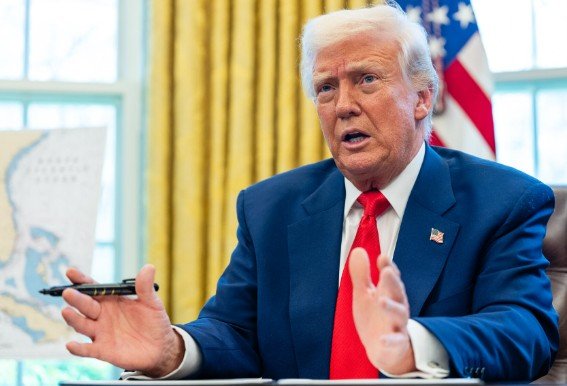
US, Mar 05 : A major development in the US tariff refunds case has dealt a setback to former President Donald Trump, after a federal trade judge ruled that companies which paid now invalidated import duties are entitled to repayment.
Judge Richard Eaton of the United States Court of International Trade said that all “importers of record” must benefit from the earlier decision by the Supreme Court of the United States, which struck down the sweeping double digit tariffs imposed under the 1977 International Emergency Economic Powers Act (IEEPA).
Refunds Extend Beyond Original Plaintiffs
The court clarified that repayments are not restricted to the companies that initially challenged the duties but apply broadly to businesses that paid tariffs under the emergency powers statute. Eaton further stated that he would exclusively oversee litigation related to reimbursement claims, centralising the process in his court.
The federal government had collected more than $130 billion through mid-December under the scrapped tariff programme. Estimates from the Penn Wharton Budget Model suggest total repayments could climb to $175 billion, underscoring the financial impact of the ruling.
Case Triggered by Manufacturer’s Challenge
The decision stems from a lawsuit filed by Atmus Filtration, a Tennessee-based producer of filtration systems, which argued it should recover duties paid under the invalidated regime.
Earlier this week, the U.S. Court of Appeals for the Federal Circuit rejected an attempt by the administration to delay proceedings and returned the matter to the trade court to determine how refunds should be implemented.
Customs Tasked With Repayment Mechanism
With the order now in effect, U.S. Customs and Border Protection must establish a framework to process claims. While the agency routinely handles corrections involving smaller sums, legal experts note that managing repayments on this scale presents unprecedented administrative challenges.
The ruling offers clarity for businesses awaiting guidance since the Supreme Court invalidated the tariff structure in February. However, it also ushers in a complex phase involving appeals, logistical planning and significant fiscal consequences for the government.

