


Voices of the House
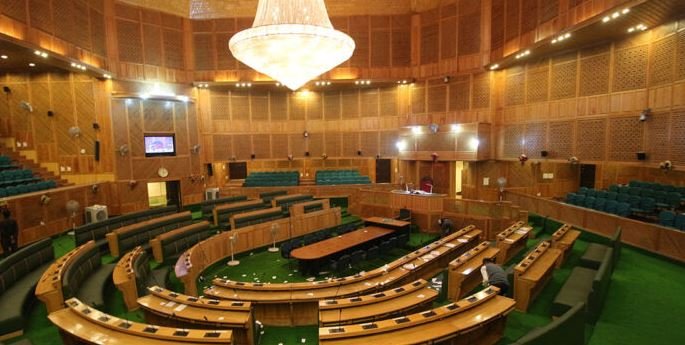
The adoption of the Motion of Thanks on the Lieutenant Governor’s address during the Budget Session of the Jammu and Kashmir Assembly represents more than a routine legislative exercise. It reflects a moment when executive intent meets legislative scrutiny and when diverse political voices converge on the shared responsibility of governance. In a region that has witnessed profound political and administrative transitions, such proceedings carry a significance that extends beyond the walls of the House, offering a glimpse into the evolving relationship between democratic institutions and public aspiration.
The budget session has traditionally served as a platform for outlining priorities and assessing performance. The Lieutenant Governor’s address and the subsequent Motion of Thanks together frame a broad vision for development, stability, and inclusive growth. When legislators engage with this vision through debate, amendment, and eventual endorsement, they perform the essential democratic function of shaping policy through dialogue. The process affirms that governance in Jammu and Kashmir is steadily moving toward greater institutional maturity, where differences are expressed within constitutional boundaries and resolved through established procedures. What stands out in the recent deliberations is the range of concerns raised by members cutting across party lines and regional identities. Issues such as youth unemployment, reservation, skill development, horticulture, flood rehabilitation, and the welfare of daily wagers dominated the discussion. This breadth indicates a legislature that is attuned to the everyday struggles of citizens and willing to place them at the center of political discourse. It also emphasizes that we cannot pursue development in Jammu and Kashmir without addressing social justice and economic opportunities. The debate also highlighted an important dimension of legislative functioning, which is the balance between consensus and contestation. While some members moved amendments and others expressed reservations, the Motion of Thanks was adopted by voice vote, suggesting a collective willingness to move forward. Such outcomes do not imply uniformity of opinion. Rather, they reflect a recognition that, despite differences, there exists a shared commitment to stability and progress. The executive sees the motion’s passage as a way for the legislature to show its support for its overall policy direction. It conveys confidence in the agenda outlined in the Lieutenant Governor’s address and provides political space to translate stated priorities into actionable programmes. At the same time, the concerns raised during the debate act as a reminder that accountability remains integral to governance. Endorsement does not absolve the executive of responsibility. It heightens expectations for delivery. The prominence given to youth-related issues deserves particular attention. Jammu and Kashmir has a young population whose aspirations for education, employment, and dignity are shaping the region’s future. When these concerns find consistent expression in the Assembly, it signals an understanding that demographic realities must guide policy choices. Similarly, calls for rationalizing reservations, strengthening skill development, and filling vacant government posts point to a desire for a more equitable and opportunity-driven growth model. Another notable aspect is the emphasis on regional and sectoral needs, from horticulture and tourism to infrastructure in remote and higher altitude areas. Such interventions reflect the diversity of Jammu and Kashmir and the necessity of tailored approaches to development. A one-size-fits-all strategy is unlikely to succeed in a region marked by varied geography and socioeconomic conditions. The adoption of the Motion of Thanks thus becomes a symbolic yet substantive moment. Symbolic because it represents unity in purpose, and substantive because it anchors that unity in a clearly articulated vision. For citizens, it offers reassurance that their elected representatives are engaged in shaping the direction of governance. For institutions, it reinforces the value of dialogue, debate, and procedure.
The challenge now lies in ensuring that the words spoken in the Assembly translate into tangible improvements on the ground. If that link between debate and delivery is strengthened, the Motion of Thanks will be remembered not merely as a formal resolution, but as a step toward a more responsive and confident democratic order.

