


West Indies Fight Back to Draw Level With India as Shai Hope and Keemo Paul Shine
An unbeaten 102 from captain Shai Hope and a five-wicket haul by Keemo Paul powered the visitors to a 24-run victory in Hyderabad, setting up a series decider.
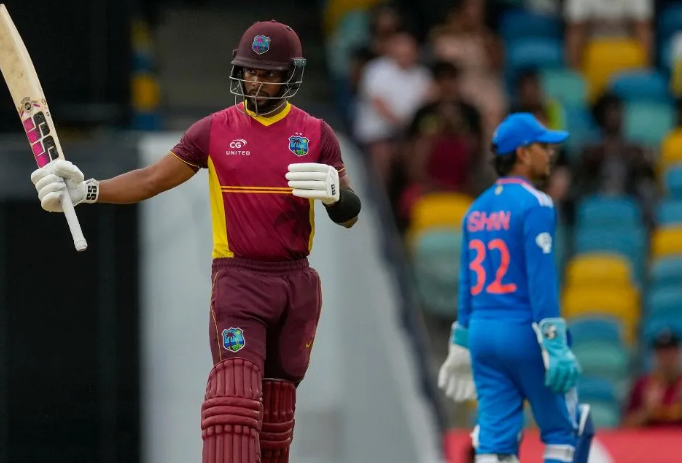
HYDERABAD, Oct. 15: West Indies revived their campaign against India with an impressive 24-run victory in the fourth T20 International, levelling the five match series 2-2 after a commanding batting performance from captain Shai Hope and a decisive bowling spell by Keemo Paul.
The visitors posted 247 for three in their allotted 20 overs before dismissing India for 223, completing a significant turnaround after falling behind in the series. The result ensured that the contest would be decided in the fifth and final match, scheduled to be played in Bengaluru on Saturday.
Hope led from the front with an unbeaten 102 off 50 deliveries, while Paul dismantled India’s middle and lower order to finish with five wickets. Their performances highlighted the West Indies’ ability to combine aggressive batting with timely breakthroughs under pressure.
India, meanwhile, struggled to contain the visitors’ powerful batting lineup and subsequently failed to maintain the required scoring rate throughout the chase. Although Sanju Samson produced a rapid half-century, the hosts could not recover after losing wickets at crucial stages.
Hope leads West Indies’ batting assault
Asked to bat first, the West Indies made an explosive start at the Rajiv Gandhi International Stadium. Hope and young opener Jewel Andrew established an early rhythm, adding 52 runs from just 26 deliveries before Andrew was dismissed for 21.
The early breakthrough offered India an opportunity to regain control, but Hope continued to attack with confidence. He combined measured strokeplay with powerful hitting, finding gaps in the field and punishing loose deliveries.
The West Indies captain reached his half-century from 28 balls and continued to accelerate as the innings progressed. His ability to rotate the strike while regularly finding boundaries prevented India from building sustained pressure.
Hope eventually completed his century with a six off the final delivery of the innings. His unbeaten 102 included a series of cleanly struck boundaries and demonstrated the effectiveness of an approach that combined patience with calculated aggression.
The innings was particularly important because Hope had already enjoyed a productive series. His latest hundred further underlined his importance to the West Indies’ white-ball batting plans and gave the visitors a formidable platform.
Sherfane Rutherford provided an equally valuable contribution at the other end. His unbeaten 49 from 26 deliveries allowed the West Indies to maintain their momentum through the closing overs.
The pair added an unbroken 91-run partnership from 43 balls, ensuring that the visitors finished strongly at 247 for three. Their late acceleration left India with a demanding target and little room for error during the chase.
The West Indies also capitalised on India’s inconsistent bowling and missed opportunities in the field. The visitors struck 16 sixes and benefited from 18 extras, adding further pressure to the home side’s defensive effort.
India struggle to contain the scoring rate
India’s bowling attack found it difficult to execute its plans consistently. Several overs proved expensive, allowing the West Indies to maintain a scoring rate that placed the hosts under pressure from the beginning.
Mayank Yadav and Arshdeep Singh conceded 52 runs apiece in their four overs, while the other bowlers also struggled to prevent the visitors from scoring freely.
Captain Shreyas Iyer acknowledged after the match that India had fallen short in carrying out their bowling plans. The performance highlighted the challenge of defending against a side capable of sustaining a high scoring rate across the full 20 overs.
The hosts also missed opportunities to interrupt partnerships, allowing Hope and Rutherford to take control during the closing phase of the innings.
India’s target of 248 required a strong opening partnership and sustained contributions from the middle order. The loss of early wickets, however, increased the pressure on the remaining batters.
Samson provides a rapid start
Sanju Samson gave India hope with an aggressive innings of 56 from only 23 deliveries. His attacking approach helped the hosts make an energetic start and briefly raised the possibility of a successful chase.
Abhishek Sharma also contributed 29, but India lost wickets before the opening momentum could be converted into a substantial partnership.
The West Indies bowlers responded by varying their pace and attacking the stumps. Paul proved particularly effective, striking at important moments and preventing India from establishing control over the chase.
Ishan Kishan was dismissed for six, while Iyer managed 16. Naman Dhir fell for a first-ball duck, leaving India in need of a substantial partnership to remain in contention.
Tilak Varma and Nitish Reddy subsequently attempted to rebuild the innings. Their partnership offered a measure of stability and brought the hosts back into the contest through a combination of aggressive shots and quick running.
However, the pressure of the required rate continued to rise. Varma’s dismissal while attempting to accelerate proved an important turning point, ending a partnership that had given India a realistic chance of challenging the target.
Keemo Paul turns the match around
Paul’s five-wicket haul was the defining contribution of the West Indies bowling effort. He finished with figures of five for 41, repeatedly breaking partnerships when India appeared capable of mounting a recovery.
After removing Samson, Paul helped restrict India’s progress through the middle overs. His wickets prevented the home side from building the kind of sustained partnership required to chase a total approaching 250.
Reddy’s dismissal for 41 further weakened India’s position. Paul then struck again to remove Prince Yadav for a first-ball duck and later dismissed Axar Patel, completing a match-winning spell.
The West Indies maintained their composure despite India’s brief recovery through Varma and Reddy. Rather than allowing the partnership to dictate the contest, the visitors continued to attack and forced the hosts to take risks.
Paul’s performance demonstrated the value of taking wickets at regular intervals in high-scoring T20 matches. Even when a batting side maintains a competitive run rate, the loss of established players can quickly alter the direction of a chase.
Series returns to a decisive contest
The victory levelled the series and gave the West Indies renewed confidence ahead of the final encounter. Their performance in Hyderabad showed a marked improvement in their ability to execute plans with both bat and ball.
For India, the defeat raised questions about bowling consistency and the responsibility required from the batting lineup during difficult chases. The hosts will need a more disciplined performance if they are to secure the series.
The match also offered valuable lessons for India’s developing pace attack. Young bowlers often require exposure to demanding situations against experienced international batters, but the team will still need to find ways to limit expensive overs and respond when opponents attack aggressively.
With the series tied at 2-2, the fifth T20I in Bengaluru will determine the winner. Both sides have demonstrated the ability to produce dominant performances, making the final match an important test of execution, composure and tactical decision-making.
Hope’s century and Paul’s five-wicket haul gave the West Indies a memorable victory in Hyderabad. India will now have to regroup quickly and address the weaknesses exposed in the fourth match before the series reaches its conclusion.

