


Logistics breakthrough, Rail Freight Reaches Kashmir
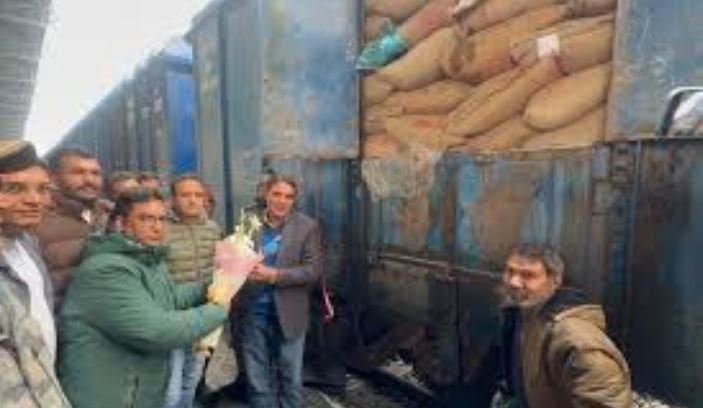
The arrival of the first Food Corporation of India food grain freight train in Kashmir marks a quiet but transformative moment in the region’s economic and logistical history. For decades, the Valley’s dependence on road transport, particularly the Srinagar-Jammu National Highway, shaped the rhythm of supply chains, often disrupted by weather, terrain, and seasonal uncertainties. The shift towards rail-based freight movement signals not just an infrastructural milestone but a deeper transition towards resilience, predictability, and economic integration.
Geography has long defined both the strength and vulnerability of Kashmir. While its strategic location and natural resources offer immense potential, its mountainous terrain has made uninterrupted connectivity a persistent challenge. Road closures due to snowfall, landslides, or heavy rainfall routinely strained the movement of essential commodities, especially food grains. Rail connectivity, by contrast, offers a more stable and weather-resilient alternative, reducing exposure to disruptions and ensuring continuity of supply throughout the year. The introduction of rail-based food grain transportation represents a structural change in how public distribution and logistics are managed in the region. Bulk movement by rail not only improves efficiency but also lowers transportation costs and transit time. These savings have a cascading effect, strengthening public distribution systems, stabilizing local markets, and ultimately benefiting consumers. When essential supplies move smoothly, the pressure on emergency arrangements reduces, allowing administrative systems to function with greater foresight rather than constant crisis management. Beyond food security, the economic implications of freight rail integration are significant. Reliable logistics form the backbone of any regional economy. Improved connectivity enhances the confidence of businesses, supports infrastructure projects, and creates new employment opportunities linked to handling, storage, and distribution. For farmers and traders, reduced transport costs and predictable supply chains can improve market access and price stability. In this sense, rail freight acts as a quiet enabler of broader economic activity rather than a standalone intervention. The Kashmir experience also offers lessons for other geographically constrained regions. Infrastructure-led integration is not merely about laying tracks or commissioning terminals. It is about aligning transport systems with regional realities and long-term development goals. The success of rail-based freight movement depends on coordination between central agencies, state institutions, and local stakeholders. It requires investment not only in physical assets but also in operational planning, monitoring, and adaptability. Importantly, rail freight does not replace roads but complements them. A multimodal transport system, where rail and road networks work in tandem, strengthens overall supply chain resilience. Roads remain essential for last-mile connectivity, while railways handle long-distance bulk movement efficiently. Together, they reduce over-reliance on any single mode of transport and spread risk more evenly across the system. The commissioning of goods terminals and the steady expansion of freight operations point towards a future where Kashmir is more closely integrated with national markets. This integration is economic as well as symbolic. It reinforces the idea that peripheral regions can be brought into the mainstream through sustained infrastructure investment and thoughtful policy execution. Each successful freight movement builds confidence and demonstrates the viability of rail logistics in challenging terrains. As climate variability increases and traditional supply routes face greater stress, such transitions become even more relevant. Infrastructure that anticipates future risks rather than merely responding to past challenges is the foundation of sustainable development. Rail-based freight connectivity in Kashmir reflects this forward-looking approach, reducing vulnerabilities while opening new avenues for growth.
The first food grain freight train may appear as a single event, but its implications extend far beyond one consignment. It represents a shift in thinking, from constraint-driven logistics to opportunity-led planning. If nurtured with consistency and coordination, this transition can redefine supply chains, strengthen food security, and anchor Kashmir more firmly within a resilient national economic framework. The successful arrival of the first FCI freight train reflects visionary planning, strong institutional coordination, and a commitment to strengthening connectivity, food security, and sustainable economic integration for the people of Kashmir.

