


Fresh Pens, Strong Voices
The vitality of any language lies not only in its historical depth but in its ability to renew itself through contemporary voices that reflect changing social realities. Punjabi literature, with its rich oral traditions and robust narrative heritage, continues to evolve through short fiction that captures everyday experiences, emotional truths, and social transformations. In Jammu and Kashmir, this process of literary renewal has gained meaningful momentum through sustained institutional support that recognizes language as a living carrier of identity, memory, and cultural continuity.
Contemporary Punjabi short stories emerging from the region reflect a quiet confidence and growing maturity. They move beyond nostalgia to engage with present concerns such as changing family structures, migration, gender relations, moral dilemmas, and the tension between tradition and modernity. These narratives do not seek grand statements but offer intimate observations that resonate deeply with readers. In doing so, they reaffirm the relevance of Punjabi as a language capable of articulating both personal emotions and collective experiences in a rapidly changing society. Institutional patronage plays a crucial role in this creative ecosystem. Platforms provided by cultural academies such as the Jammu and Kashmir Academy of Art, Culture, and Languages have created spaces where emerging writers are not only published but also critically engaged. Book releases, scholarly discussions, and literary gatherings help situate new works within a broader intellectual framework. They enable dialogue between writers, critics, and readers, fostering a culture of reflection that strengthens literary standards and encourages creative responsibility. The transition from oral storytelling to modern print culture has not diminished the essence of Punjabi narrative traditions. Instead, it has expanded their reach and adaptability. Contemporary short fiction draws from folk memory while employing modern narrative techniques, creating a blend that is both rooted and forward-looking. This continuity ensures that language does not remain confined to the past but remains responsive to present realities and future aspirations. Cultural academies function as custodians of this balance. Their role extends beyond publication to preservation, mentorship, and public engagement. By encouraging scholarly critique and providing institutional validation, they help young writers gain confidence and visibility. Such support is particularly vital at a time when regional languages face competition from dominant global languages and digital homogenization. Sustained institutional encouragement counters this pressure by reaffirming the value of regional expression. Emerging Punjabi writers in Jammu and Kashmir demonstrate a keen awareness of social sensitivity and narrative discipline. Their work reflects careful observation rather than hurried commentary, suggesting a growing seriousness towards craft. Critical engagement through academic papers and discussions further refines this creative process, ensuring that literary growth is accompanied by intellectual depth. This interplay between creativity and critique is essential for the long-term health of any literary tradition. Literary platforms also serve as instruments of language survival. When books are discussed, debated, and celebrated, they create readership and curiosity. Such engagement strengthens the cultural fabric by reminding society that language is not merely a means of communication but a repository of values, emotions, and shared memory. Each new publication adds to this collective archive, ensuring continuity through renewal. In a society shaped by rapid change, sustaining regional literatures requires both creative commitment and institutional vision.
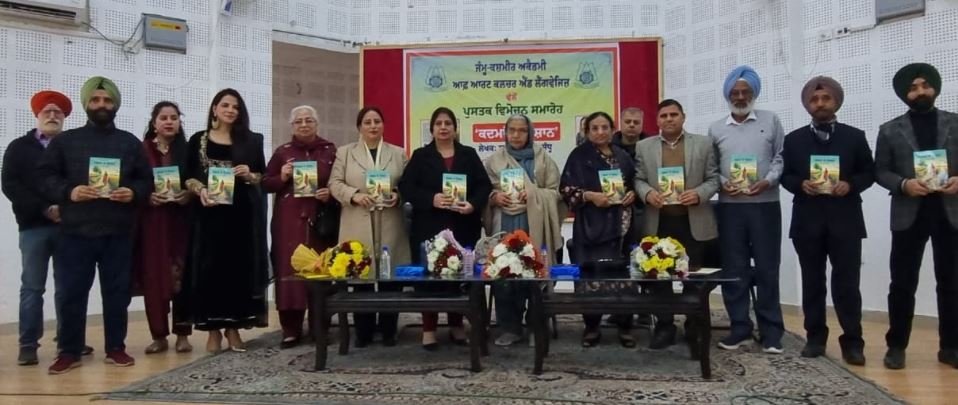
Punjabi short stories emerging today reflect a language that is alive, responsive, and deeply human. Remembering the past while speaking to the present, they reaffirm the enduring power of literature to preserve identity, foster understanding, and connect generations. Through thoughtful institutional support and engaged readership, Punjabi literary heritage in Jammu and Kashmir continues not only to survive but to evolve with quiet strength and dignity. Ultimately, the release of “Kadma De Nishan” once again highlights JKAACL’s consistent commitment to nurturing regional languages and emerging literary voices, reaffirming its role as a vital cultural institution dedicated to preserving linguistic heritage while encouraging contemporary creative expression.

