


Pure voters’ list vital for strong democracy: Chief Election Commissioner
CEC defends electoral roll revision, says Bihar exercise drew zero complaints
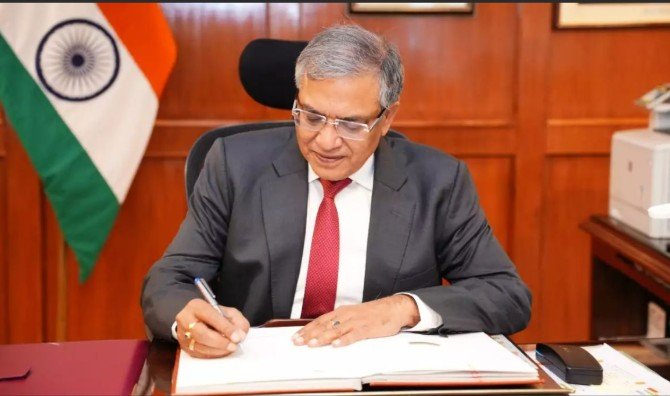
NEW DELHI, Jan 21: Emphasising the centrality of credible electoral rolls to democratic strength, Chief Election Commissioner Gyanesh Kumar on Wednesday asserted that a “pure” and legally compliant voters’ list is fundamental to free, fair, and trustworthy elections.
Addressing the inaugural session of the International Conference on Democracy and Election Management (IICDEM-2026) here, the CEC said that the integrity of elections ultimately rests on the accuracy of electoral rolls. He underlined that every eligible citizen must be included in accordance with law, while ineligible entries must be removed through transparent and accountable processes.
Referring to the Special Intensive Revision of electoral rolls carried out in Bihar last year, Kumar said the exercise was conducted under close public scrutiny and yet did not attract a single complaint regarding wrongful inclusion or exclusion of voters. He also pointed out that not a single repoll was ordered across the nearly one lakh polling stations during the two phases of the Bihar Assembly elections, reflecting the robustness of the electoral process.
“A pure electoral roll, which includes every eligible elector as per law, is essential to strengthen democracy. All elections conducted on the basis of such a roll gain greater credibility and public confidence,” Kumar said.
The CEC highlighted the efficiency demonstrated by the local election machinery in Bihar, noting that high standards were maintained from the purification of electoral rolls to the actual conduct of polling. He said the experience showed that with proper planning, training, and transparency, large-scale electoral exercises can be carried out smoothly even under intense public and political scrutiny.
The remarks come amid sustained criticism from opposition parties over the Special Intensive Revision process, which they have alleged could be misused to manipulate voter lists. The government and the Election Commission of India, however, have consistently rejected these allegations, maintaining that the revision exercises are carried out strictly in accordance with law and established procedures.
Phase II of the Special Intensive Revision began on November 4 last year in several states and Union Territories, including Andaman and Nicobar Islands, Lakshadweep, Chhattisgarh, Goa, Gujarat, Kerala, Madhya Pradesh, Puducherry, Rajasthan, Tamil Nadu, Uttar Pradesh, and West Bengal. In Assam, a separate special revision of electoral rolls is currently underway.
Officials explained that the most recent SIR in each state serves as the cut-off point for electoral roll verification, similar to how the 2003 voter list was used as a reference during Bihar’s intensive revision. Most states last carried out such revisions between 2002 and 2004.
The primary objective of the Special Intensive Revision is to ensure the accuracy of voter lists, including the identification and removal of illegal foreign migrants by verifying place of birth and other statutory details. The exercise has gained added significance amid ongoing crackdowns in various states against illegal migrants, including those from Bangladesh and Myanmar.
The international conference has drawn nearly 100 delegates from about 70 countries, making IICDEM-2026 the largest global gathering hosted by India in the field of democracy and election management. The forum aims to facilitate the exchange of best practices, institutional experiences, and innovations in electoral governance.

