


Busy J&K Budget Session Ahead
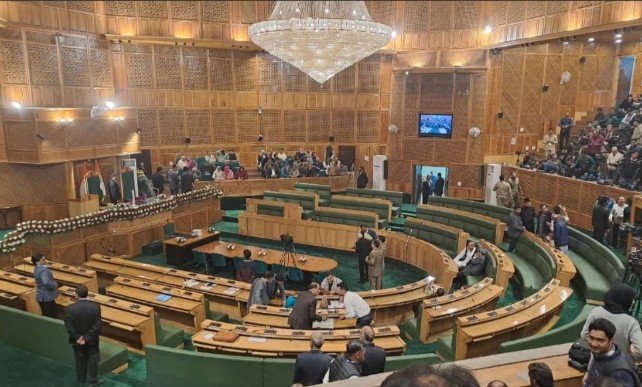
The unprecedented volume of questions submitted ahead of the Jammu and Kashmir Legislative Assembly’s forthcoming Budget Session reflects a quiet but meaningful assertion of legislative responsibility. With more than fifteen hundred questions already received for a twenty-two-day sitting, the Assembly is poised for a session that could deepen democratic oversight and sharpen policy scrutiny, provided the spirit of inquiry translates into orderly and productive deliberation on the floor of the House.
Question Hour has long been regarded as the most immediate instrument through which elected representatives seek accountability from the executive. In Jammu and Kashmir’s current Union Territory framework, its relevance has only grown. Questions compel departments to place facts on record, explain delays, justify decisions, and respond to public concerns carried by legislators. The surge in submissions suggests that members are eager to utilize this forum to engage the government on pressing issues that affect daily life, ranging from health and education to rural development, taxation, industry, and social welfare—the mechanics of the process matter. Starred questions, answered orally, allow for supplementary queries and real-time clarification, while unstarred questions ensure that detailed written responses are formally recorded. Together, they create a paper trail of governance that citizens and institutions can revisit. In a House where eighty-three legislators are entitled to raise up to twenty questions each, the near approach to the maximum possible number underscores both enthusiasm and expectation. It also places a responsibility on the executive to respond with accuracy and seriousness. Budget Sessions, by their nature, concentrate legislative energy. They bring together fiscal choices, policy priorities, and administrative performance in a compressed time frame. In Jammu and Kashmir, the session’s structure, with sittings split across two phases, allows for questions to be taken up early and private members’ business later. This sequencing is important. It enables members to interrogate departments before engaging in broader budgetary debate, and then to propose bills and resolutions that reflect local needs and policy ideas. Private Members’ Bills and Resolutions often receive less public attention, yet they are vital indicators of legislative agency. They allow members to move beyond critique and place constructive proposals on record. Even when such initiatives do not become law, they enrich debate, influence policy thinking, and signal emerging priorities. In a legislature adapting to a Union Territory context, the space for private members’ business becomes a measure of how inclusive and responsive parliamentary practice remains. The constraints are real. Question Hour is vulnerable to disruption, and the absence of discussion on certain departments reflects the altered distribution of powers under the Union Territory arrangement. Yet these limitations do not diminish the value of focused scrutiny where it is permitted. On the contrary, they make discipline and cooperation within the House even more important. If proceedings remain orderly, a significant number of questions can be discussed, setting benchmarks for transparency and responsiveness. What ultimately matters is the outcome. Questions should lead to corrective action, policy refinement, and administrative improvement. When replies are candid and follow-up is pursued, the exercise strengthens public trust. When answers are evasive or delayed, the opportunity is lost. The record number of submissions raises public expectations that this session will move beyond formality toward substance. There is also a broader signal here. Legislative engagement of this scale suggests that elected representatives recognise the importance of being seen and heard on issues that matter to their constituencies. It reflects an understanding that democracy is sustained not only through elections but through continuous oversight. In regions with complex governance histories, such everyday practices acquire added significance.
As the Budget Session unfolds, the challenge will be to convert quantity into quality. A large stack of questions is a promising start, but the true test lies in how many are meaningfully addressed, how robust the debate remains, and how responsibly both sides of the House conduct themselves. If handled well, this session can reinforce the Assembly’s role as a forum of accountability and deliberation, demonstrating that even within evolving institutional frameworks, democratic practices can remain active, relevant, and responsive to the people they are meant to serve.

