


Modi-Trump Surprise Deal Signals Reset in Strained India-US Ties
Surprise agreement between India and the US headlines a week of major global economic signals, from steady interest rates in Europe to fragile US employment data and slowing growth in China.
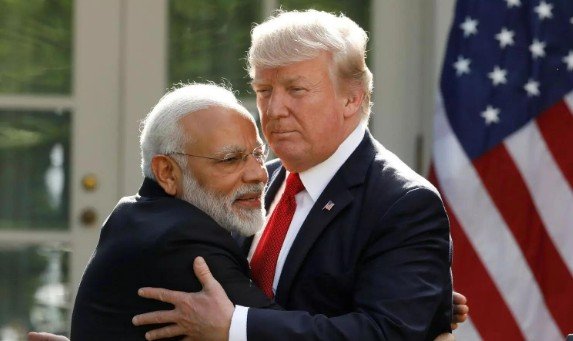
India, Feb 08 : A surprise tariff cut agreement between Prime Minister Narendra Modi and US President Donald Trump emerged as one of the most significant developments in the global economy this week, signalling a potential thaw in previously strained bilateral relations while offering optimism for trade and investment flows.
Trump said India had committed to sharply reducing duties, expanding purchases of American goods worth up to $500 billion, and discontinuing crude imports from Russia moves that align with longstanding US trade priorities and could reshape economic dynamics between the two nations.
Central banks adopt cautious stance
Monetary policymakers across major economies largely chose stability over aggressive action. The European Central Bank held borrowing costs steady, with President Christine Lagarde suggesting price pressures remain broadly balanced while dismissing concerns over the euro’s recent strength.
In the United Kingdom, the Bank of England came close to lowering rates, with policymakers projecting inflation could slip below the official target—an outcome that has strengthened expectations of a possible cut in the near term.
Several other countries, including India, Mexico, Poland, Iceland, Armenia, Madagascar, and the Czech Republic, also left rates unchanged. Meanwhile, Australia diverged from the trend, becoming the first major economy to raise interest rates in 2026.
Mixed signals from the United States
Fresh indicators pointed to an uneven American economic outlook. Private employers added just 22,000 jobs in January, fewer than anticipated, suggesting the labour market may be losing momentum. The data gained added importance as the government’s official employment report faced delays due to a partial shutdown.
Yet there was encouraging news from the manufacturing sector, which expanded at its fastest pace since 2022 on the back of stronger orders and production—raising hopes that a long-struggling industrial base could be entering a recovery phase.
At the same time, the number of unemployed individuals has now exceeded available job openings for two consecutive months, reflecting a notable reversal from the tight labour conditions seen only a few years ago.
Europe shows early recovery signs
Germany reported a sharp increase in factory orders, reinforcing expectations that Europe’s largest economy could regain momentum after narrowly avoiding a triple-dip recession last year.
France delivered another surprise as inflation cooled to a five-year low, remaining well below the ECB’s 2% goal amid declining energy costs—an outlier trend compared with broader eurozone price levels.
Asia faces uneven momentum
Property prices in Seoul extended their upward march for a 52nd straight week, highlighting persistent housing demand despite repeated policy attempts to tame the market.
India’s latest federal budget struck a cautious tone, prioritising macroeconomic stability as policymakers brace for global uncertainties. Analysts viewed the approach as providing predictability for investors navigating volatile conditions.
China, however, entered the year on softer footing. Robust exports were insufficient to counter weak domestic consumption, increasing pressure on Beijing to consider additional stimulus measures.
Emerging markets navigate uncertainty
Elsewhere, Chile’s economic activity rebounded toward the end of the year, while Mexico’s central bank paused its easing cycle as core inflation hovered slightly above its preferred range.
Trade deal underscores broader transition
Taken together, this week’s developments reflect a global economy in transition—balancing cooling inflation, tentative industrial recovery, and geopolitical recalibration. Against that backdrop, the Modi-Trump tariff pact stands out as a potentially transformative step, one that could influence supply chains, strategic alliances, and growth trajectories well beyond the two countries.

