


Opposition Blocks Reform: Union Minister Ram Mohan Naidu Slams Congress Over Constitution Amendment Bill Defeat
Union Minister Ram Mohan Naidu accuses opposition of blocking women’s empowerment, while Congress leaders hail the move as a historic stand
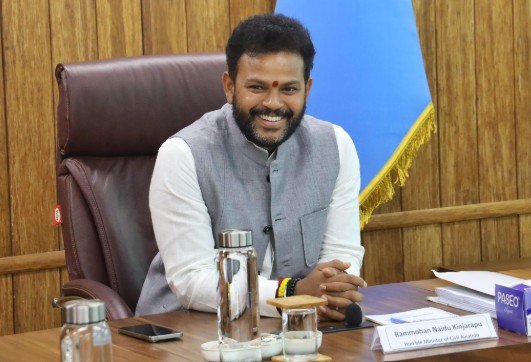
NEW DELHI, Apr 18: A sharp political confrontation unfolded in the Lok Sabha after the Constitution Amendment Bill aimed at implementing women’s reservation from the 2029 general elections was defeated, triggering strong reactions from both the government and the opposition.
Union Minister for Civil Aviation Ram Mohan Naidu Kinjarapu criticised the Congress-led opposition, accusing it of placing political interests above national progress. He said the rejection of the bill reflected a deliberate attempt to stall reforms intended to empower women across the country.
Taking to social media, Naidu expressed disappointment over the outcome, stating that the opposition had chosen “obstruction over progress” at a crucial moment when India was taking decisive steps toward gender equality. He argued that opposing the Women’s Reservation Bill amounted to denying millions of women the opportunity for fair political representation.
“This bill represents justice, dignity, and rightful participation in governance,” Naidu said, adding that future generations would remember who supported women’s empowerment and who stood against it.
Opposition Calls It ‘Historic Victory’
On the other side of the political divide, leaders from the Congress and its allies described the bill’s defeat as a significant democratic moment. Telangana Chief Minister Revanth Reddy praised the leadership of Rahul Gandhi and Congress President Mallikarjun Kharge for uniting opposition parties.
Reddy termed the development a “red-letter day” in Indian political history, claiming that the coordinated effort by opposition parties helped avert what he described as a “national disaster.” He credited the INDIA bloc for standing firm against what he labelled as “black bills.”
He also acknowledged the role of several prominent opposition leaders, including M. K. Stalin, Mamata Banerjee, Akhilesh Yadav, Sharad Pawar, Uddhav Thackeray, Lalu Prasad Yadav, Hemant Soren, Farooq Abdullah, Naveen Patnaik, and Arvind Kejriwal for their collective stance.
Voting Outcome in Lok Sabha
The bill faced a decisive vote after an intense debate in the Lok Sabha. In the final division, 298 members voted in favour of the amendment, while 230 opposed it. Despite securing a majority, the bill failed to meet the higher threshold required for constitutional amendments, leading to its defeat.
The proposed amendment sought to operationalise women’s reservation in Parliament and state legislatures starting from the 2029 general elections, a move the government projected as a landmark reform for inclusive governance.
Legal Status Remains Unchanged
Despite the setback, the Women’s Reservation Act, 2023 continues to remain part of the legal framework. However, its implementation is still contingent upon the completion of a nationwide census and subsequent delimitation exercise, leaving uncertainty over when the policy will come into force.
Political Implications Ahead
The episode has intensified political polarisation ahead of upcoming elections, with both sides attempting to shape the narrative. The ruling alliance is likely to project the opposition as anti-reform and anti-women, while opposition parties may continue framing their resistance as a defence against what they perceive as flawed or politically motivated legislation.
The debate surrounding women’s representation in politics remains far from settled. While the bill’s defeat marks a temporary halt, the broader issue of gender equality in governance is expected to remain a central theme in India’s political discourse in the coming years.

