


Priyanka Gandhi Vadra Hails Opposition Unity After Alleged Federal Structure Move by Centre Defeated
Congress leader says defeat of amendment bill reflects strength of opposition unity and raises questions over delimitation plans
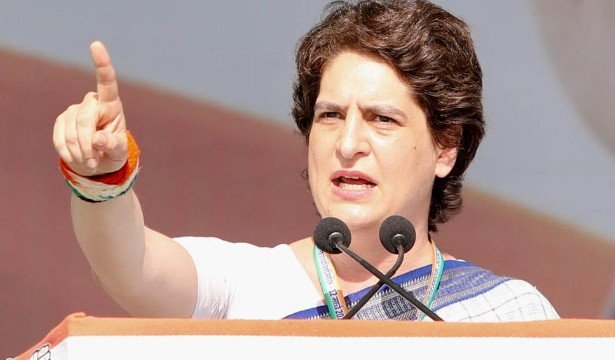
NEW DELHI, Apr 18: Congress general secretary Priyanka Gandhi Vadra on Saturday described the defeat of the Constitution amendment bill in the Lok Sabha as a “significant victory for democracy,” alleging that the Centre attempted to alter the country’s federal framework under the pretext of implementing women’s reservation.
Addressing a press conference, Priyanka Gandhi said the outcome of the voting reflected the collective strength of opposition parties and their commitment to safeguarding constitutional principles. She asserted that the development marked a decisive moment in resisting what she termed as an attempt to centralize power.
The Congress leader further urged the government to implement the Women’s Reservation Act, 2023 based on the current strength of the Lok Sabha, rather than linking it to future delimitation exercises. According to her, such linkage raised concerns about political intent and timing.
Criticising remarks made by Union Home Minister Amit Shah during the parliamentary debate, she said his comments indicated a mindset focused on retaining power rather than addressing democratic concerns. She alleged that the proposed changes were aimed at influencing future electoral outcomes.
Priyanka Gandhi also questioned the government’s approach to delimitation, suggesting that it could have been carried out in a manner that suited its political interests. She claimed that the bill was strategically positioned in a way that, whether passed or rejected, could be used to shape a narrative against the opposition.
“The attempt was framed in a way that if it succeeded, it would serve their purpose, and if it failed, the opposition would be portrayed as being against women’s empowerment,” she said, adding that such political positioning undermines genuine efforts toward gender equality.
Referring to past incidents involving women, she argued that true commitment to women’s welfare requires consistent action rather than symbolic measures. She emphasised that the opposition’s stance was guided by broader constitutional and structural concerns rather than opposition to women’s representation.
In a significant setback to the government, the Constitution (131st Amendment) Bill failed to secure the required two-thirds majority in the Lok Sabha. While 298 members supported the proposal, 230 voted against it, falling short of the 352 votes needed for passage.
The proposed legislation sought to implement 33 percent reservation for women in Parliament and state assemblies by 2029, alongside increasing the strength of the Lok Sabha from 543 to 816 seats following a delimitation exercise based on the 2011 Census. Similar expansions were planned for state and Union Territory assemblies.
The bill was taken up during a special three-day session of Parliament held from April 16 to 18, aimed at securing legislative approval. Its defeat has intensified political debate, with opposition parties terming it a victory for democratic values and constitutional safeguards.
The Congress party reiterated that the outcome demonstrated the effectiveness of a united opposition in countering policies it views as potentially disruptive to the federal balance.

