


US Navy Captures Iranian Vessel Near Hormuz, Tehran Threatens Retaliation
Naval interception in the Gulf of Oman heightens tensions, raises oil prices, and casts doubt on upcoming diplomatic talks
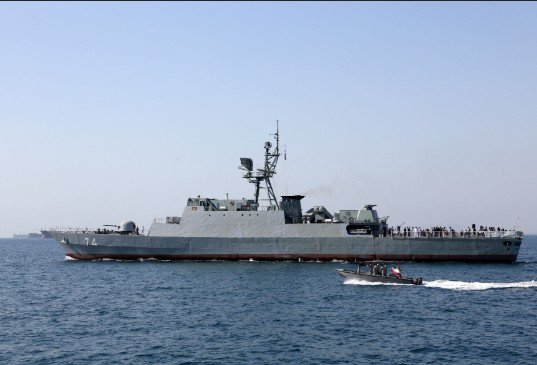
WASHINGTON, Apr 20: The United States has intensified its maritime blockade strategy against Iran by intercepting and seizing an Iranian flagged cargo vessel near the strategically vital Strait of Hormuz, triggering sharp reactions from Tehran and placing a fragile ceasefire under serious strain just days before its scheduled expiration.
According to U.S. officials, the vessel identified as the Touska was stopped in the Gulf of Oman after allegedly attempting to bypass restrictions imposed under Washington’s recent naval blockade targeting Iranian ports. The operation marks the first such interception since the United States expanded its maritime enforcement measures last week, signaling a more aggressive posture in one of the world’s most critical energy corridors.
Iran’s joint military command swiftly condemned the action, labeling it an act of “piracy” and a direct violation of the temporary ceasefire agreement currently in place. The strong language underscores the gravity of the situation, as both sides edge closer to a potential escalation that could disrupt regional stability and global energy markets.
The confrontation comes at a particularly sensitive moment, with the ceasefire agreement between the two adversaries set to expire within days. Diplomatic efforts, already fragile, now face additional uncertainty. Earlier, U.S. President Donald Trump had indicated that fresh negotiations with Iranian representatives were expected to begin soon, with American envoys scheduled to travel to Pakistan. However, the latest developments have cast doubt over whether those talks will proceed as planned.
In a statement shared on social media, Trump described the sequence of events leading to the seizure. He claimed that a U.S. Navy guided missile destroyer issued multiple warnings to the Iranian vessel over several hours. When the ship allegedly failed to comply, U.S. forces disabled it by targeting its engine room, effectively halting its movement. Following the interception, U.S. Marines boarded the vessel and took control, initiating an inspection to determine its cargo and purpose.
Details regarding the condition of the crew remain unclear, and there has been no official confirmation of casualties or injuries. The U.S. Central Command acknowledged the operation but provided limited information, stating only that repeated warnings had been issued before action was taken.
The incident has sent ripples through global markets, particularly in the energy sector. Oil prices surged amid fears that escalating tensions in the Strait of Hormuz a chokepoint through which a significant portion of the world’s oil supply passes—could lead to supply disruptions. Analysts warn that prolonged instability in the region may trigger one of the most severe energy crises in recent history, affecting economies worldwide.
Strategically, the Strait of Hormuz remains a focal point of geopolitical friction. Any military activity in the area carries far reaching implications, not only for regional actors but also for international trade and energy security. The latest seizure reinforces concerns that the waterway could become a flashpoint for broader conflict if diplomatic channels fail to deliver de-escalation.
Iran’s warning of a “swift response” adds another layer of uncertainty. While the nature of that response remains unspecified, previous confrontations suggest the possibility of retaliatory naval actions or increased military posturing in nearby waters. Such moves could further heighten tensions and complicate efforts to maintain stability.
Observers note that both nations appear to be walking a tightrope between demonstrating strength and avoiding full-scale confrontation. The United States’ enforcement of its blockade reflects a strategy aimed at exerting economic and military pressure on Iran, while Tehran’s rhetoric indicates a readiness to defend its sovereignty and challenge perceived aggression.
As the deadline for the ceasefire approaches, the international community is closely monitoring developments. The coming days will be crucial in determining whether the situation de-escalates through renewed dialogue or spirals into a deeper crisis with global consequences.
For now, the seizure of the Touska stands as a stark reminder of the fragile balance in the region one that could tip rapidly if tensions continue to mount without a clear path toward diplomatic resolution.

