


Ex-Army Chief Naravane Objects to Being Quoted in Unpublished Book, Calls It Unwarranted
Former Army Chief shifts focus to storytelling as latest work explores military legends, traditions, and untold wartime stories
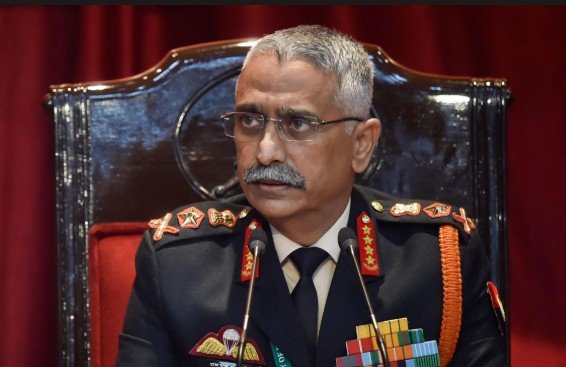
New Delhi, April 25: Former Chief of Army Staff General Manoj Naravane has described the controversy surrounding his unpublished memoir Four Stars of Destiny as “unwarranted,” stating that attempts to quote from the yet-to-be-released work unnecessarily brought him into public attention.
Reflecting on the episode, Naravane said the matter had effectively ended after the Ministry of Defence directed the publisher to hold the book pending official clearance. Since then, he has chosen to move forward with new writing projects instead of revisiting the controversy.
“As far as I am concerned, that chapter is closed. Dragging the unpublished book and indirectly me into the limelight was not warranted,” he said in an interview.
Shift Toward New Literary Work
Since the controversy earlier this year, Naravane has redirected his efforts toward writing accessible and engaging books. He has already published two titles and confirmed that a third is on the way.
His latest release, The Curious and the Classified: Unearthing Military Myths and Mysteries, marks a departure from traditional academic or strategic military writing. Instead, it focuses on lesser-known stories, traditions, and folklore from India’s armed forces.
Published by Rupa Publications, the book is intended as an entertaining yet informative exploration of military history and culture.
Naravane emphasized that the work is designed for a broader audience rather than specialists, blending historical facts with engaging narratives.
Parliament Episode Rekindled Debate
The controversy gained traction in February when Congress leader Rahul Gandhi attempted to cite excerpts from the unpublished memoir in the Lok Sabha. However, he was stopped as the book had not been officially released.
The incident triggered political debate and public curiosity about the contents of the memoir, even though it remained unavailable for public scrutiny.
Naravane, however, has maintained distance from the episode, reiterating that he considers the issue resolved.
Exploring the Origins of ‘Jai Hind’
One of the highlights of Naravane’s latest book is the exploration of the origins of the widely used military greeting Jai Hind.
He traces its roots back to India’s freedom movement and reveals that it was first adopted by the Indian Air Force before becoming standard across all three services.
Traditionally, military salutes were silent, with regiments using their own greetings such as “Sat Sri Akal” or “Ram Ram.” Over time, “Jai Hind” emerged as a unifying expression across the armed forces.
Naravane noted that despite using the phrase countless times during his career, he only later discovered its deeper historical significance.
Stories of Valor and Legacy
The book also brings to light remarkable wartime stories, including that of Badluram, a soldier of the Assam Regiment who died during the Battle of Kohima.
Despite his death, rations allocated in his name continued to arrive, inadvertently helping sustain his unit during a critical phase of the battle. The story later inspired a regimental song, Badluram Ka Badan, which remains a powerful symbol of morale and camaraderie.
Naravane explained that while the song is widely known, its historical roots are often overlooked, making it an important story to retell.
Legend of the Mule Pedongi
Another fascinating account featured in the book is that of Pedongi, a military mule captured during the Indo-Pak War of 1971.
According to Naravane, the animal managed to escape captivity, navigating dangerous terrain and minefields to return to its unit—an act he described as remarkable for its instinct and loyalty.
Following its return, Pedongi was honoured and exempted from further duty, effectively being given a ceremonial retirement. The mule lived for 37 years and spent its final years in care at Bareilly.
A New Chapter Beyond Controversy
Naravane’s recent remarks signal a clear shift away from the earlier controversy toward a more reflective and narrative-driven engagement with military history.
By focusing on untold stories, traditions, and human elements within the armed forces, he aims to connect with readers beyond the strategic and policy-focused discourse often associated with military literature.
As he continues work on his upcoming third book, Naravane appears determined to let his writing—not past controversies—define his public legacy.

