


Op Sindoor Lessons: Experts Call for Stronger Air Power and Cyber Warfare as Red Lines Shift
India’s Response Strategy Enters a New Era
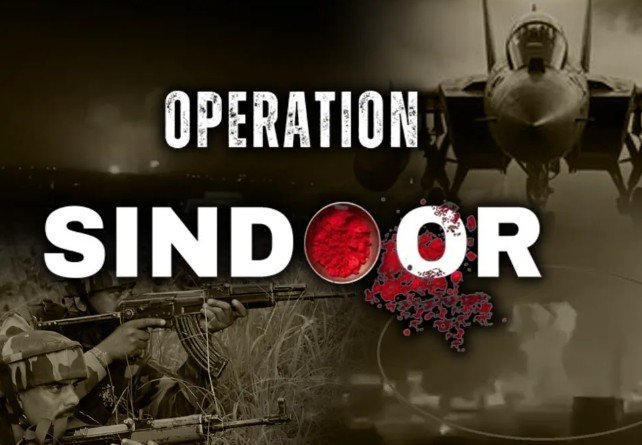
NEW DELHI, May 6: One year after the launch of Operation Sindoor, defence and strategic affairs experts say the military campaign fundamentally transformed India’s approach towards terrorism and national security. The operation, carried out during the night of May 6-7 last year, not only demonstrated India’s willingness to retaliate decisively but also highlighted the evolving nature of modern warfare.
Experts believe the operation marked a turning point in India’s military doctrine by pushing traditional “red lines” further and showcasing a more assertive national security posture. The conflict also provided valuable operational lessons in air combat, drone warfare, cyber resilience, and coordinated military action.
The military operation was launched in response to the deadly terror attack in Pahalgam, following which Indian forces targeted terror infrastructure located in Pakistan and Pakistan-Occupied Kashmir (PoK). The nearly 88-hour confrontation between the two nuclear-armed neighbours eventually ended after an understanding was reached on May 10.
Air Power and Drone Warfare Take Centre Stage
Retired Air Commodore Gaurav M Tripathi described the operation as a defining example of how modern air power can shape the outcome of future conflicts. According to him, the operation reinforced the need for the Army, Navy and Air Force to function as a unified combat force in future scenarios.
Tripathi noted that Pakistan relied heavily on drone incursions during the conflict, sending repeated waves of unmanned aerial systems across the western frontier stretching from Leh to Sir Creek. Many of these drones, he explained, were intended to distract Indian air defence systems and exhaust munitions before launching more sophisticated attacks.
However, he warned that future threats are likely to be far more advanced.
According to the former Indian Air Force officer, next-generation drones may use hardened communication systems, autonomous navigation, electro-optical guidance and coordinated swarm tactics that would make them significantly harder to neutralise.
He stressed the urgent need to expand India’s anti-drone shield across sensitive military installations and strategic infrastructure.
Cyber and Information Warfare Emerges as Critical Front
Experts said Operation Sindoor highlighted that future wars will no longer remain confined to physical battlefields. Alongside aerial engagements, India also faced a major information warfare campaign designed to spread misinformation and weaken public morale.
Military analysts observed that cyberspace, digital propaganda and cognitive warfare are becoming increasingly important in shaping battlefield outcomes. During the operation, Indian agencies had to simultaneously tackle hostile drone attacks and online disinformation campaigns.
Former Army officer Lt Gen Dushyant Singh (retd) stated that modern military confrontations will increasingly involve interconnected battle spaces spanning cyberspace, outer space and undersea domains.
He underlined the importance of building secure and resilient communication systems capable of surviving electronic warfare attacks and cyber disruptions.
S-400, BrahMos and Air Defence Systems Prove Crucial
The operation also highlighted the effectiveness of India’s advanced air defence systems. Air Commodore Tripathi praised the performance of the S-400 missile system, Akash air defence platform and BrahMos missiles during the conflict.
According to him, India used the S-400 system in an offensive and highly mobile manner, frequently relocating launch units and deploying decoy formations to mislead enemy surveillance systems.
He explained that the military employed sophisticated camouflage, concealment and deception tactics to safeguard strategic assets while maintaining operational effectiveness.
Tripathi added that one of the most significant developments during the operation was the offensive use of long-range surface-to-air missile systems, a concept he believes may become a permanent feature of future Indian Air Force operations.
Experts Stress Faster Military Preparedness and Integration
Lt Gen Dushyant Singh said Operation Sindoor demonstrated India’s shift from a policy of strategic restraint to one of strategic proactiveness.
He stated that India has now shown its willingness to respond rapidly and forcefully to cross-border terrorism, even under the shadow of nuclear deterrence.
According to the retired officer, the operation made it clear that India is prepared to challenge the “nuclear bluff” often associated with Pakistan’s strategic posture.
He emphasised that future military readiness would require quicker mobilisation, stronger logistics and better coordination among all branches of the armed forces.
Defence experts also stressed the need to accelerate networking among India’s aerial assets to ensure seamless battlefield coordination.
Future Wars Expected Across Multiple Domains
Security analysts believe the lessons from Operation Sindoor extend beyond conventional warfare.
Dinakar Peri, Fellow in the security studies programme at Carnegie India, described the operation as a watershed moment that established a new military threshold in South Asia and highlighted the widening asymmetry between India and Pakistan.
However, he cautioned that future conflicts are unlikely to mirror the previous engagement. According to him, adversaries now possess a clearer understanding of India’s military strengths as well as operational limitations.
He argued that maintaining superiority would require constant technological upgrades, greater self-reliance in defence manufacturing and rapid modernisation of military systems.
Emergency Defence Procurements Underway After Operation
Following the military operation, the Defence Ministry approved several emergency procurement programmes aimed at filling operational gaps identified during the conflict.
The acquisitions reportedly include precision-guided munitions, replenishment of S-400 missile stocks, drones, loitering munitions, anti-drone systems and Javelin anti-tank guided missiles.
Defence experts believe these procurements are intended to strengthen India’s immediate combat readiness while larger modernisation programmes move forward.
Among the major projects expected to shape India’s future military capabilities are the acquisition of 114 Rafale fighter aircraft, additional S-400 systems and upgraded air defence guns.
Strategic Shift Signals Tougher Posture Against Terrorism
The anniversary of Operation Sindoor has revived discussions about India’s changing security strategy and military preparedness.
The Indian Army, while commemorating the operation and the victims of the Pahalgam terror attack, reiterated that any act targeting India would receive a firm response.
Experts say the operation has not only altered regional military calculations but also signalled India’s readiness to adopt a tougher and more proactive stance against terrorism in the years ahead.

