


AI-Powered PCs Enter New Phase as Nvidia Pushes Computing Beyond the Cloud
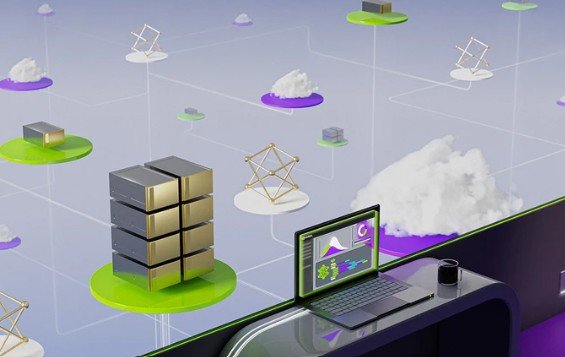
India, June 08 : The personal computer industry is undergoing one of its most significant transformations in decades as technology companies race to embed advanced artificial intelligence capabilities directly into consumer devices. The latest push is being led by Nvidia, whose newly unveiled AI-focused computing platform signals a major shift away from cloud-dependent AI services toward local, on-device intelligence.
The development reflects a broader trend across the technology sector. As AI applications become increasingly sophisticated, companies are seeking ways to process complex workloads directly on personal computers rather than relying exclusively on remote data centres. The approach promises faster performance, improved privacy and reduced dependence on internet connectivity.
At the centre of this transition is Nvidia’s latest AI computing platform, designed specifically for next-generation laptops and desktop systems. The company says the technology combines powerful graphics processing and AI acceleration capabilities, enabling devices to perform advanced AI tasks locally.
Industry observers believe this could fundamentally alter the way users interact with computers. Instead of manually navigating applications, future systems may rely on intelligent assistants capable of understanding context, automating workflows and performing complex tasks with minimal user input. Nvidia executives have described the shift as one of the most important changes in computing since the arrival of graphical user interfaces.
The growing importance of AI-powered hardware is being driven by several factors. Generative AI applications require substantial computational resources. Running these applications entirely in the cloud can increase costs and create latency issues. Local processing allows users to access advanced AI features instantly while retaining greater control over sensitive information.
Major computer manufacturers have already begun integrating specialised AI chips into their products. The trend is expected to accelerate during the second half of 2026 as consumers and businesses seek devices capable of supporting increasingly advanced AI applications.
The shift is also influencing software development. Operating systems, productivity suites and creative applications are being redesigned to take advantage of dedicated AI hardware. Developers are introducing features that can generate content, analyse information, automate repetitive tasks and provide intelligent recommendations in real time.
Another important aspect of the transition is the emergence of AI agents. Unlike traditional software tools that require explicit instructions, AI agents can interpret goals, plan actions and execute tasks autonomously. Industry leaders believe such systems could become a standard feature of future personal computers.
The transformation extends beyond workplace productivity. AI-enabled devices are expected to enhance education, healthcare, entertainment, cybersecurity and digital content creation. Students could receive personalised tutoring assistance. Professionals may automate complex workflows. Content creators could generate sophisticated multimedia projects using natural language instructions.
Competition in the sector is intensifying. Technology companies including Nvidia, Microsoft, Google, Apple and Intel are investing billions of dollars in AI hardware and software ecosystems. Their objective is to establish platforms capable of supporting the next generation of intelligent applications.
Recent developments in the smartphone market further highlight the growing importance of on-device AI. Mobile operating systems are introducing features such as advanced image analysis, intelligent search tools, fraud detection and contextual assistants. These innovations are expected to converge with PC technologies, creating a more seamless AI experience across multiple devices.
Analysts predict that the market for AI-enabled computers will expand rapidly over the next several years. Businesses are expected to drive initial adoption as they seek productivity gains and automation benefits. Consumer demand is likely to increase as applications become more practical and user-friendly.
However, challenges remain. Developers must optimise software for new hardware architectures. Privacy concerns related to AI systems continue to attract regulatory scrutiny. Questions also remain regarding energy consumption, security and long-term market demand.
Even so, momentum behind AI-powered computing continues to build. The convergence of powerful processors, intelligent software and expanding AI ecosystems is creating opportunities that were difficult to imagine only a few years ago.
As artificial intelligence becomes an integral part of everyday technology, the personal computer is evolving from a passive tool into an active digital assistant. The transition may redefine not only how people use technology, but also how work, communication and creativity are conducted in the AI-driven era.

