


India, Canada Aim to Seal Free Trade Agreement by End of 2026
Defence cooperation, energy security, innovation and supply chain resilience emerge as key pillars as PM Modi and PM Carney chart a new roadmap for bilateral ties at the G7 Summit.
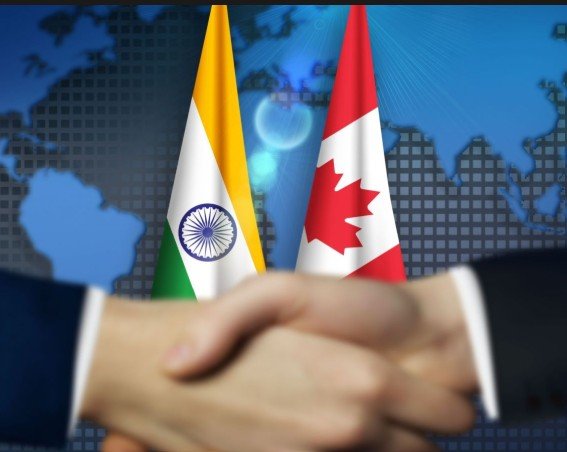
India, June 17 : India and Canada have agreed to intensify efforts to conclude negotiations on a comprehensive free trade pact by the end of 2026, signalling a renewed phase in bilateral relations marked by deeper economic engagement, defence cooperation and strategic collaboration.
The commitment was reaffirmed during a meeting between Prime Minister Narendra Modi and Canadian Prime Minister Mark Carney on the sidelines of the G7 Summit in Evian-les-Bains, France. The discussions reflected the growing momentum in ties between the two nations, with both leaders emphasizing the importance of expanding cooperation across multiple sectors, including trade, energy, technology, education and security.
Prime Minister Modi described the interaction as productive and highlighted the frequency of his engagements with Carney over the past year as evidence of the two countries’ determination to strengthen diplomatic and economic relations.
According to the Ministry of External Affairs (MEA), both leaders reviewed the progress made in negotiations for the Comprehensive Economic Partnership Agreement (CEPA) and reiterated their shared objective of finalizing the agreement within the current year. The proposed pact is expected to significantly enhance bilateral trade, improve market access for businesses and create new opportunities for investment and employment in both countries.
Officials noted that the trade negotiations have advanced considerably in recent months, reflecting a positive shift in the overall relationship. The agreement is anticipated to cover a broad range of sectors, including goods, services, digital trade, investments and regulatory cooperation.
Beyond trade, the two leaders agreed to begin negotiations on a General Security of Information Agreement, a move aimed at expanding defence and security cooperation. The initiative is expected to facilitate greater information sharing, strengthen strategic coordination and support future collaboration in emerging security domains.
During the discussions, Modi and Carney explored ways to build a stronger and more resilient partnership driven by economic growth, technological innovation and people-to-people connections. They underscored the complementary nature of the Indian and Canadian economies and highlighted the need for dependable supply chains to address global challenges related to energy and food security.
Energy cooperation emerged as a major area of focus. The leaders reviewed ongoing commercial arrangements involving liquefied natural gas (LNG), liquefied petroleum gas (LPG) and metallurgical coal, sectors that are increasingly important for supporting industrial development and energy diversification. Both sides acknowledged the strategic importance of ensuring stable energy supplies amid global market uncertainties.
The meeting also reviewed progress achieved since Prime Minister Carney’s visit to India earlier this year. During that visit, both countries signed important agreements covering uranium supplies and critical minerals, sectors considered vital for clean energy technologies and advanced manufacturing.
India and Canada have also expanded collaboration in areas such as renewable energy, critical technologies, advanced research and small modular nuclear reactors. These sectors are expected to play a key role in the future economic partnership between the two countries as they pursue sustainable growth and technological advancement.
Institutional engagement between New Delhi and Ottawa has also gained momentum. The two leaders welcomed recent meetings of the Joint Science and Technology Committee and the Consular Dialogue, describing them as important mechanisms for enhancing cooperation. They also expressed optimism about upcoming engagements in defence, finance and migration related matters.
A notable aspect of the discussions was the emphasis on talent mobility and innovation partnerships. The leaders acknowledged the growing role of academic exchanges, skilled workforce collaboration and innovation ecosystems in strengthening bilateral ties. Ongoing initiatives under the Canada-India Talent and Innovation Strategy were reviewed as examples of successful cooperation.
Further expanding the relationship, the two countries announced the establishment of Raisina Americas, a new platform designed to facilitate dialogue, policy discussions and collaborative initiatives involving stakeholders from both nations. The platform is expected to promote greater engagement between government institutions, industry leaders, academics and civil society organizations.
Prime Minister Modi also conveyed India’s support for Canada’s bid to become a Dialogue Partner of the Indian Ocean Rim Association. The move reflects India’s willingness to broaden cooperation with Canada in regional and multilateral forums and strengthen collaboration on maritime and economic issues.
The latest developments mark a significant turnaround in India-Canada relations, which had experienced a period of strain following allegations made in 2023 by former Canadian Prime Minister Justin Trudeau regarding a possible Indian connection to the killing of Khalistani extremist Hardeep Singh Nijjar in Canada.
Those allegations triggered diplomatic tensions and led to a sharp deterioration in bilateral engagement. However, the arrival of Prime Minister Mark Carney ushered in a new phase of dialogue and efforts aimed at rebuilding trust and restoring cooperation.
Since taking office, Carney has prioritized constructive engagement with India, recognizing the strategic importance of the relationship in an increasingly interconnected global economy. Diplomatic channels have remained active, allowing both countries to gradually rebuild confidence and identify common areas of interest.
Analysts believe that the decision to target completion of the free trade agreement by the end of the year reflects a shared recognition of the economic opportunities available to both nations. India remains one of the world’s fastest-growing major economies, while Canada possesses significant strengths in natural resources, technology and innovation.
The proposed CEPA is expected to create a more predictable business environment, reduce trade barriers and encourage greater investment flows. Industry groups in both countries have welcomed the renewed momentum, arguing that stronger economic ties can generate long-term benefits across sectors ranging from manufacturing and agriculture to clean energy and digital services.
The meeting between Modi and Carney at the G7 Summit therefore represents more than a diplomatic engagement. It signals a broader effort to redefine India-Canada relations around shared economic interests, strategic cooperation and future oriented partnerships.
As negotiations continue in the coming months, both governments will be working toward transforming political goodwill into concrete outcomes. If concluded as planned, the India-Canada Free Trade Agreement could become one of the most significant milestones in the bilateral relationship, opening a new chapter of cooperation and prosperity for both nations.

