


Reactor Pressure Vessel Successfully Installed at Kudankulam Nuclear Power Plant
320-tonne component positioned inside reactor building as India accelerates expansion of nuclear power generation capacity
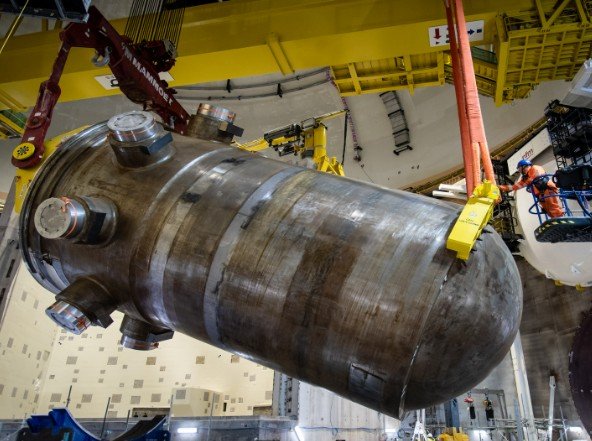
TIRUNELVELI, June 17: India’s nuclear energy expansion received a significant boost after the successful placement of a crucial reactor component at the Kudankulam Nuclear Power Project (KKNPP) in Tamil Nadu. The Nuclear Power Corporation of India Limited (NPCIL) announced that the Reactor Pressure Vessel (RPV) for Unit-5 has been successfully installed, marking one of the most important stages in the construction of the new reactor unit.
The achievement represents a major engineering milestone in the development of the upcoming nuclear power unit and signals steady progress toward enhancing the country’s clean energy generation capabilities. NPCIL stated that the installation was completed following regulatory approval from the Atomic Energy Regulatory Board (AERB), which cleared the project for major equipment erection activities.
Weighing approximately 320 tonnes, the Reactor Pressure Vessel is considered one of the most critical components of a nuclear power facility. It serves as the containment structure for the reactor core, where the controlled nuclear reaction takes place to generate heat for electricity production. The vessel is designed to operate under extreme temperature and pressure conditions, making its installation a highly specialized and technically demanding process.
According to project officials, advanced heavy-lifting systems were deployed to accurately position the massive equipment inside the reactor building. The operation required extensive planning, precision engineering and strict adherence to safety protocols to ensure flawless execution.
NPCIL described the development as the beginning of the installation phase for key Nuclear Steam Supply System (NSSS) components at Unit-5. The successful placement of the reactor vessel paves the way for the integration of additional reactor systems and equipment that will eventually support power generation operations.
The Kudankulam Nuclear Power Project remains one of India’s largest nuclear energy initiatives and plays a crucial role in strengthening the nation’s long-term energy security. The project is being implemented with technical cooperation from Russia’s Atomstroyexport, continuing a partnership that has contributed significantly to the advancement of nuclear infrastructure in India.
Officials noted that the latest accomplishment highlights the effectiveness of international collaboration in delivering complex nuclear engineering projects. The cooperation between Indian and Russian experts has enabled the adoption of advanced reactor technologies and high safety standards throughout the project lifecycle.
The existing Units 1 and 2 at Kudankulam have already established themselves as major contributors to the country’s electricity grid. Together, the two operational units have generated nearly 130 billion units of electricity since commissioning, helping meet growing energy demand while reducing dependence on fossil fuels.
NPCIL emphasized that the power produced by these units has delivered substantial environmental benefits. By replacing conventional thermal power generation, the reactors have helped prevent an estimated 112 million tonnes of carbon dioxide emissions, supporting India’s broader climate and sustainability goals.
Construction activities are currently underway on Units 3, 4, 5 and 6, reflecting the government’s commitment to expanding nuclear energy as part of a diversified power generation strategy. Once completed, these additional reactors are expected to significantly increase electricity output and contribute to stable, low-carbon energy supplies.
Industry experts view the installation of the Reactor Pressure Vessel as a critical benchmark that demonstrates the project’s continued momentum. The milestone also reflects the growing maturity of India’s nuclear engineering capabilities and the country’s determination to strengthen its position in the global clean energy landscape.
With construction progressing across multiple units, the Kudankulam project is expected to remain a cornerstone of India’s future energy infrastructure, supporting economic growth, energy security and environmental sustainability for decades to come.

