


Artificial Intelligence Reshapes Global Education Policies and Classroom Learning
Governments and universities worldwide adopt new strategies to balance innovation, ethics and student learning in the AI era.
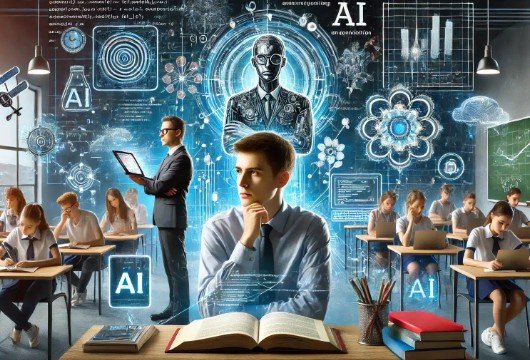
LONDON, June 20: Artificial Intelligence is rapidly transforming education systems around the world, prompting governments, universities and policymakers to rethink traditional approaches to teaching, learning and student assessment.
One of the most significant developments emerged this week from Norway, where the government announced a near total restriction on generative AI tools for elementary school students. Under the new policy, children between the ages of six and thirteen will generally not be permitted to use AI applications in classrooms. Officials argue that excessive dependence on artificial intelligence could negatively affect foundational learning skills and critical thinking abilities.
The Norwegian decision reflects a broader international debate over the role of AI in education. While some educators view the technology as a revolutionary tool capable of personalizing learning experiences, others worry about its impact on academic integrity, creativity and cognitive development.
Universities around the world are simultaneously embracing and regulating AI technologies. Educational conferences held this month have focused heavily on how institutions can integrate generative AI responsibly into teaching and research. Discussions have centred on ethical use, assessment methods, transparency and the development of AI literacy among students and faculty.
Experts increasingly believe that AI literacy will become as important as digital literacy over the next decade. Students entering the workforce will be expected to understand how AI systems function, how they influence decision-making and how to use them responsibly in professional environments.
Higher education institutions are facing particular challenges in adapting assessment models. Traditional assignments and take-home projects are becoming more difficult to evaluate as students gain access to increasingly sophisticated AI tools. Researchers argue that universities must redesign assessments to emphasize critical thinking, problem-solving and real-world application rather than simple content generation.
At the same time, universities are creating new academic programs focused specifically on artificial intelligence. Recent studies indicate a rapid expansion of undergraduate AI degrees, minors and certification programs as institutions attempt to meet growing demand from students and employers.
Educational leaders stress that AI should be viewed as a complement to human learning rather than a replacement for teachers. Human interaction, mentorship and collaborative learning continue to play a central role in educational development despite advances in technology.
Many universities are also investing in faculty training programs designed to help educators understand AI-powered tools and incorporate them effectively into classroom instruction. The goal is to ensure that technology enhances educational outcomes without undermining academic standards.
Policy experts argue that the coming years will determine how successfully education systems adapt to AI-driven transformation. Countries that strike the right balance between innovation and regulation may gain a significant advantage in preparing students for future careers.
As classrooms continue to evolve, the challenge for educators will be to harness the benefits of artificial intelligence while preserving the human qualities that remain essential to meaningful learning experiences.

