


Indian Navy Launches Seventh Anti-Submarine Warfare Craft ‘Machilipatnam’
Seventh indigenous Anti-Submarine Warfare Shallow Water Craft enhances underwater surveillance, mine warfare operations and maritime security in the Indian Ocean Region.
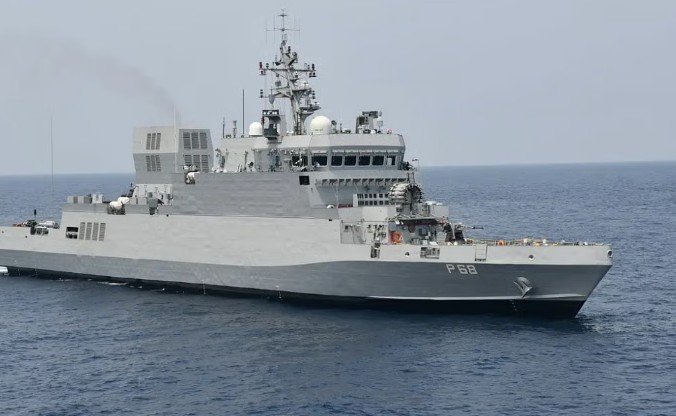
NEW DELHI, Jul 29: The Indian Navy achieved another milestone in its naval modernisation programme with the launch of ‘Machilipatnam’, the seventh Anti-Submarine Warfare Shallow Water Craft (ASW SWC) being constructed by Cochin Shipyard Limited (CSL). The vessel is part of an eight ship project aimed at strengthening India’s coastal defence and boosting indigenous shipbuilding under the government’s Aatmanirbhar Bharat initiative.
Designed to undertake a wide range of maritime missions, the vessel is equipped with advanced underwater surveillance systems, anti-submarine warfare capabilities, low intensity maritime operations and mine warfare features. These capabilities are expected to significantly improve the Navy’s ability to detect and counter underwater threats while enhancing maritime domain awareness across strategic waters.
The launch ceremony took place in the presence of Vice Admiral Atul Anand, Additional Secretary in the Department of Military Affairs, along with senior officers from the Indian Navy, Cochin Shipyard Limited and other distinguished guests. The event marked another important step in the timely execution of one of India’s key indigenous naval construction projects.
Named after the historic port city of Machilipatnam in Andhra Pradesh’s Krishna district, the vessel reflects India’s rich maritime heritage. For centuries, the coastal city served as a thriving trading hub on the eastern seaboard, connecting India with international maritime routes. By carrying this name, the ship symbolises the country’s enduring naval traditions while representing its modern maritime ambitions.
The Mahe-class warship has been developed to operate effectively in shallow coastal waters where submarine detection and surveillance pose unique operational challenges. Its specialised systems will enable the Navy to conduct anti-submarine missions with greater efficiency while supporting coastal security operations and safeguarding critical sea lanes.
Officials said the addition of the new vessel will strengthen India’s maritime preparedness in the Indian Ocean Region, where strategic competition and security challenges continue to evolve. Enhanced surveillance and rapid-response capabilities will allow the Navy to better protect national interests, monitor coastal activities and secure vital maritime infrastructure.
A significant highlight of the project is its high indigenous content, which exceeds 80 per cent. The extensive use of domestically manufactured equipment and systems demonstrates the growing maturity of India’s defence manufacturing ecosystem and reduces dependence on foreign suppliers for critical naval assets.
The successful construction of the vessel by Cochin Shipyard Limited also reflects the increasing capabilities of Indian shipyards in designing and building sophisticated warships. The project has generated employment, encouraged technological innovation and strengthened the domestic defence industrial base.
Defence officials noted that indigenous warship-building programmes play a crucial role in enhancing operational readiness while promoting self-reliance in strategic sectors. As more advanced naval platforms enter service, the Indian Navy is expected to expand its surveillance reach and improve its ability to respond swiftly to emerging maritime threats.
Once commissioned, the vessel will join the Navy’s expanding fleet dedicated to protecting India’s vast coastline, securing shipping routes and maintaining stability in the Indian Ocean Region. The launch represents another step toward building a technologically advanced and self-sufficient naval force capable of meeting future security challenges.

