


Jammu’s Residency Road Urban Makeover
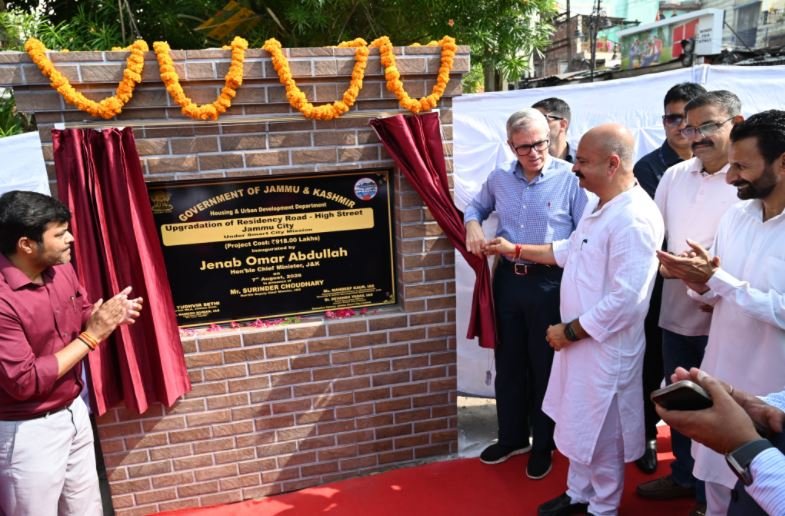
The ₹9.18 crore redevelopment of Jammu’s Residency Road–High Street is a welcome effort to improve one of the city’s busiest and most visible stretches. Covering nearly 1.2 kilometres, the project has brought together better road surfacing, improved footpaths, underground communication lines and upgraded drainage. The work is important, but its real value will depend on how well these improvements are protected and maintained in the years ahead.
Residency Road is not just another traffic corridor. It serves shoppers, traders, commuters, visitors and residents every day and connects some of Jammu’s important commercial and civic areas. Any improvement here directly affects the way people move through and experience the city centre. One of the more useful features of the project is the underground communication corridor. Moving cables below ground can reduce visual clutter and make future utility management more organised. It can also help avoid repeated digging of newly laid roads. That benefit, however, will survive only if different departments coordinate their work properly. Newly upgraded roads should not be damaged again because one agency failed to plan with another. The new footpaths are another positive addition. Pedestrians have often been the most neglected users of busy city roads. In several commercial areas, walking space is gradually taken over by parked vehicles, shop extensions or other encroachments. If the footpaths on Residency Road are allowed to meet the same fate, much of the purpose behind the redevelopment will be lost. They must remain open, safe and usable. The fresh road surface should make vehicular movement smoother, while the new RCC drains are expected to improve drainage. But this is one area where maintenance will matter more than construction. Drains that are not cleaned regularly can fail even after heavy investment. The system will be tested during rainfall, and regular de-silting and inspection must become part of routine civic management. The upgraded corridor can also strengthen business activity. A cleaner, safer and more attractive marketplace can encourage people to spend more time in the area and improve the overall shopping experience. Traders will benefit from better public infrastructure, but they too have a responsibility to ensure that footpaths and road space are not gradually occupied by commercial activity. Parking will remain another major test. Even a well-designed road can quickly become congested if vehicles are allowed to park wherever convenient. Clear parking zones, firm enforcement and better traffic management are essential if the benefits of the project are to remain visible. Urban development is not only about building better roads. It is also about making them easier and safer to use. Senior citizens, children and persons with disabilities should be able to move comfortably along the corridor. Proper ramps, safe crossings and obstruction-free walking areas should therefore be treated as basic requirements, not optional additions. Jammu Smart City Limited and the Housing and Urban Development Department deserve credit for taking up the redevelopment of an important city stretch. Yet the responsibility does not end with completion. Streetlights, drains, footpaths, road surfaces and public amenities need regular attention. Citizens should also know which agency is responsible when repairs or maintenance are required. The Residency Road project can become a useful example for other congested parts of Jammu. But before similar works are replicated elsewhere, the city must show that upgraded infrastructure can be maintained properly. Too many urban projects lose their original quality within a few years because maintenance is treated as an afterthought.
The investment has certainly improved the appearance and functionality of the corridor. The challenge now is to preserve those gains. A smart street should continue to look organised, remain walkable and function smoothly long after the opening ceremony is over. If that happens, the Residency Road redevelopment will be remembered not simply as another Smart City project, but as a meaningful improvement in everyday urban life. Further, the Residency Road upgrade deserves appreciation for giving Jammu’s urban core renewed dignity and functionality. The administration should now introduce periodic citizen-satisfaction surveys, independent quality inspections, smart surveillance for asset protection and business-friendly loading zones, ensuring that future improvements remain responsive, measurable and firmly connected with every day public needs.

