


China Achieves First Ever Land Recovery of Rocket Stage After Sea Recovery Success
The successful Zhuque-3 landing marks a significant step in China's reusable launch technology and follows its earlier sea based recovery in July.
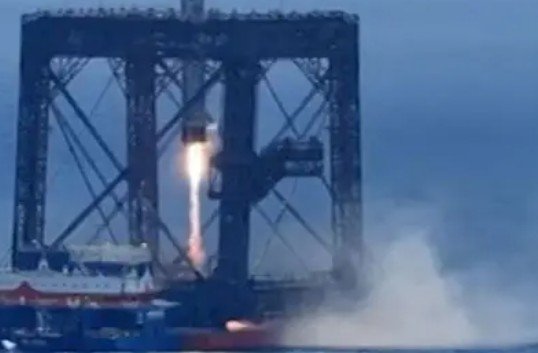
BEIJING, Aug 19: China has successfully recovered a rocket’s first stage on land for the first time, marking a major milestone in the country’s efforts to develop reusable launch systems and lower the cost of space missions.
State news agency Xinhua reported that the Zhuque-3 reusable rocket was launched on Wednesday morning and its first stage was subsequently recovered. The mission represented China’s first successful land-based recovery of a rocket stage.
The achievement follows China’s earlier success in recovering rocket hardware at sea. On July 10, the first stage of a Long March-10B rocket separated from its upper stage after launch and returned to a sea platform. That recovery relied on a net-capture system rather than a conventional landing.
The latest mission introduced another important development. According to Xinhua, it was China’s first recovery attempt using deployable landing legs, demonstrating progress towards a landing method similar to those used by established reusable launch systems.
Reusable launch technology gains momentum
Reusable rockets have become an important area of competition in the global space industry because recovering and flying rocket stages again can reduce the expense of launching satellites and other payloads.
US companies SpaceX and Blue Origin have been developing and operating reusable launch systems for years, helping establish rocket recovery as an increasingly important part of commercial spaceflight.
China’s latest achievement reflects its growing focus on developing similar capabilities. Successful recovery and refurbishment of rocket stages could eventually allow launch providers to reuse expensive hardware instead of discarding it after every mission.
The Zhuque-3 test also demonstrates the country’s expanding capabilities in controlled descent and precision landing, technologies that are essential for future reusable launch vehicles.
Competition intensifies in Asia
China’s progress comes as other Asian space powers are also exploring reusable rocket technology.
Japan conducted the first test flight of an experimental reusable rocket on July 11, one day after China’s Long March-10B sea recovery. The Japanese vehicle successfully took off and landed, highlighting the growing regional interest in technologies designed to reduce launch costs.
Reusable launch systems are increasingly viewed as critical to the future of the global space economy, particularly as satellite constellations and commercial missions continue to expand.
China’s successful land recovery of Zhuque-3 therefore represents more than a single mission milestone. It strengthens the country’s position in the race to develop reliable, cost-effective and repeatedly reusable launch vehicles.

