


‘Paalna’: Every Tree Gets a Guardian
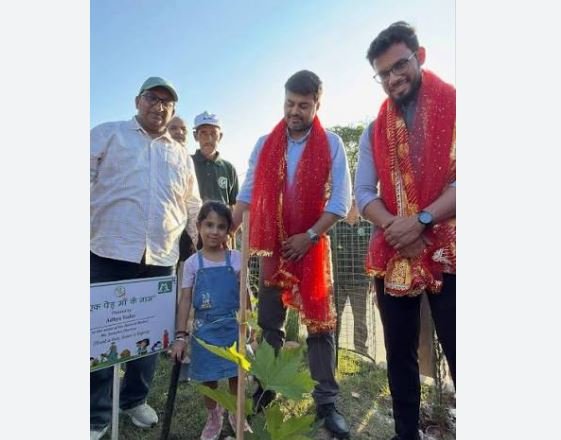
Plantation drives often begin with enthusiasm, large numbers and public participation. The real challenge, however, starts after the event is over. A sapling planted today needs care for months and years before it can become part of the green cover people hope to create. Jammu administration’s “Paalna” initiative stands out because it tries to keep that responsibility alive beyond plantation day.
The campaign has brought 60,000 saplings under the care of students and teachers across 815 educational institutions. More importantly, every tree has been given a guardian. That simple idea changes the nature of the exercise. Instead of planting a sapling and walking away, the person who adopts it is expected to look after it, watch its growth and report on its condition. This is where Paalna becomes more meaningful than an ordinary plantation drive. The idea is not merely to plant, but to raise and protect. A sapling needs water, attention and timely care. If those things are missing, even the biggest plantation target can lose its value very quickly. The decision to publish survival data every month is therefore welcome. It brings a level of honesty into the process that is often missing in large plantation campaigns. People usually hear how many trees were planted, but rarely how many survived. If Paalna continues to report those figures openly, it can help set a better standard for future environmental programmes. The digital dashboard developed by the National Informatics Centre can also make a difference. Tracking trees school by school and plant by plant can help identify where care is weak and where support is needed. It can also prevent the programme from becoming only a collection of impressive numbers without follow-up. The participation of students gives the initiative another strength. When a child names a tree and becomes responsible for it, environmental awareness becomes personal. It is no longer just a chapter in a textbook or a speech delivered on a special day. The child watches the tree grow and understands, in a very simple way, what care for nature actually means. The provision of alternate guardians during school vacations is also sensible. Many saplings are lost because there is no one to look after them when institutions close. By planning for that gap, the administration has recognized one of the most common reasons plantation drives fail. Still, the real test of Paalna will come with time. The administration must ensure that survival figures remain accurate and are not adjusted simply to show better results. If saplings die, those losses should be recorded honestly. The purpose should be to learn what went wrong and improve the next round of planting. Field visits will also matter. A digital entry cannot replace physical care. Forest officials and local teams should continue to visit schools, guide students and help with issues such as watering, soil condition and species suitability. As the programme expands to hospitals, government offices and roadside plantations, the same spirit must be preserved. Expansion should not become a race for bigger numbers. The real success of the initiative will be measured by how many trees are still healthy after one year, three years and beyond.
There is a useful lesson here for environmental policy. Planting a tree is easy. Keeping it alive is the difficult part. Paalna has taken a positive step by shifting the focus from plantation to survival. If the administration remains transparent and institutions stay committed, the campaign can grow into a lasting model of public participation and environmental responsibility. Last but not least, the government should now link plantation planning with local water availability, native species selection and climate suitability, while creating dedicated maintenance funds for vulnerable sites. Independent annual audits, community partnerships and rewards for high-performing institutions can strengthen accountability. Long-term policy must ensure that plantation becomes ecological restoration, not merely a seasonal activity.

