


PM Modi Holds Bilateral Talks with Leaders of South Africa, Egypt, Philippines and Kazakhstan
Discussions centred on strengthening trade, investment, defence, technology and development cooperation, with a focus on expanding India’s engagement with the Global South.
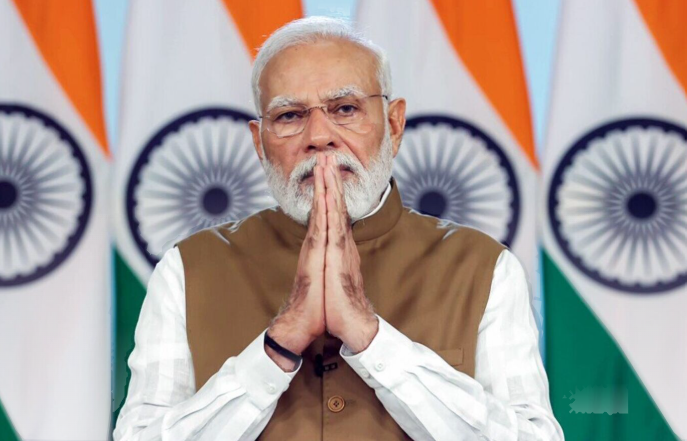
NEW DELHI, Sep 13: Prime Minister Narendra Modi on Sunday held a series of bilateral meetings with several world leaders on the sidelines of the BRICS summit, discussing ways to strengthen economic, strategic and development partnerships.
Modi met South African President Cyril Ramaphosa, Philippines President Ferdinand Marcos Jr, Egyptian President Abdel Fattah El-Sisi and Kazakh President Kassym-Jomart Tokayev, among others.
The discussions covered a wide range of areas, including trade and investment, defence and security, technology, energy, infrastructure, agriculture and people to people relations.
During his meeting with Ramaphosa, Modi reviewed the entire spectrum of the India-South Africa strategic partnership. The two leaders discussed cooperation in mining and critical minerals, infrastructure, food security, digital public infrastructure and emerging technologies.
“Our partnership is rooted in history and firmly focused on the future. We will work closely for Africa’s progress, the priorities of the Global South and a more balanced global order,” Modi said in a social media post.
According to the Ministry of External Affairs (MEA), the two leaders also exchanged views on several global issues of mutual interest and agreed to maintain close coordination in multilateral forums.
Modi also invited South Africa to consider joining the International Big Cat Alliance, highlighting the successful translocation of cheetahs from South Africa to India.
During his meeting with Marcos Jr, Modi noted the growing momentum in the India-Philippines strategic partnership. The two leaders discussed economic cooperation as well as collaboration in technology, trade, space and innovation.
They also explored ways to strengthen India-ASEAN engagement.
The MEA said both sides expressed satisfaction over progress in bilateral cooperation and agreed to expand collaboration in defence and security, trade and investment, space, railway infrastructure, fintech, education, tourism, science and technology and innovation.
Modi described his meeting with Egyptian President El-Sisi as a “wonderful interaction”, saying the two leaders discussed regional developments and the steadily growing friendship between India and Egypt.
The prime minister also held talks with Tokayev and discussed measures to give fresh momentum to the India-Kazakhstan strategic partnership.
“We see immense potential to deepen cooperation in trade, investment, energy, technology, connectivity and innovation, while further strengthening our close cultural and people to people ties,” Modi said.
In another meeting, Modi congratulated Burundi President Avariste Ndayishimiye on assuming the chairmanship of the African Union.
The two leaders discussed strengthening India-Burundi cooperation in development assistance, capacity building, youth skilling, agriculture and clean energy.
The MEA said they recalled India’s role in facilitating the African Union’s inclusion in the G20 during India’s presidency in 2023. They also underlined the importance of the India-African Union partnership as a key pillar of cooperation within the Global South.
Modi also commended the African Union leadership for its efforts in combating the Ebola outbreak.
During his interaction with Nigerian Vice President Kashim Shettima, the prime minister discussed cooperation in trade, power, clean energy, fertilisers and defence. Health, capacity building and technology were also part of the discussions.
Modi separately met Indonesian President Prabowo Subianto and reaffirmed India’s commitment to strengthening the bilateral partnership across multiple sectors.
The prime minister also held discussions with Ugandan Vice President Jessica Alupo on expanding cooperation in healthcare, agriculture, digital technologies and capacity building.
The series of meetings reflected India’s efforts to deepen partnerships with countries across Africa, Southeast Asia and Central Asia while advancing common priorities of the Global South.

