


India, Asian Buyers Face $7.4 Billion LNG Bill as Spot Gas Prices Surge
India, Pakistan, Bangladesh, Thailand and Vietnam are paying more than twice last year’s comparable long-term contract costs as disruptions force them to seek replacement gas.
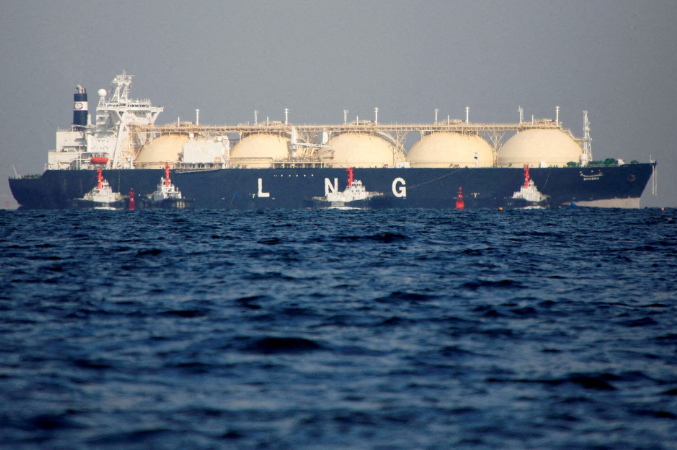
India, Sep 14 : India and four other major emerging Asian liquefied natural gas (LNG) buyers have spent a combined $7.4 billion on spot market supplies since the US-Iran conflict began, highlighting the sharp financial impact of disruptions to regional gas trade.
India, Pakistan, Bangladesh, Thailand and Vietnam have turned increasingly to spot LNG after interruptions to shipments through the Strait of Hormuz disrupted contracted supplies. According to a Bloomberg News analysis of purchase tenders, the five countries spent about $7.4 billion on spot cargoes during the period, compared with roughly $3.1 billion for a similar volume purchased through long-term contracts a year earlier.
The steep increase in procurement costs is putting additional pressure on Asian economies that depend on natural gas for electricity generation and industrial activity. It is also forcing policymakers and energy companies to reconsider their reliance on imported LNG and examine alternative sources of power.
The disruption has had a particularly significant impact on supplies from Qatar, which accounted for around one-fifth of global LNG shipments before the conflict. Shipments of Qatari LNG through the Strait of Hormuz have largely halted since fighting began in late February, leaving buyers searching for replacement cargoes at significantly higher spot prices.
The latest price shock is raising questions about the role of LNG as a dependable fuel for developing Asian economies. The sector had already faced major volatility following the Russia-Ukraine war, which triggered a global gas supply crunch and sent prices sharply higher.
For many countries, however, alternatives cannot be developed quickly enough to replace LNG. A rapid shift to other fuels could create new pressure on electricity supplies, leaving governments dependent on imported gas despite the increased cost.
“If prices remain at such levels, we think that LNG will have a problem competing with the alternative fuels,” Fabian Kor, executive vice president for Asia at SEFE Marketing & Trading, said at a conference in Singapore last week, according to Bloomberg.
Asian economies are already examining a broader range of energy options, including solar and wind power, coal, nuclear generation, domestic gas production and pipeline imports.
Pakistan, once regarded as a potentially fast-growing LNG market, is expected to increase its dependence on solar and hydropower as the impact of the Hormuz disruption becomes clearer, Bloomberg reported, citing BloombergNEF analyst Akshay Modi.
Bangladesh has spent more than $2 billion replacing supplies lost from Qatar and is also introducing incentives to encourage rooftop solar installations.
Thailand is pursuing a similar diversification strategy. Its latest long-term energy plan targets renewable sources for at least 65% of electricity generation by 2050.
Vietnam and the Philippines could face a different outcome, with higher LNG prices potentially encouraging greater use of coal, according to Modi. The International Energy Agency expects global coal consumption to reach a record level this year, with expensive gas contributing to increased demand for the fuel.
The crisis is also encouraging LNG buyers to diversify their supplier base. About 80% of buyers surveyed by McKinsey expect to alter their procurement strategies, with greater geographical diversification emerging as a key priority over the coming years.
The shift could create opportunities for LNG projects located closer to Asian markets, including developments in Papua New Guinea. Producers in the United States and Canada may also benefit as buyers seek to reduce their exposure to supply disruptions in the Middle East.
The latest turmoil comes at a time when the LNG industry is already debating the strength of future demand. Shell forecasts that global LNG demand could increase by 65% by 2050, largely driven by rising consumption in South and Southeast Asia.
However, high gas prices are already affecting investment decisions. Around 47 proposed gas-fired power projects, representing approximately $52 billion in investment, have been cancelled, withdrawn or made little progress over the past five years in countries including the Philippines, Thailand and Vietnam, according to data cited from the Institute for Energy Economics and Financial Analysis.
The latest crisis is therefore prompting Asian economies to balance immediate energy security against longer-term affordability. Diversifying suppliers may reduce exposure to individual supply routes, while investment in renewable energy, nuclear power, domestic production and other alternatives could gradually reduce dependence on imported gas.
Sam Reynolds, research lead for LNG and gas in Asia at IEEFA, said the succession of geopolitical shocks was changing how Asian countries viewed energy security.
“One geopolitical conflict is a really negative thing. A second geopolitical conflict is a pattern,” Reynolds said, according to the report.

