


US Supreme Court Rejects Trump Bid to Restrict Mail-In Ballots
The ruling marks a setback for the Trump administration's effort to tighten federal oversight of mail voting before the November midterm elections.
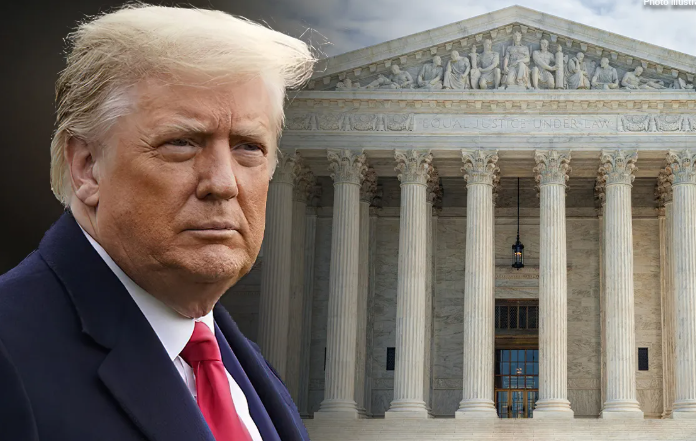
WASHINGTON, Sept 15: The U.S. Supreme Court on Monday declined to allow the U.S. Postal Service to enforce a new rule targeting mail in ballots, dealing a setback to President Donald Trump’s efforts to tighten voting by mail regulations ahead of the November midterm elections.
The justices rejected a request from the Justice Department to lift an order issued by Boston based U.S. District Judge Indira Talwani, who had blocked the Postal Service from implementing the measure while legal challenges brought by states and voting rights organizations continue.
The Postal Service adopted the rule following an executive order signed by Trump in March seeking tighter controls over mail voting.
In a brief, one paragraph order, the Supreme Court said the government was unlikely to succeed on the merits of its challenge to Talwani’s preliminary injunction.
Conservative Justice Samuel Alito, joined by Justice Clarence Thomas, dissented from the decision. Alito argued that the Postal Service has broad authority to regulate mail and described some of the challengers’ legal claims as unlikely to succeed.
No other justice publicly dissented. The Supreme Court currently has a 6-3 conservative majority.
The decision comes as Republicans face a closely contested battle to retain control of Congress in the November midterms. Democrats have historically relied more heavily on mail voting than Republicans, making restrictions on the practice a politically significant issue.
Under the disputed Postal Service rule, states would have been required to provide the agency with lists of voters receiving mail ballots. They also would have had to use Postal Service approved envelopes carrying unique barcodes for outgoing and returning ballots.
The agency could then reject ballots that failed to meet the new requirements or were linked to voters whose names did not appear on the provided lists.
Opponents have warned that the system could interfere with the delivery of legitimate ballots and create confusion as states prepare to distribute mail ballots to eligible voters. The administration has defended the measure as necessary to protect the electoral system and prevent voter fraud.
However, election experts and voting rights groups have pointed to the rarity of widespread voter fraud as evidence that the restrictions could create unnecessary barriers for voters.
Trump has repeatedly questioned the security of mail voting, although he has also voted by mail. He has continued to make false claims of widespread fraud in U.S. elections, including the 2020 presidential election, which he lost to Democrat Joe Biden.
States Challenge Postal Rule
A coalition of states, most of them governed by Democrats, along with Washington, D.C., and several voting-rights organizations challenged the Postal Service’s rule in federal court.
Judge Talwani issued an injunction on September 4 preventing the measure from taking effect. She found that the rule likely raised constitutional concerns because the Constitution gives states primary responsibility for administering elections. She also concluded that states would face serious difficulties complying with the requirements so close to the midterm elections.
The Boston-based 1st U.S. Circuit Court of Appeals subsequently declined to suspend Talwani’s order. The appeals court warned that the measure could potentially disenfranchise millions of voters while producing little, if any, benefit in preventing election fraud.
Separately, U.S. District Judge Carl Nichols in Washington, D.C., also ruled against the rule on Sunday. Nichols granted a preliminary injunction sought by the Democratic Party and organizations including the NAACP.
Nichols said the measure could make mail voting more difficult for some Americans and concluded that the Postal Service had exceeded its statutory authority.
The dispute is part of a broader effort by the Trump administration to increase federal involvement in election procedures before the midterms.
All 50 states offer some form of voting by mail. In 29 states, voters can request a mail ballot without giving a specific reason, while eight states conduct elections entirely by mail.
The Supreme Court had previously lifted an injunction issued by Talwani in June that had blocked parts of Trump’s executive order, including the Postal Service measure before it was finalized.
The latest ruling leaves the lower court injunctions in place as litigation over the legality and implementation of the mail-ballot restrictions continues.

