


India Needs Multi-Route Energy Strategy Amid West Asia Supply Risks: Experts
Experts call for diversified suppliers, larger strategic reserves, flexible refineries and alternative ports to protect India from energy disruptions.
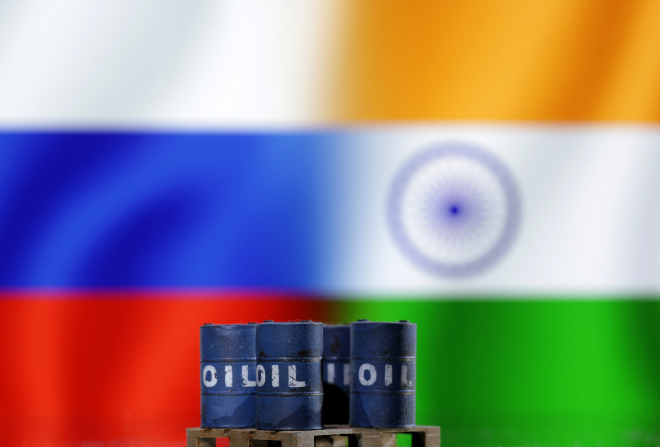
India, Sep 20 : India needs a broader energy security strategy built around multiple import routes, diversified suppliers, larger strategic reserves and stronger port infrastructure as continuing tensions in West Asia threaten global energy flows, experts said.
The recent escalation involving Saudi Arabia and Yemen’s Houthi rebels has highlighted the vulnerability of India’s energy supply chains, particularly their exposure to key maritime routes in the region. Disruptions around the Strait of Hormuz and the Red Sea have added pressure to international oil and gas transportation.
India remains heavily dependent on overseas supplies to meet its energy requirements. Government data shows that the country’s overall primary energy import dependence stood at around 42 per cent in 2024-25. Crude oil accounted for nearly 89 per cent of consumption through imports, while natural gas dependence was about 49 per cent and coal dependence around 18 per cent.
Experts said India’s priority should be to create multiple logistical and supply options that can keep energy moving during a regional crisis. However, they noted that completely replacing Gulf supplies in the short term would be difficult because alternative sources often involve higher transportation costs, longer journeys and compatibility challenges for existing refineries.
India imported around 1.8 billion barrels of crude oil in 2025, with approximately 48 per cent sourced from the Gulf region, according to Rajeev Agarwal, senior research consultant at the New Delhi-based Chintan Research Foundation.
Agarwal said India would need a multi-pronged approach to strengthen energy security. He noted that the country has already expanded its crude sourcing network to more than 40 countries, with Russia, the United States, Nigeria and Venezuela among its significant suppliers.
Cauvery Ganapathy, climate and energy fellow at the Observer Research Foundation Middle East, said India could explore short-term options such as rerouting Gulf-origin crude through alternative maritime corridors and purchasing cargoes already at sea through spot trades, swaps and other arrangements.
However, she cautioned that the availability of such supplies is limited and competition for them could increase costs. Diversifying away from Gulf crude could also involve higher risk premiums and longer voyage times.
Experts also stressed the importance of increasing India’s strategic petroleum reserves and commercial inventories. Mannat Jaspal, climate and energy director at ORF Middle East, said stronger emergency stocks would provide an additional buffer against supply disruptions.
India’s agreement with the UAE to expand crude storage in the country’s strategic petroleum reserves is one such step. Under the arrangement, Abu Dhabi National Oil Company could increase its storage capacity in India to up to 30 million barrels, while both sides are also exploring storage facilities in Fujairah and additional LNG and LPG infrastructure.
Jaspal also advocated wider diversification of LNG supplies from countries including the US, Australia and nations in Africa, along with greater domestic gas production and increased renewable energy use.
Ganapathy said India should expand its strategic reserves while ensuring that new storage facilities can accommodate different grades of crude. India’s refining system has traditionally been suited to medium and heavy sour crude from the Gulf, making refinery flexibility an important part of any diversification strategy.
Alternative facilities in the UAE and Oman could also strengthen India’s energy logistics. Fujairah, located outside the Strait of Hormuz on the UAE’s Gulf of Oman coast, is a major storage and bunkering centre. Oman’s Duqm and Salalah ports could provide additional options for storage, transhipment and maritime services.
Agarwal suggested upgrading Oman’s ports, including Duqm, Salalah, Sur and Muscat, along with developing pipelines and tanker-loading facilities.
Experts, however, warned that alternative infrastructure cannot completely eliminate exposure to the Strait of Hormuz when the original energy supplies come from inside the Persian Gulf. LPG presents an additional challenge because it requires specialised logistics and cannot simply be shifted to pipeline networks.
The experts said India’s long-term energy security will therefore depend on combining diversified sourcing with strategic reserves, flexible refining capacity, alternative ports, stronger storage infrastructure and secure maritime corridors.
They also stressed the importance of India’s diplomatic engagement with countries across West Asia to keep alternative energy supply channels operational during periods of regional instability.

