


Qualcomm Unveils New Snapdragon Chips as Smartphone AI Race Intensifies
The new flagship mobile platforms focus on faster on-device artificial intelligence, improved performance and better power management as chipmakers compete for the next generation of smartphones.
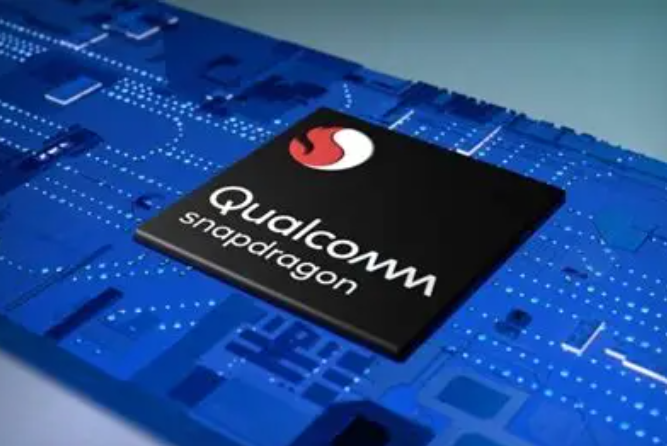
SAN DIEGO, Sept 24: Qualcomm has unveiled a new generation of flagship Snapdragon mobile platforms, putting greater emphasis on artificial intelligence, processing performance and power efficiency as smartphone makers seek to deliver more advanced AI features directly on devices.
The announcement at the Snapdragon Summit 2026 comes as the smartphone industry moves toward a model in which increasingly sophisticated AI functions are handled locally rather than relying entirely on cloud-based computing. Qualcomm’s latest platforms are designed to provide the processing capacity required for these applications while maintaining the battery efficiency expected from premium mobile devices.
The company introduced the Snapdragon 8 Elite Extreme Gen 6 and another flagship platform at the event. Both chips are based on TSMC’s 2-nanometre manufacturing technology, representing a further move toward smaller semiconductor processes for high-end mobile computing.
Qualcomm has also changed the packaging approach used for its latest smartphone processor. The company is adopting an “offset PoP” design intended to improve thermal management, an increasingly important consideration as mobile processors perform more demanding AI calculations.
Heat has become one of the central engineering challenges for smartphone manufacturers. AI workloads can require sustained processing power, and maintaining performance without causing excessive heat or rapidly draining batteries is particularly difficult in thin mobile devices.
The latest Snapdragon generation is therefore aimed not simply at increasing conventional processor speeds but at balancing several requirements at the same time. Smartphones need enough computing power to run AI models, graphics applications and demanding games while remaining responsive during extended use.
The development also reflects a broader shift in the role of AI in consumer electronics. Earlier smartphone AI features were often limited to photography, voice recognition and background processing. Newer systems can summarize information, translate conversations, generate content, analyze images and perform other tasks that require considerably more computing resources.
Running these functions directly on a smartphone can offer several advantages. It can reduce the amount of personal information that needs to be sent to remote servers, allow certain functions to work without an internet connection and potentially reduce delays caused by communication with cloud-based services.
However, local AI also places greater demands on the device’s processor. Smartphone chipmakers are consequently competing to develop dedicated AI hardware capable of processing increasingly sophisticated models without consuming excessive amounts of energy.
Qualcomm’s latest announcement is part of that competition. The company has increasingly positioned its Snapdragon platforms as complete computing systems rather than processors focused solely on traditional smartphone functions.
The importance of semiconductor design has also grown as manufacturers attempt to differentiate smartphones in a mature market. Improvements in cameras, displays and battery technology remain important, but AI capabilities are becoming another major area through which premium devices can distinguish themselves.
Qualcomm is competing with several companies developing their own mobile silicon. Apple designs its A-series processors for iPhones, while MediaTek has expanded its Dimensity range. Chinese smartphone manufacturers are also investing in custom hardware and software to reduce dependence on outside suppliers.
MediaTek recently unveiled a new smartphone chip manufactured using TSMC’s most advanced technology, highlighting the wider semiconductor industry’s race to adopt leading edge manufacturing processes.
The transition to 2nm manufacturing is particularly significant because smaller process nodes can allow chip designers to place more transistors into a similar physical area while potentially improving energy efficiency. Actual gains, however, depend on chip architecture, manufacturing implementation and the workloads being performed.
For smartphone users, the effects may become most visible through AI applications rather than technical specifications. Manufacturers could use the new processors to offer faster image generation, real-time translation, voice processing and personalized assistants.
The development is also linked to the growing importance of agentic AI. Technology companies are increasingly working on systems that can carry out sequences of tasks instead of simply responding to individual questions. Qualcomm executives have discussed agentic AI as an important direction for consumer technology, suggesting that smartphones will remain central even as new AI interfaces emerge.
Such systems require smartphones to process information quickly while maintaining secure connections with cloud services when additional computing power is needed. A hybrid approach could allow simpler activities to take place locally while more demanding operations are handled remotely.
Security is another consideration. Keeping more AI processing on the device can potentially reduce the need to transfer sensitive information to external servers. At the same time, smartphones will need stronger protections because AI applications could have access to personal messages, photographs, contacts, location information and other sensitive data.
The chip industry is therefore increasingly focused on dedicated security features alongside AI acceleration. Hardware-level protection can help isolate sensitive operations and prevent unauthorized access to information processed by AI applications.
Qualcomm’s new platforms arrive as competition for AI computing extends across the technology industry. The focus is no longer restricted to large data centres running enormous language models. Companies are developing increasingly capable processors for laptops, smartphones, automobiles and other connected devices.
This expansion is creating demand for specialized computing architectures capable of handling AI at different scales. Qualcomm has already pushed its Snapdragon technology into PCs and automotive systems, while its smartphone business remains a major part of its strategy.
For handset manufacturers, the availability of advanced processors could provide opportunities to build new AI-focused features into their next flagship models. The extent to which those capabilities reach consumers will depend on software support and how individual manufacturers integrate Qualcomm’s hardware.
The smartphone market is also becoming more competitive in terms of AI branding. Companies increasingly highlight dedicated neural processing capabilities, generative AI functions and on device assistants when launching premium devices.
That trend is likely to continue as AI becomes more deeply integrated into everyday mobile applications. Instead of being presented as a separate application, artificial intelligence is increasingly becoming part of the operating system and the basic functions of a smartphone.
Qualcomm’s latest Snapdragon platforms demonstrate how semiconductor development is adapting to that change. Faster processors remain important, but the next stage of mobile computing is increasingly about combining CPU performance, graphics processing, AI acceleration, connectivity and thermal efficiency within a single compact platform.
The immediate impact will be seen in upcoming flagship smartphones using the new technology. Over time, improvements developed for premium devices are also likely to influence chips aimed at broader segments of the smartphone market.
The September 24 announcement therefore adds another chapter to the industry’s race to make AI faster, more efficient and more accessible on personal devices. As smartphone manufacturers prepare their next-generation products, processing technology will play a central role in determining how much AI can be delivered directly from a user’s pocket.

