


Supreme Court Seeks Five Years of Financial and Administrative Records From Private Universities
Court asks institutions to disclose fee structures, fund utilisation, staffing, admissions and regulatory details as part of wider review.
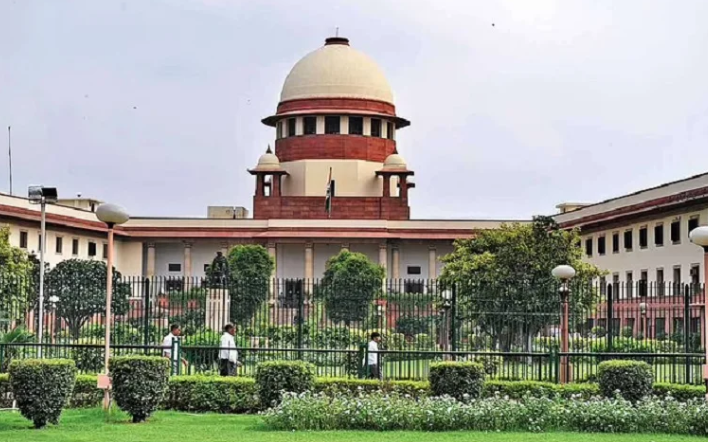
New Delhi, Sep 26 : The Supreme Court has directed private universities across India to provide extensive financial, administrative and academic information as it examines the functioning and regulation of such institutions. The order requires details covering five years of audited financial records, fee structures, utilisation of funds, surplus investments and other aspects of university administration.
The directions were issued by a bench of Justices Ahsanuddin Amanullah and N V Anjaria on September 17 in proceedings that initially arose from a student’s grievance involving Amity University, Noida. The proceedings were subsequently expanded to examine broader questions concerning private universities and their functioning.
The court has asked private universities to submit audited financial statements for the previous five years. The information is to include funds generated by the institutions, the manner in which those funds were utilised, payments made to persons not directly involved in educational functions, surplus funds and investments made from such surplus.
Details of student fee structures have also been sought. Universities are required to provide information regarding the fees charged for their courses as part of the disclosure process. The exercise is intended to provide a wider picture of how institutions generate and utilise their financial resources.
The Supreme Court has also sought information concerning the admission process. Universities are expected to disclose the procedure followed for admitting students to different courses, as well as the persons responsible for admissions, setting examination papers, conducting examinations and evaluating answer sheets.
The court has further asked institutions to explain the role of management in these academic and administrative processes. Such information forms part of the broader examination into how private universities are established and operated.
Another area covered by the directions is staffing. Universities have been asked to provide details regarding teaching and non-teaching employees, their recruitment, salaries and other remuneration. Information concerning the allocation of teaching responsibilities has also been sought for the period beginning January 2025.
The court has also placed attention on student grievance mechanisms. Universities have been asked to provide details of the committees established to address complaints, including their composition, the types of grievances they handle and the number of complaints received during the previous three years.
Information about how those complaints were dealt with and the time taken to resolve them is also part of the disclosure exercise. The requirement brings student grievance redressal within the wider review of university administration.
Private institutions have additionally been asked to disclose benefits or concessions received from the Central or state governments. This includes information relating to land allotment, relaxations in existing laws and other privileges or benefits provided to the institutions.
The Supreme Court has stated that private universities cannot operate as profit-making institutions. At the same time, the court recognised that universities require a reasonable financial cushion for smooth functioning and appropriate compensation of teaching and non-teaching employees. The focus of the directions is therefore on the manner in which institutional resources are managed and used for educational purposes.
The directions extend beyond general university finances to regulatory compliance. Affiliating and recognising bodies have been asked to provide information concerning inspections carried out during the previous five years and the faculty and supporting staff on the basis of which recognition or affiliation was granted.
The court has also sought details of deficiencies identified during inspections and whether those shortcomings were subsequently addressed. For professional courses, information from relevant regulatory bodies has been included in the wider exercise.
Universities connected with hospitals for medical or other professional programmes will also have to provide information regarding the nature of their relationship with those hospitals. The requirement seeks to bring information about affiliated clinical facilities within the court’s broader review.
The Union government, state governments and Union Territories have been directed to collect the required information from universities and colleges under their jurisdiction. They have been asked to file affidavits within six weeks from the date of the September 17 order.
The affidavits are required to be personally affirmed by the respective Chief Secretaries, while regulatory bodies have separate responsibilities regarding the information they are required to submit. The matter is scheduled to come up before the Supreme Court again on November 19, 2026.
The proceedings could bring greater attention to financial and administrative practices followed by private universities. The information being collected covers several areas that directly affect students, including fees, admissions, faculty availability, examinations and grievance mechanisms.
For students and families, fee structures and the use of institutional resources are closely connected with the cost and quality of higher education. The court’s directions will require governments and universities to compile detailed information rather than relying solely on individual disclosures or regulatory reports.
The staffing-related requirements also place emphasis on the academic resources available to students. Details regarding teaching and non-teaching personnel, recruitment and remuneration will form part of the information placed before the court.
Similarly, the requirement to disclose inspection findings and subsequent corrective action could provide information about how universities respond to deficiencies identified by regulatory and affiliating bodies.
The proceedings originated in a dispute involving one student but have now developed into a broader examination of private university functioning. The Supreme Court’s next hearing will provide an opportunity for the court to consider the information collected by governments and regulatory authorities.
Until then, universities and authorities will have to compile the requested records within the prescribed timeframe. The exercise covers financial, academic, administrative and regulatory aspects of private higher education and could provide the court with a detailed picture of how institutions operate across the country.

