


Trump Appoints Jay Clayton as AI Czar to Lead US Super Intelligence Task Force
The new White House panel will examine the opportunities and risks of advanced artificial intelligence and recommend measures to strengthen the US government's response to AI-related threats.
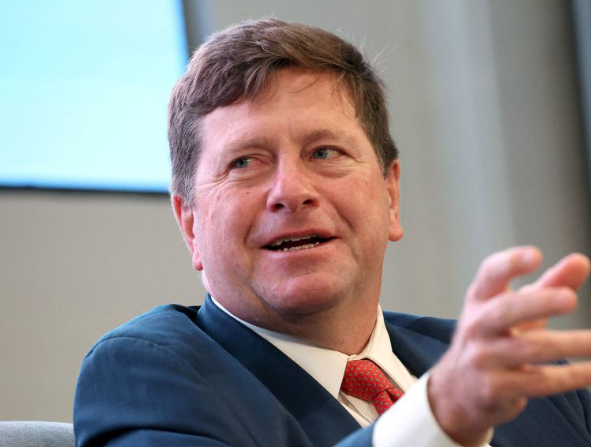
Washington, Oct 3: US President Donald Trump has appointed Director of National Intelligence Jay Clayton to serve as the administration’s new artificial intelligence czar, putting the country’s top intelligence official at the centre of a new effort to assess the opportunities and risks associated with increasingly advanced AI systems.
According to a Wall Street Journal report cited by Reuters, Clayton will lead a new White House panel tasked with examining artificial intelligence risks and opportunities and submitting a report within 120 days. The administration has referred to the initiative as the “Super Intelligence Force.”
The move comes as the rapid development of artificial intelligence has expanded from a technology-sector issue into a broader national security, economic and geopolitical concern.
AI systems are increasingly being used for coding, research, data analysis, automation and other high-value tasks. At the same time, officials and researchers have raised concerns about cybersecurity, misinformation, autonomous systems and the possibility that increasingly capable models could create risks that existing government structures are not adequately prepared to handle.
Clayton said the President wanted a group established to ensure that the United States remains a leader in advanced artificial intelligence while protecting American interests.
He also indicated that the administration considers maintaining technological leadership to be strategically important, particularly as the United States competes with China in the development of advanced AI.
The creation of the task force reflects the growing importance of AI in national policy. Governments are no longer dealing with the technology solely as an issue involving innovation or consumer applications. The development of powerful models is increasingly linked to national security, economic competitiveness and the ability to control critical technological infrastructure.
The new panel is expected to examine the risks associated with advanced AI as well as the government’s existing systems for reporting and responding to incidents.
According to the Reuters report, the task force will review mechanisms for dealing with AI-related breaches, hacks and other incidents and will consider how federal agencies can strengthen their response capabilities under existing authorities.
The initiative comes at a time when debate over AI safety has intensified in the United States.
Some researchers and technology experts have warned that future AI systems could become substantially more capable than current models and potentially create serious risks if their development is not accompanied by effective safeguards.
Those concerns have prompted lawmakers from both political parties to call for greater attention to AI safety and oversight.
Trump, however, has repeatedly argued that the United States should avoid excessive regulation that could weaken its ability to compete with China and other countries in the global technology race.
The administration’s approach therefore attempts to balance two competing objectives: accelerating AI development while improving the government’s ability to manage potential threats.
Clayton’s appointment is significant because of his position as Director of National Intelligence. His role gives the new initiative a direct connection to the country’s intelligence and national security establishment.
The White House has also brought senior officials and advisers from several areas of government into the task force. Its vice chairs will include Emil Michael, Scott Kupor and Federal Trade Commission Chair Andrew Ferguson, according to the report.
Other members are expected to include Vice President JD Vance, Defense Secretary Pete Hegseth, Treasury Secretary Scott Bessent and White House Chief of Staff Susie Wiles. External advisers include former AI czar David Sacks and former Secretary of State Condoleezza Rice, Reuters reported.
The formation of the panel also represents a renewed attempt by the Trump administration to centralise AI-related policy.
The United States has already established senior-level positions focused on artificial intelligence. Venture capitalist David Sacks previously held the AI czar role during Trump’s second term. Clayton’s appointment represents another effort to coordinate AI policy across different parts of the federal government.
One of the most important questions facing the task force will be how government agencies should respond when AI systems are involved in cyberattacks or other security incidents.
Artificial intelligence can help defenders identify unusual activity, analyse large amounts of information and respond more quickly to threats. But the same technology can also be used by attackers to automate malicious activity, identify vulnerabilities and create sophisticated social-engineering campaigns.
The cybersecurity implications are particularly important as businesses and government agencies increasingly integrate AI into their digital infrastructure.
Industry experts have warned that artificial intelligence is changing both sides of the cybersecurity battle. A recent discussion involving IBM India and South Asia highlighted the growing role of AI in cyber defence while also pointing to vulnerabilities created by the technology itself.
For Washington, the challenge extends beyond cybersecurity.
AI is becoming a central element of competition between major powers. Access to advanced processors, computing infrastructure, research talent and large-scale data is increasingly viewed as a strategic advantage.
The United States currently has a strong position in advanced AI development, supported by major technology companies, large cloud platforms and extensive private investment. Maintaining that lead will require continued investment while ensuring that the technology is deployed safely.
China remains a major competitor in the field, adding a geopolitical dimension to the debate over regulation.
The Trump administration has indicated that it does not want restrictive rules to slow American companies while other countries continue developing their own systems. At the same time, the new task force signals recognition that technological leadership cannot be separated from questions about safety and national security.
The 120-day deadline gives Clayton and his colleagues a relatively short period to evaluate a rapidly changing field.
The report is expected to examine the risks associated with advanced AI, assess how the federal government currently monitors incidents and recommend improvements where necessary.
Its findings could influence how Washington handles future AI-related emergencies, cybersecurity incidents and national security threats.
The initiative may also shape the broader debate over how governments should regulate powerful artificial intelligence systems without preventing technological development.
For the technology industry, the outcome could be significant. Clearer government procedures for reporting and responding to AI incidents could provide greater certainty to companies, while additional oversight could increase compliance requirements for developers of highly capable systems.
The appointment also underlines how quickly AI policy has moved from a specialised technology discussion to a national strategic priority.
As artificial intelligence becomes more capable and more deeply embedded in the economy, governments are being forced to consider not only what the technology can accomplish but also how its risks should be managed.
Clayton’s new role places him at the centre of that challenge in the United States.
The task force’s eventual recommendations will show whether Washington can strike a balance between maintaining technological leadership, protecting national interests and establishing safeguards for an era in which artificial intelligence is expected to play an increasingly influential role in government, business and society.

