


IIT Madras Expands Focus on Advanced Research and Innovation
The institute has announced new academic initiatives aimed at strengthening research, technology development and opportunities for students and faculty.
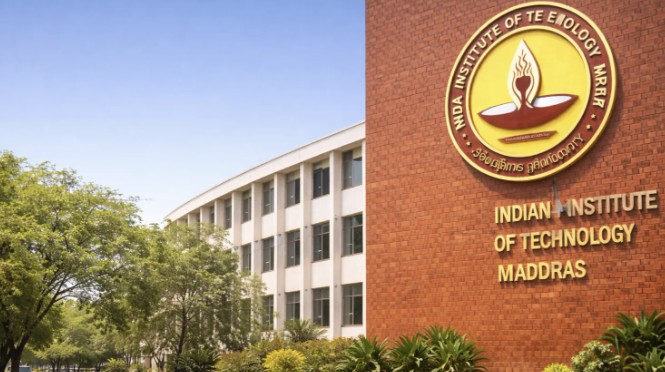
CHENNAI, Oct 7: The Indian Institute of Technology Madras has stepped up its focus on advanced research, innovation and technology development, with new initiatives aimed at creating greater opportunities for students, researchers and faculty members.
The institute’s latest efforts come at a time when India’s higher education sector is placing increasing emphasis on research-driven learning and the development of technologies that can address real world challenges.
Research has become an important component of India’s academic ecosystem, with institutions being encouraged to move beyond conventional classroom education and contribute to scientific and technological progress. IIT Madras has continued to build programmes that connect academic research with practical applications.
For students, exposure to research can provide an opportunity to work on problems beyond the boundaries of their regular coursework. Participation in research projects can help learners develop analytical abilities, technical skills and a deeper understanding of their chosen fields.
The institute’s research environment covers a wide range of disciplines, including engineering, science, technology and emerging areas of innovation. Such interdisciplinary work allows researchers to approach complex problems from multiple perspectives.
One of the key advantages of a research-oriented academic environment is the opportunity to convert ideas into practical solutions. Students and faculty can work together on projects that may eventually result in new technologies, products or services.
The growing connection between universities and industry has also created new possibilities for research institutions. Companies increasingly seek partnerships with academic organisations to develop technologies and find solutions to specialised technical challenges.
Collaboration can provide universities with access to practical problems while giving businesses an opportunity to work with researchers possessing specialised expertise.
For students, these partnerships can offer valuable exposure to professional environments. Working on industry-linked projects can help learners understand how theoretical concepts are applied outside the classroom.
Innovation programmes can also encourage students to develop entrepreneurial ideas. Instead of limiting their academic experience to examinations and assignments, students can explore ways of turning research findings into useful products or services.
Such opportunities are particularly relevant as emerging technologies continue to transform employment patterns. Fields including artificial intelligence, advanced computing, biotechnology, robotics and clean energy are creating demand for graduates with strong technical and problem-solving capabilities.
Higher education institutions therefore face the challenge of preparing students for careers that may involve technologies still undergoing rapid development.
Research-focused programmes can help address this challenge by encouraging students to experiment, analyse new ideas and work on unfamiliar problems.
Faculty members also benefit from a strong research ecosystem. Access to specialised facilities, laboratories and collaborative programmes can support academic projects and enable researchers to pursue ambitious areas of study.
Research funding and institutional partnerships remain important factors in sustaining such activities. High-quality research often requires advanced equipment, specialised personnel and long-term investment.
The development of research infrastructure can consequently strengthen an institution’s ability to undertake complex projects.
Another important aspect of research-based education is the development of intellectual independence. Students involved in research are required to ask questions, examine evidence and develop solutions rather than simply reproduce information.
This approach can complement conventional academic instruction and prepare learners for careers where innovation and independent thinking are essential.
The emphasis on technology development also supports India’s broader objective of strengthening domestic research capabilities. Developing advanced technologies within the country can reduce dependence on imported solutions in strategically important sectors.
Academic institutions can contribute by training researchers and engineers while developing technologies that can eventually be adopted by government agencies and private organisations.
The role of institutes such as IIT Madras is therefore not limited to educating students. Their research activities can contribute to national priorities in areas such as energy, healthcare, transportation, digital technology and sustainable development.
Research can also have a direct social impact when academic solutions are designed around local challenges. Technologies developed for affordable healthcare, efficient energy use, water management or improved transportation can potentially benefit communities beyond university campuses.
Students who participate in such projects gain an opportunity to understand the relationship between technical innovation and social needs.
The institute’s continued emphasis on research and innovation also reflects changing expectations from higher education institutions. Universities and technical institutes are increasingly evaluated not only on the number of graduates they produce but also on their research output, innovation capacity and contribution to society.
For students considering higher education, a strong research ecosystem can provide additional academic opportunities. Learners interested in pursuing postgraduate studies or research careers can gain early exposure to laboratories and research projects.
Undergraduate research can also help students determine whether they want to pursue advanced academic work after completing their degrees.
The expansion of research opportunities can further strengthen India’s talent pipeline. Students who receive research exposure during their education may go on to pursue careers in universities, laboratories, technology companies and research organisations.
The benefits can extend internationally as well. Strong research institutions attract collaborations with universities and organisations from other countries, creating opportunities for academic exchange and joint projects.
International collaboration can expose students and researchers to different approaches and research practices while strengthening India’s participation in global scientific networks.
At the same time, maintaining high standards remains essential. Research institutions need to ensure that projects are supported by rigorous methodology, reliable data and appropriate evaluation.
Innovation must also be accompanied by attention to ethics, safety and responsible technology development, particularly in fields involving artificial intelligence, biotechnology and other rapidly evolving technologies.
The growing research focus at IIT Madras is therefore part of a larger transformation taking place across Indian higher education. Institutions are increasingly seeking ways to combine academic learning, scientific investigation, industry engagement and entrepreneurship.
For students, this creates an educational environment in which learning can extend beyond textbooks and lecture halls. Research projects, laboratories, internships and innovation programmes can provide practical experience alongside theoretical knowledge.
For the wider economy, stronger academic research can contribute to the development of skilled professionals and new technologies.
The continued expansion of research and innovation activities at IIT Madras is consequently significant for both students and the broader higher education sector. As India seeks to strengthen its position in science and technology, institutions capable of producing advanced research and skilled graduates will remain central to that effort.
The institute’s approach demonstrates the increasing importance of creating educational environments where students are encouraged not only to learn existing knowledge but also to question, experiment and contribute to the creation of new knowledge.

