


India Exposes Pakistan’s Double Standards at UN, Says World Has Not Forgotten 9/11, 26/11 and Pahalgam Attacks
New Delhi accuses Islamabad of shielding terror groups and misleading the international community, urging concrete action against perpetrators, financiers and state sponsors of terrorism.
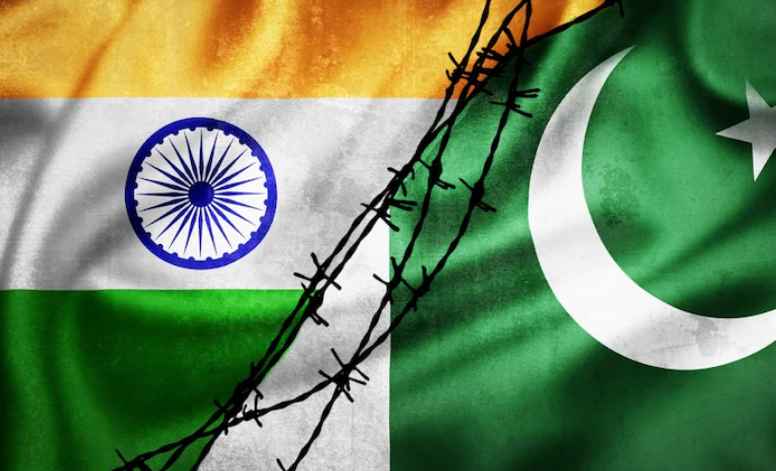
UNITED NATIONS, Oct 8: India on Wednesday accused Pakistan of adopting a double standard on terrorism, questioning its claims of combating the menace while allegedly providing support and safe havens to terrorist groups. Addressing the UN General Assembly’s Sixth Committee, India said the international community had not forgotten the September 11 attacks in the United States, the 2008 Mumbai attacks and the April 2025 Pahalgam massacre.
Exercising its Right of Reply to remarks made by the Pakistani representative during discussions on measures to eliminate international terrorism, First Secretary at India’s Permanent Mission to the UN, Raghoo Puri, questioned what action was being taken when terrorists were financed, trained, sheltered or supported from a country’s territory.
Puri said India had consistently maintained that terrorism could not be defeated through statements alone and required firm action against those responsible for carrying out attacks, organising operations, financing extremist networks and supporting their activities.
He alleged that Pakistan had portrayed itself as both a frontline state in the fight against terrorism and a victim of the menace while overlooking the consequences of its alleged support for militant organisations.
India also criticised Pakistan’s announcement of enhanced financial rewards for information leading to the arrest of Jaish-e-Mohammed (JeM) chief Masood Azhar, who is listed by the United Nations as a terrorist.
Puri said such announcements could not conceal allegations of state support for terrorism. He recalled that Pakistani representatives had previously described JeM as a defunct organisation, questioning the credibility of that assertion in light of subsequent developments.
He further argued that reports of media interactions with Azhar, including his comments on the outcome of Operation Sindoor, raised questions about Pakistan’s claims regarding his whereabouts.
Operation Sindoor was launched by India in May 2025 against terrorist infrastructure in Pakistan and Pakistan-occupied Kashmir following the April 22 attack in Pahalgam, Jammu and Kashmir, in which 26 civilians, mostly tourists, were killed. The Resistance Front, which India has described as a proxy of Pakistan-based Lashkar-e-Taiba, was linked to the attack.
Earlier this month, India had dismissed Pakistan’s latest announcement of a bounty of seven million Pakistani rupees on Azhar as a publicity exercise, calling on Islamabad to take concrete measures against terrorism.
Pakistan has maintained that Azhar fled to Afghanistan and has claimed in recent years that the JeM founder was operating from there. However, Afghanistan’s Taliban authorities have rejected Islamabad’s assertions, with a senior Afghan Foreign Ministry official stating that Azhar was not present in the country.
The latest reward announcement also comes as Pakistan faces international scrutiny over its efforts to combat terrorist financing. The Financial Action Task Force (FATF), the Paris based global watchdog, is scheduled to review the country’s anti-terror financing measures at an upcoming plenary.
Pakistan remained on the FATF grey list from 2018 to 2022 over deficiencies in its anti-money laundering and counter-terror financing frameworks.
Puri also referred to remarks by Punjab Chief Minister Maryam Nawaz, daughter of former Pakistani prime minister Nawaz Sharif, who had said that the province faced a greater threat from neighbouring provinces than from neighbouring countries.
Using the statement to highlight what India described as contradictions in Pakistan’s position, Puri said a country could not claim to fight terrorism while allowing conditions that enabled extremist groups to operate.
He warned that when terrorist organisations function with political backing or receive safe havens, international commitments become ineffective and victims are denied justice.
Recalling major terrorist attacks, Puri said the world remembered the September 11 attacks and the circumstances surrounding the capture of al-Qaeda leader Osama bin Laden, as well as the November 2008 Mumbai attacks and the Pahalgam killings.
He also highlighted the religious dimension of the Pahalgam attack, stating that the victims had been questioned about their religion before being killed. He questioned Pakistan’s position on religious hatred in view of India’s allegations of continued cross-border terrorism.
Puri accused Islamabad of relying on misinformation, disinformation and narrative-building rather than taking meaningful steps against militant groups. He also dismissed Pakistan’s portrayal of military damage as a victory, saying such claims did not change the underlying realities.
Stressing the need for accountability, the Indian diplomat said an effective international response to terrorism must establish responsibility and ensure that those involved face consequences.
He asserted that India would continue to defend its people and that further acts of terrorism against the country would have consequences.
In a separate Right of Reply, Puri rejected what he described as Pakistan’s repetitive narratives, arguing that greater efforts to counter terrorism would serve the international community better than attempts to shape perceptions.
He also referred to the term “Form 47”, associated with allegations of electoral manipulation in Pakistan’s 2024 general elections, to criticise the credibility of the Pakistani government’s claims.
India reiterated that tackling terrorism required verifiable action against those responsible rather than public announcements or diplomatic rhetoric.

