


AI Boom Drives Chip Demand as TSMC Prepares to Report Another Record Quarter
Strong demand for advanced processors and sophisticated chip packaging is strengthening Taiwan Semiconductor Manufacturing Company's position in the global technology supply chain.
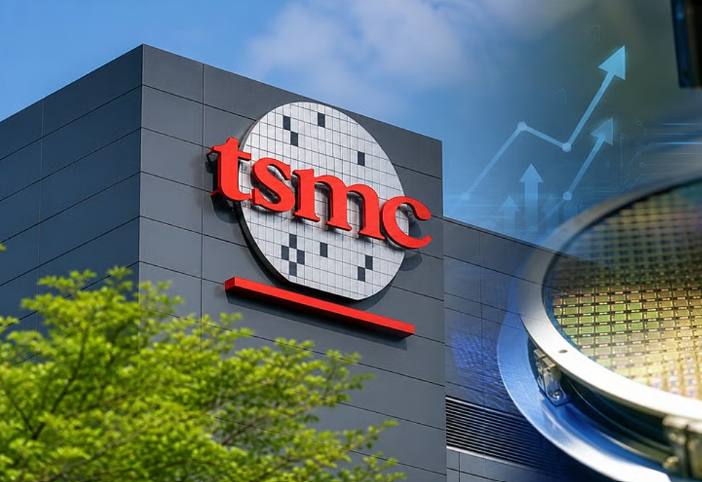
TAIPEI, Oct 12: Taiwan Semiconductor Manufacturing Company (TSMC), the world’s leading contract chipmaker, is expected to report another record quarterly profit as demand for artificial intelligence processors and advanced semiconductor technologies continues to expand.
The company’s anticipated performance reflects the growing importance of semiconductor manufacturing to the global technology industry. As businesses invest in AI models, cloud computing and data centre infrastructure, chipmakers are under increasing pressure to deliver powerful processors capable of handling more demanding workloads.
TSMC manufactures semiconductors for major technology companies, including Nvidia and Apple. Its production capabilities have made it a central supplier to businesses developing AI accelerators, high-performance computing systems and consumer electronics.
Reuters reported on October 12 that analysts expected TSMC’s third-quarter net profit to rise approximately 65 per cent year on year to 746.3 billion New Taiwan dollars, equivalent to about US$23.4 billion. The forecast would mark the company’s sixth consecutive quarter of record profit. These figures were analyst expectations ahead of the company’s results announcement, rather than confirmed final earnings.
The projected increase highlights how demand for advanced computing hardware is reshaping the semiconductor market and creating new opportunities for manufacturers with the capacity to produce sophisticated chips at scale.
Artificial intelligence reshapes semiconductor demand
The rapid development of generative AI has changed the types of computing resources required by technology companies.
Traditional computing systems are designed to perform a wide range of tasks, but training and operating large AI models often require specialised processors capable of handling extensive parallel calculations. These processors must work alongside high-speed memory, networking equipment and advanced cooling systems.
AI companies and cloud service providers have consequently increased investment in data centres and specialised computing infrastructure.
Nvidia has emerged as a major supplier of AI accelerators, while other technology companies are developing their own processors to reduce costs and improve performance for particular workloads. The manufacturing of these chips depends on sophisticated semiconductor fabrication processes that require specialised equipment, engineering expertise and substantial capital investment.
TSMC’s role is particularly important because it manufactures chips designed by other companies. Rather than competing primarily through its own consumer-facing processor brand, it provides production capabilities that allow customers to turn semiconductor designs into physical products.
As demand for AI hardware increases, the company benefits from orders for advanced manufacturing processes and related packaging technologies.
Advanced chip packaging becomes more important
The performance of modern computing systems depends not only on the semiconductor manufacturing process but also on how individual components are connected and assembled.
Advanced packaging technologies allow processors and memory components to be integrated more efficiently. These methods can improve data transfer between components, support more complex chip designs and help manufacturers meet the requirements of high-performance computing systems.
One technology attracting attention is TSMC’s Chip on Wafer on Substrate, commonly known as CoWoS.
The process enables multiple semiconductor components to be integrated into a single package, making it valuable for certain AI accelerators and other advanced computing products.
As AI systems require greater computing capacity, the availability of advanced packaging has become an important consideration for chip designers. A company may have a successful processor design but still face production constraints if the required manufacturing or packaging capacity is unavailable.
TSMC has been expanding its capabilities to address demand for these technologies. However, increasing production is complicated by the need for specialised machinery, trained workers, strict quality controls and coordination across the semiconductor supply chain.
Packaging capacity is therefore becoming a strategic issue alongside the production of increasingly advanced silicon chips.
Why TSMC matters to global technology companies
The semiconductor industry relies on a highly specialised international supply chain.
Chip designers develop architectures and circuit layouts, equipment manufacturers supply the machinery used in production, and fabrication companies operate facilities that manufacture the devices. Other businesses provide materials, testing services, packaging and distribution.
TSMC occupies a particularly influential position because its manufacturing processes are used by several leading technology companies.
Apple relies on advanced semiconductor manufacturing for processors used in its devices, while Nvidia depends on foundry capacity to supply chips for AI computing systems. Demand from these customers can influence production planning, capital expenditure and the development of future manufacturing technologies.
The company’s scale also creates challenges for customers. Advanced fabrication plants are expensive to construct and operate, and production capacity cannot be increased instantly when demand rises.
Manufacturing schedules must account for customer requirements, equipment availability, technical yields and the time needed to qualify new processes.
This makes TSMC’s investment decisions important to the broader technology industry. Changes in its capacity or manufacturing roadmap can affect how quickly other companies bring new products to market.
Revenue growth reflects broader investment trends
The anticipated quarterly profit increase comes amid continued investment in AI infrastructure by technology companies.
Cloud providers are spending on data centres, networking equipment and specialised processors to support AI services. Businesses are also exploring how AI tools can be incorporated into software development, customer service, scientific research and internal operations.
These applications require computing resources at different scales. Training large models can involve substantial computing capacity, while serving millions of users creates continuing demand for inference processing.
Inference refers to the process through which a trained AI model generates responses, predictions or other outputs. As AI products reach more users, the associated processing requirements can become a significant source of demand for specialised hardware.
The resulting investment cycle benefits companies across the semiconductor ecosystem, although the distribution of revenue varies according to each company’s role.
TSMC’s expected results suggest that demand for advanced manufacturing remains strong. Nevertheless, analysts and investors must consider whether current spending levels can be sustained as customers evaluate the returns from their AI investments.
Manufacturing expansion and capital requirements
Meeting rising demand requires significant investment in manufacturing infrastructure.
Advanced semiconductor fabrication facilities involve complex cleanrooms, precision equipment, specialised chemical processes and highly controlled operating environments. Their construction and qualification can take years, while production yields must be improved before new capacity becomes commercially efficient.
TSMC has been investing in manufacturing capacity outside Taiwan, including major projects in the United States. Such investments are intended to broaden its production footprint and strengthen supply chain resilience.
Reuters reported on October 12 that the company had earmarked substantial investment for its Arizona manufacturing operations and was examining possible further expansion in Texas. The timing and scale of future projects will depend on demand, production requirements and commercial considerations. Expanding overseas can help customers diversify some manufacturing risks, but it also introduces additional challenges. Building and operating facilities in different locations requires access to skilled employees, reliable infrastructure, suppliers and competitive operating conditions.
The economics of advanced chip manufacturing remain demanding. Companies must invest heavily before new facilities begin generating revenue, and technological changes can require further spending on equipment and process development.
TSMC’s ability to balance investment with customer demand will therefore remain important to its long-term financial performance.
Competition remains intense
Despite its strong market position, TSMC operates in a competitive and rapidly changing industry.
Samsung Electronics is a major semiconductor manufacturer with ambitions in advanced foundry production, while Intel is investing in its own manufacturing capabilities and seeking external customers for its foundry business.
Competition involves more than the ability to manufacture smaller transistors. Customers also evaluate production yields, reliability, delivery schedules, design-support services, packaging options and the total cost of manufacturing.
Developing a new process requires years of research and substantial investment. Customers also need time to adapt chip designs and validate production before moving large volumes of products to a new manufacturing platform.
These factors can make foundry relationships long-term commitments rather than decisions based only on short-term pricing.
TSMC’s established manufacturing ecosystem and experience with major customers provide advantages, but the company must continue investing to preserve its position as competing manufacturers develop their own technologies.
Supply-chain risks remain
The concentration of advanced semiconductor manufacturing in a limited number of locations remains a concern for governments and technology companies.
Disruptions caused by geopolitical tensions, natural disasters, equipment shortages or transport problems could affect production and deliveries. The complexity of chip manufacturing means that a shortage of a single critical component or material can create problems across the wider supply chain.
Governments have consequently encouraged greater geographic diversification of semiconductor production. However, creating new manufacturing capacity requires substantial investment, and moving the industry away from established production centres cannot happen quickly.
For customers, maintaining adequate inventories and diversifying suppliers where technically possible can help reduce exposure to disruptions. Yet the most advanced chips often require specialised manufacturing processes that are not readily interchangeable between foundries.
TSMC’s overseas expansion is part of a wider effort to improve resilience, although geographic diversification alone cannot eliminate every supply-chain risk.
Questions over the sustainability of AI spending
The semiconductor industry’s current growth is closely connected to expectations about the commercial value of artificial intelligence.
Supporters argue that AI will improve productivity, automate repetitive tasks and create new products across multiple sectors. These potential benefits are driving investment in computing infrastructure.
However, building and operating AI systems is expensive. Data centres require electricity, cooling, networking and continuous maintenance, while advanced processors carry significant development and acquisition costs.
Technology companies must therefore demonstrate that AI services can generate sufficient revenue or operational savings to justify their investments.
If demand for AI computing continues to expand, chip manufacturers could benefit from additional orders and higher utilisation of advanced production capacity. If customers reduce spending or delay infrastructure projects, growth expectations could weaken.
The distinction between short-term demand and sustainable long-term consumption is therefore important when evaluating semiconductor company valuations.
Outlook for the semiconductor industry
TSMC’s anticipated quarterly results underline the central role of advanced chip manufacturing in the global AI economy. Demand for specialised processors and sophisticated packaging has created substantial opportunities for the company and its suppliers.
The next phase of growth will depend on continued investment by AI developers, cloud providers and technology manufacturers, alongside TSMC’s ability to expand capacity without compromising quality or financial discipline.
Investors will also watch for guidance on future demand, manufacturing expenditure and the pace at which new facilities and packaging technologies become available.
For the wider industry, the challenge is to meet growing computing requirements while managing costs, energy consumption and supply-chain vulnerabilities.
TSMC’s expected record performance offers a snapshot of the current semiconductor boom. Its longer-term significance will depend on whether AI adoption continues to create enough demand to support the enormous investments required to manufacture the next generation of chips.

