


Over 14 Crore Beneficiaries in UP Receive Nutritional Support
The state’s Public Distribution System covers more than 3.67 crore ration cardholder families, with digital verification and ration portability aimed at improving transparency and access to food security.
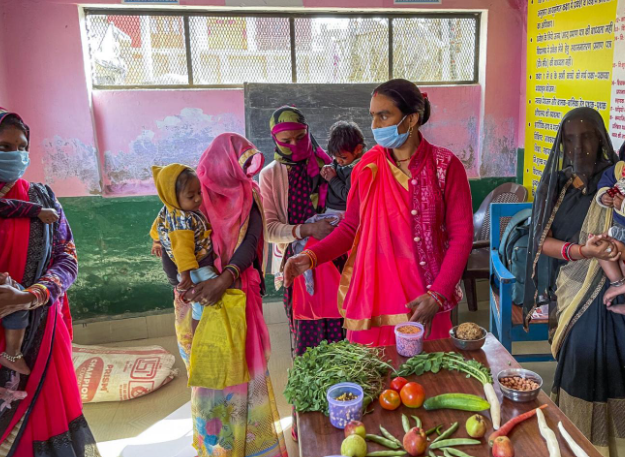
LUCKNOW, Oct 12: More than 14.71 crore beneficiaries across Uttar Pradesh are receiving foodgrains through the state’s Public Distribution System (PDS), as the government continues efforts to strengthen food security and provide nutritional assistance to economically disadvantaged households.
According to figures released by the Department of Food and Civil Supplies, the system covers 14,71,04,181 beneficiaries belonging to 3,67,52,818 ration cardholder families. The initiative aims to ensure regular access to essential food supplies, particularly for vulnerable sections of society.
The state government has emphasised transparent distribution and uninterrupted supplies, seeking to ensure that eligible households receive their entitled foodgrains irrespective of their caste, economic background or geographical location.
Among Uttar Pradesh’s 18 administrative divisions, the Lucknow division has reported extensive coverage under the food security programme. Across its six districts, 45,24,479 ration cardholder families, comprising 1,72,13,915 members, receive benefits under the system.
Districts such as Sitapur, Lakhimpur Kheri and Hardoi account for a significant number of beneficiaries, highlighting the importance of an extensive distribution network in reaching rural communities and remote settlements.
The government has also introduced technology-based measures to improve accountability at fair-price shops. Electronic Point of Sale (e-PoS) machines and biometric authentication are being used to verify beneficiaries and record transactions, with the objective of reducing irregularities and ensuring that foodgrains reach eligible households.
These measures form part of the state’s broader efforts to improve the functioning of the ration distribution network. Digital monitoring and verification are intended to strengthen oversight, improve delivery and limit the possibility of duplicate or fraudulent transactions.
Ration portability has also expanded access for migrant workers and families who move away from their registered locations for employment. Under the One Nation One Ration Card framework, eligible beneficiaries can collect their entitled foodgrains from authorised distribution outlets outside their home districts and, subject to scheme provisions, in other states.
The facility is particularly important for daily-wage earners, construction workers and other migrants whose employment frequently requires them to relocate. It allows eligible households to access food assistance without depending entirely on their original place of registration.
Under the prescribed allocation system, Antyodaya Anna Yojana families are entitled to 35 kilograms of foodgrains per household each month, while eligible priority household beneficiaries receive five kilograms per person per month, subject to applicable scheme provisions.
The programme is intended to reduce the financial burden of purchasing essential food items and help low-income families manage other necessary expenses, including education, healthcare and livelihood-related costs.
The scale of coverage reflects the importance of the Public Distribution System in Uttar Pradesh, one of India’s most populous states. Effective implementation depends on maintaining adequate stocks, ensuring timely transportation, monitoring fair-price shops and addressing complaints from beneficiaries.
Continued supervision and transparent record-keeping remain essential to ensure that assistance reaches eligible households without delays or diversion. The government’s focus on digital systems, portability and regular distribution is aimed at strengthening the delivery of food security benefits to millions of families across the state.

